
TGFBI (NM_000358) Human Tagged ORF Clone


$938.00
In Stock*
Specifications
| Product Data | |
| Type | Human Tagged ORF Clone |
|---|---|
| Target Symbol | TGFBI |
| Synonyms | BIGH3; CDB1; CDG2; CDGG1; CSD; CSD1; CSD2; CSD3; EBMD; LCD1 |
| Vector | pCMV6-Entry |
| E. coli Selection | Kanamycin (25 ug/mL) |
| Mammalian Cell Selection | Neomycin |
| Sequence Data | |
| Chromatograms |
Chromatograms
 Sequencher program is needed, download here |
| Restriction Sites |
SgfI-MluI Cloning Scheme for this gene
|
Plasmid Map

|
| ACCN | NM_000358 |
| ORF Size | 2049 bp |
| OTI Disclaimer | The molecular sequence of this clone aligns with the gene accession number as a point of reference only. However, individual transcript sequences of the same gene can differ through naturally occurring variations (e.g. polymorphisms), each with its own valid existence. This clone is substantially in agreement with the reference, but a complete review of all prevailing variants is recommended prior to use. More info |
| OTI Annotation | This clone was engineered to express the complete ORF with an expression tag. Expression varies depending on the nature of the gene. |
| Components | The ORF clone is ion-exchange column purified and shipped in a 2D barcoded Matrix tube containing 10ug of transfection-ready, dried plasmid DNA (reconstitute with 100 ul of water). |
| Reconstitution Method | 1. Centrifuge at 5,000xg for 5min. 2. Carefully open the tube and add 100ul of sterile water to dissolve the DNA. 3. Close the tube and incubate for 10 minutes at room temperature. 4. Briefly vortex the tube and then do a quick spin (less than 5000xg) to concentrate the liquid at the bottom. 5. Store the suspended plasmid at -20°C. The DNA is stable for at least one year from date of shipping when stored at -20°C. |
| Note | Plasmids are not sterile. For experiments where strict sterility is required, filtration with 0.22um filter is required. |
| Shipping | Ambient |
| Reference Data | |
| RefSeq | NM_000358.3 |
| RefSeq Size | 2805 bp |
| RefSeq ORF | 2052 bp |
| Locus ID | 7045 |
| UniProt ID | Q15582 |
| Cytogenetics | 5q31.1 |
| Domains | FAS1 |
| Protein Families | Druggable Genome, Secreted Protein, Transmembrane |
| MW | 74.7 kDa |
| Summary | This gene encodes an RGD-containing protein that binds to type I, II and IV collagens. The RGD motif is found in many extracellular matrix proteins modulating cell adhesion and serves as a ligand recognition sequence for several integrins. This protein plays a role in cell-collagen interactions and may be involved in endochondrial bone formation in cartilage. The protein is induced by transforming growth factor-beta and acts to inhibit cell adhesion. Mutations in this gene are associated with multiple types of corneal dystrophy. provided by RefSeq, Jul 2008 |
Reviews


Documents
| Product Manuals |
| FAQs |
| SDS |
Resources
"NM_000358" in other vectors (6)
| SKU | Description | Size | Price | |
|---|---|---|---|---|
| RC200411L1 | Lenti ORF clone of Human transforming growth factor, beta-induced, 68kDa (TGFBI), Myc-DDK-tagged | 10 ug |
$1,238.00
|
|
| RC200411L2 | Lenti ORF clone of Human transforming growth factor, beta-induced, 68kDa (TGFBI), mGFP tagged | 10 ug |
$1,238.00
|
|
| RC200411L3 | Lenti ORF clone of Human transforming growth factor, beta-induced, 68kDa (TGFBI), Myc-DDK-tagged | 10 ug |
$1,238.00
|
|
| RC200411L4 | Lenti ORF clone of Human transforming growth factor, beta-induced, 68kDa (TGFBI), mGFP tagged | 10 ug |
$1,238.00
|
|
| RG200411 | TGFBI (tGFP-tagged) - Human transforming growth factor, beta-induced, 68kDa (TGFBI) | 10 ug |
$789.00
$1,138.00
|
|
| SC119927 | TGFBI (untagged)-Human transforming growth factor, beta-induced, 68kDa (TGFBI) | 10 ug |
$939.00
|
|
Citations
Time-resolved quantitative proteomic analysis of the developing Xenopus otic vesicle reveals putative congenital hearing loss candidates
Baxi, Nemes, Moody
iScience (2023) 26 (9), 107665 DOI: 10.1016/j.isci.2023.107665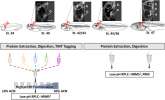
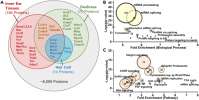
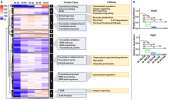
Baxi, Nemes, Moody
iScience (2023) 26 (9), 107665 DOI: 10.1016/j.isci.2023.107665
Cited by 6
AI Summary: In this study, the researchers used the Human TGFBI cDNA clone (OriGene Cat#RC200411) to investigate the role of TGFBI as a putative Six1 target in otic vesicle development and congenital hearing loss.
Snippet: opus laevis dlx5 cDNA Dr. Thomas Sargent, NIH-NICHD Luo et al., 200166 Xenopus laevis pax2 cDNA Dr. Andre Brandli, Ludwig-Maximilians Univ Munchen Heller and Brandli 199767 Human TGFBI Origene Cat#RC200411 ------------------------- Software and algorithms ------------------------- Skyline SCIEX https://sciex.com/products/software/skyline-software Proteome Discovery V2.1
Time-Resolved Quantitative Proteomic Analysis of the Developing Otic Vesicle Reveals Putative Congenital Hearing Loss Candidates and a Novel Role for Tgfbi
Baxi, Nemes, Moody
Available at SSRN 4457461 (2023)
Baxi, Nemes, Moody
Available at SSRN 4457461 (2023)
Snippet: mRNA encoding human TGFBI was synthesized in vitro from a vector purchased from Origene (Cat#: RC200411) according to the manufacturer's protocols (mMessage
Dysregulation of the MiR-449b target TGFBI alters the TGFβ pathway to induce cisplatin resistance in nasopharyngeal carcinoma
Bissey, Law, Bruce et al
Oncogenesis (2018) 7 (5), 40 DOI: 10.1038/s41389-018-0050-x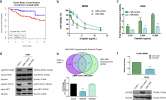
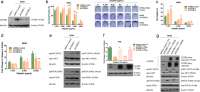
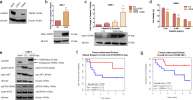
Bissey, Law, Bruce et al
Oncogenesis (2018) 7 (5), 40 DOI: 10.1038/s41389-018-0050-x
AI Summary: OriGene products pCMV6-TGFBI-Myc and pCMV6-XL5-TGFBI (non-tagged) were used in this study to overexpress TGFBI in cell lines, enabling the investigation of TGFBI’s role in cisplatin resistance in nasopharyngeal carcinoma.
Snippet: were performed using calcium phosphate. JetPRIME (Polyplus-transfection, Graffenstaden, France) was used to transfect C666-1 for cell death assays and functional analysis in HEK293T. pCMV6-TGFBI-Myc (Origene, Rockville, MD, USA), pCMV6-XL5-TGFBI non-tagged (Origene), pcDNA3.1-beta-3 (Addgene plasmid #27289;from Timothy Springer, Addgene, Cambridge, MA, USA), pCX-EGFP beta5ΔC (Addgene plasmid #14;....
c-Jun/AP-1 overexpression reprograms ERα signaling related to tamoxifen response in ERα-positive breast cancer
He, Sinha, Fan et al
Oncogene (2018)
He, Sinha, Fan et al
Oncogene (2018)
AI Summary: OriGene products contributed to this study by providing the c-Jun expression plasmid (RC208307) and c-Jun shRNA (TL313337), which were used to manipulate c-Jun levels in breast cancer cells to investigate its role in ERα signaling and tamoxifen response.
Showing 1-4 of 4 papers.
Powered by BizGenius
*Delivery time may vary from web posted schedule. Occasional delays may occur due to unforeseen
complexities in the preparation of your product. International customers may expect an additional 1-2 weeks
in shipping.
Related Products
- Price:
- Actual Price:
Welcome to OriGene AI!
I'm your AI-powered guide to everything OriGene.
Ask me anything:
- Product specs
- Ordering help
- Technical questions
- How to find exactly what your experiment needs
Prefer a live agent? Connect with us by clicking the green chat icon, as seen in the image below or email our team at custsupport@origene.com.
