
DDK (FLAG) mouse monoclonal antibody, clone OTI11C3


$200.00
In Stock*
Specifications
| Product Data | |
| Clone Name | OTI11C3 |
|---|---|
| Application | ICC, IF, WB |
| Recommended Dilution | WB 1:4000 |
| Reactivity | DDK (FLAG tag): DYKDDDDK |
| Antibody Host | Mouse |
| Clonality | Monoclonal |
| Immunogen | Anti-DDK monoclonal antibody is produced by immunizing mice with a synthetic peptide coupled to KLH |
| Isotype | IgG1 |
| Formulation | PBS (pH7.3) containing 1% BSA, 50% glycerol and 0.02% sodium azide |
| Concentration | 1 mg/ml |
| Conjugation | Unconjugated |
| Storage | Store at -20°C. |
| Stability | Stable for 1 year at -20°C from date of shipment. |
| Shipping | Blue Ice |
| Note | This anti-DDK (FLAG) antibody recognizes both N-terminus and C-terminus DDK tags. |
Reviews


Documents
| Product Manuals |
| FAQs |
| SDS |
Resources
Citations
The circadian gene Dec2 promotes pancreatic cancer progression and dormancy through immune evasion
Wang, Harris, Dudgeon et al
Dev Cell (2026)
Wang, Harris, Dudgeon et al
Dev Cell (2026)
Cited by 2
Exome Sequencing Reveals the Genetic Architecture of Non-syndromic Orofacial Clefts and Identifies BOC as a Novel Causal Gene
He, Yu, Jiao et al
Adv Sci (Weinh) (2025)
He, Yu, Jiao et al
Adv Sci (Weinh) (2025)
Cited by 4
Enhanced radiotherapy susceptibility in NSCLC through palbociclib-mediated PP5 inhibition
Huang, Chen, Chen et al
Biochim Biophys Acta Mol Cell Res (2024) 1872 (2), 119884 DOI: 10.1016/j.bbamcr.2024.119884
Huang, Chen, Chen et al
Biochim Biophys Acta Mol Cell Res (2024) 1872 (2), 119884 DOI: 10.1016/j.bbamcr.2024.119884
AI Summary: In this study, OriGene's Mouse anti-DDK antibody (TA180144) was used to detect tagged proteins, contributing to the investigation of PP5's role in enhancing radiotherapy susceptibility in NSCLC.
Snippet: Mouse anti-DDK (TA180144) and FITC-anti-γ-H2AX (Ser139) antibody (#613404) and its isotype control (#400110) were purchased from OriGene Technologies, Inc. (Rockville, MD, USA) and BioLegend (San Diego, CA, USA), respectively. Secondary antibodies anti-rabbit-HRP (111-035-003), anti-mouse-HRP (115-035-003), and anti-goat-HRP (112-003-035) were from Jackson ImmunoResearch (West Grove, PA, USA)
The circadian gene Dec2 promotes pancreatic cancer dormancy by regulating tumor cell antigen presentation to facilitate immune evasion
Harris, Wang, Dudgeon et al
bioRxiv (2024)
Harris, Wang, Dudgeon et al
bioRxiv (2024)
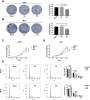
Progerin Inhibits the Proliferation and Migration of Melanoma Cells by Regulating the Expression of Paxillin
Liu, Huang, Luo et al
Onco Targets Ther (2024) 17, 227-242 DOI: 10.2147/OTT.S442504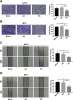
Liu, Huang, Luo et al
Onco Targets Ther (2024) 17, 227-242 DOI: 10.2147/OTT.S442504
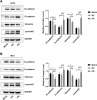
AI Summary: OriGene's Flag antibody (#TA180144) was used in this study to detect Flag-tagged proteins in Western blot experiments, contributing to the analysis of progerin and paxillin expression in melanoma cells.
Snippet: was blocked with 5% milk in TBST and then incubated with specific primary antibodies: LaminA/C (1:1000, ab169532, Abcam, USA), Paxillin (1:1000, #2542, Cell Signaling, USA), Flag (1:1000, #TA180144, OriGene, USA), N-cadherin (1:2000, 66219-1-Ig, Proteintech, USA), E-cadherin (1:5000, 20874-1-AP, Proteintech, China), vimentin (1:10000, 60330-1-1g, Proteintech, USA), and GAPDH (1:10000, 60004-1-Ig,
SPTSSA variants alter sphingolipid synthesis and cause a complex hereditary spastic paraplegia
Srivastava, Shaked, Gable et al
Brain (2023)
Srivastava, Shaked, Gable et al
Brain (2023)
Cited by 37
AI Summary: OriGene products contributed to this study by providing plasmids for expression of SPTLC1 and SPTLC2, which were used to investigate the effects of SPTSSA variants on serine palmitoyltransferase function and sphingolipid synthesis.
Snippet: Sphingolipids are a diverse family of lipids with critical structural and signalling functions in the mammalian nervous system, where they are abundant in myelin Save;Plasmids for expression of SPTLC1 and SPTLC2 were purchased from OriGene. Plasmids for expressing NubG-HA-tagged SPTSSA and Nu
Showing 1-6 of 27 papers.
Powered by BizGenius
*Delivery time may vary from web posted schedule. Occasional delays may occur due to unforeseen
complexities in the preparation of your product. International customers may expect an additional 1-2 weeks
in shipping.
Related Products
- Price:
- Actual Price:
Welcome to OriGene AI!
I'm your AI-powered guide to everything OriGene.
Ask me anything:
- Product specs
- Ordering help
- Technical questions
- How to find exactly what your experiment needs
Prefer a live agent? Connect with us by clicking the green chat icon, as seen in the image below or email our team at custsupport@origene.com.
