
p53 (TP53) Mouse Monoclonal Antibody [Clone ID: UMAB62]


$224.00
In Stock*
Specifications
| Product Data | |
| Clone Name | UMAB62 |
|---|---|
| Application | 10k-ChIP, IF, IHC, WB |
| Recommended Dilution | IHC 1:50~100 |
| Reactivity | Human |
| Antibody Host | Mouse |
| Isotype | IgG1 |
| Clonality | Monoclonal |
| Immunogen | Full length human recombinant protein of human TP53 (NP_000537) produced in HEK293T cell. |
| Buffer | PBS (pH 7.3) containing 1% BSA, 50% glycerol and 0.02% sodium azide |
| Concentration | 0.5~1.0 mg/ml (Lot Dependent) |
| Purification | Purified from mouse ascites fluids or tissue culture supernatant by affinity chromatography (protein A/G) |
| Conjugation | Unconjugated |
| Storage | Store at -20°C as received. |
| Stability | Stable for 12 months from date of receipt. |
| Shipping | Blue Ice |
| Predicted Protein Size | 43.5 kDa |
| Gene Name | tumor protein p53 |
| Database Link | |
| Background | The protein encoded by this gene is a member of the STAT family of transcription factors. In response to cytokines and growth factors, STAT family members are phosphorylated by the receptor associated kinases, and then form homo- or heterodimers that translocate to the cell nucleus where they act as transcription activators. This protein is activated by, and mediates the responses of many cell ligands, such as IL2, IL3, IL7 GM-CSF, erythropoietin, thrombopoietin, and different growth hormones. Activation of this protein in myeloma and lymphoma associated with a TEL/JAK2 gene fusion is independent of cell stimulus and has been shown to be essential for the tumorigenesis. The mouse counterpart of this gene is found to induce the expression of BCL2L1/BCL-X(L), which suggests the antiapoptotic function of this gene in cells. provided by RefSeq, Jul 2008 |
| Synonyms | BCC7; LFS1; P53; TRP53 |
| Reference Data | |
| Protein Categories | ADC Targets, Cancer: Bladder, Cancer: Brain and CNS, Cancer: Endocrine, Cancer: Gastrointestinal, Cancer: Gynecologic, Cancer: Haematopoietic and Lymphoid, Cancer: Head and Neck, Cancer: Lung, Cancer: Sarcoma, Cancer: Skin, Cardiovascular diseases, Growth Factors, Intracellular Proteins, Nervous system Diseases, Transciption Factors |
| Protein Families | Druggable Genome, Stem cell - Pluripotency, Transcription Factors |
| Protein Pathways | Amyotrophic lateral sclerosis (ALS), Apoptosis, Basal cell carcinoma, Bladder cancer, Cell cycle, Chronic myeloid leukemia, Colorectal cancer, Endometrial cancer, Glioma, Huntington's disease, MAPK signaling pathway, Melanoma, Neurotrophin signaling pathway, Non-small cell lung cancer, p53 signaling pathway, Pancreatic cancer, Pathways in cancer, Prostate cancer, Small cell lung cancer, Thyroid cancer, Wnt signaling pathway |
Reviews


Documents
| Product Manuals |
| FAQs |
| SDS |
Resources
Other "UMAB62" antibodies (2)
| SKU | Description | Size | Price | |
|---|---|---|---|---|
| UM500053 | Purified P53 (TP53) mouse monoclonal antibody, clone UMAB62 | 100 ul |
$610.00
|
|
| UM500053CF | Carrier-free (BSA/glycerol-free) Purified P53 (TP53) mouse monoclonal antibody, clone UMAB62 | 100 ug |
$680.00
|
|
Citations
TRIM65 Promotes Cervical Cancer Through Selectively Degrading p53-Mediated Inhibition of Autophagy and Apoptosis
Wang, Mao, Guan et al
Front Oncol (2022) 12, 853935 DOI: 10.3389/fonc.2022.853935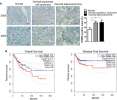
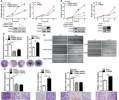
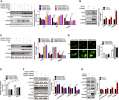
Wang, Mao, Guan et al
Front Oncol (2022) 12, 853935 DOI: 10.3389/fonc.2022.853935
Cited by 23
AI Summary: In this paper, OriGene products—specifically the TRIM65 shRNA (OriGene, TL320091) and TRIM65 overexpression plasmid (OriGene, RC215234)—were used to manipulate TRIM65 expression in cervical cancer cells, enabling the authors to investigate TRIM65’s role in promoting cancer progression through p53 degradation.
Snippet: as a garbage machine for digestion, whereas the ubiquitin mediates the protein degradation by proteasomes (8). Studies indicated that autophagy has a critical inhibitory effect on HPV infection in tumorigenesis and development of cervical cancer (9). However, HPV also suppressed autophagy upon infection to avoid early clearance of viral particles, resulting in aggravation of infectivity by acceler
Prediction model of lymphovascular invasion based on clinicopathological factors in Chinese patients with invasive breast cancer
Shen, Wu, Xiao et al
Medicine (Baltimore) (2018) 97 (43), e12973 DOI: 10.1097/MD.0000000000012973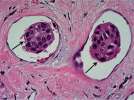
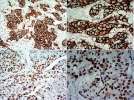
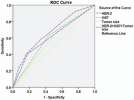
Shen, Wu, Xiao et al
Medicine (Baltimore) (2018) 97 (43), e12973 DOI: 10.1097/MD.0000000000012973
Cited by 18
AI Summary: OriGene products, specifically the anti-HER-2 antibody (TA808229), anti-Ki67 antibody (TA500294), and anti-P53 antibody (TA802901), were used for immunohistochemical detection of protein expression in breast cancer tissue samples, contributing to the evaluation of clinicopathological risk factors for lymphovascular invasion in this study.
Showing 1-2 of 2 papers.
Powered by BizGenius
*Delivery time may vary from web posted schedule. Occasional delays may occur due to unforeseen
complexities in the preparation of your product. International customers may expect an additional 1-2 weeks
in shipping.
Related Products
- Price:
- Actual Price:
Welcome to OriGene AI!
I'm your AI-powered guide to everything OriGene.
Ask me anything:
- Product specs
- Ordering help
- Technical questions
- How to find exactly what your experiment needs
Prefer a live agent? Connect with us by clicking the green chat icon, as seen in the image below or email our team at custsupport@origene.com.
