
p400 (EP400) (NM_015409) Human Tagged ORF Clone
$994.00
3 Weeks*
Specifications
| Product Data | |
| Type | Human Tagged ORF Clone |
|---|---|
| Target Symbol | p400 |
| Synonyms | CAGH32; P400; TNRC12 |
| Vector | pCMV6-AC-GFP |
| E. coli Selection | Ampicillin (100 ug/mL) |
| Mammalian Cell Selection | Neomycin |
| Sequence Data | |
| Restriction Sites | SgfI-RsrII Cloning Scheme for this gene | |
| ACCN | NM_015409 |
| ORF Size | 9369 bp |
| OTI Disclaimer | The molecular sequence of this clone aligns with the gene accession number as a point of reference only. However, individual transcript sequences of the same gene can differ through naturally occurring variations (e.g. polymorphisms), each with its own valid existence. This clone is substantially in agreement with the reference, but a complete review of all prevailing variants is recommended prior to use. More info |
| OTI Annotation | This clone was engineered to express the complete ORF with an expression tag. Expression varies depending on the nature of the gene. |
| Components | The ORF clone is ion-exchange column purified and shipped in a 2D barcoded Matrix tube containing 10ug of transfection-ready, dried plasmid DNA (reconstitute with 100 ul of water). |
| Reconstitution Method | 1. Centrifuge at 5,000xg for 5min. 2. Carefully open the tube and add 100ul of sterile water to dissolve the DNA. 3. Close the tube and incubate for 10 minutes at room temperature. 4. Briefly vortex the tube and then do a quick spin (less than 5000xg) to concentrate the liquid at the bottom. 5. Store the suspended plasmid at -20°C. The DNA is stable for at least one year from date of shipping when stored at -20°C. |
| Note | Plasmids are not sterile. For experiments where strict sterility is required, filtration with 0.22um filter is required. |
| Shipping | Ambient |
| Reference Data | |
| RefSeq | NM_015409.5 |
| RefSeq Size | 12265 bp |
| RefSeq ORF | 9372 bp |
| Locus ID | 57634 |
| UniProt ID | Q96L91 |
| Cytogenetics | 12q24.33 |
| Summary | Component of the NuA4 histone acetyltransferase complex which is involved in transcriptional activation of select genes principally by acetylation of nucleosomal histones H4 and H2A. This modification may both alter nucleosome - DNA interactions and promote interaction of the modified histones with other proteins which positively regulate transcription. May be required for transcriptional activation of E2F1 and MYC target genes during cellular proliferation. The NuA4 complex ATPase and helicase activities seem to be, at least in part, contributed by the association of RUVBL1 and RUVBL2 with EP400. May regulate ZNF42 transcription activity. Component of a SWR1-like complex that specifically mediates the removal of histone H2A.Z/H2AFZ from the nucleosome.UniProtKB/Swiss-Prot Function |
Reviews


Documents
| Product Manuals |
| FAQs |
| SDS |
Resources
Citations
The human chromatin remodeling complex p400 restricts HIV-1 transcription in a Tat-dependent manner
Li, Ma, Mori et al
Nucleic Acids Res (2025) 53 (22) DOI: 10.1093/nar/gkaf1323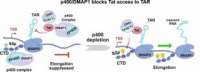
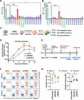
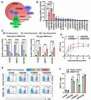
Li, Ma, Mori et al
Nucleic Acids Res (2025) 53 (22) DOI: 10.1093/nar/gkaf1323
Cited by 3
AI Summary: OriGene’s pCMV6-Entry vector containing EP400-Flag ORF (#RG221066) was used to express EP400 in functional studies investigating the role of the p400 complex in restricting HIV-1 transcription.
Snippet: ectors pMKO.1-puro (Addgene, #8452) and pLKO-Tet-on (Addgene, #21915) were used for cloning, with gene-specific sequences listed in Supplementary Table S1. EP400-Flag ORF was cloned into pCMV6-Entry (Origene, #RG221066). HA-tagged DMAP1 was cloned into pcDNA3.1(+), and DMAP1 cDNA was also cloned into IRES-mCherry (Addgene, #80139) for Jurkat overexpression. pFL-Tat(86)-Flag and deletion mutants we
Showing 1-1 of 1 papers.
Powered by BizGenius
*Delivery time may vary from web posted schedule. Occasional delays may occur due to unforeseen
complexities in the preparation of your product. International customers may expect an additional 1-2 weeks
in shipping.
Related Products
- Price:
- Actual Price:
Welcome to OriGene AI!
I'm your AI-powered guide to everything OriGene.
Ask me anything:
- Product specs
- Ordering help
- Technical questions
- How to find exactly what your experiment needs
Prefer a live agent? Connect with us by clicking the green chat icon, as seen in the image below or email our team at custsupport@origene.com.
