
pLenti-C-mGFP-P2A-Puro Lentiviral Gene Expression Vector

$880.00
In Stock*
Specifications
| Product Data | |
| C-Tag | mGFP |
|---|---|
| E. coli Selection | Chloramphenicol (34 ug/mL) |
| Mammalian Cell Selection | Puromycin |
| Expression Promoter | CMV |
| Features | This Lenti vector is a third generation lentiviral vector.
|
| Download Vector Sequence | |
| Schematic of the multiple cloning sites |

|
| Shipping | Ambient |
Reviews


Documents
Resources
Citations
Phosphoproteomic dysregulation promotes tumor proliferation in Cushing's disease
Asuzu, Bhatt, Mullaney et al
Proc Natl Acad Sci U S A (2026) 123 (40), e2528513123 DOI: 10.1073/pnas.2528513123
Asuzu, Bhatt, Mullaney et al
Proc Natl Acad Sci U S A (2026) 123 (40), e2528513123 DOI: 10.1073/pnas.2528513123
AI Summary: OriGene’s PPP1R17-GFP and GFP-only lentiviral vectors helped researchers test how PPP1R17 overexpression promotes pituitary cell proliferation in Cushing’s disease.
Snippet: Corticotroph cells (mCort) were harvested as previously described (28) from female BALB/c mice aged 6 to 8 wk (Taconic Biosciences, USA) (33) Lentiviral vectors encoding PPP1R17-GFP or GFP-only were obtained from Origene (Cat# RC207007L4V and PS100093)
FBXO28 targets SNAI1 for ubiquitin-proteasomal degradation in non-small cell lung cancer
Lin, Qiao, Liu et al
J Biol Chem (2026)
Lin, Qiao, Liu et al
J Biol Chem (2026)
AI Summary: OriGene products—including the pCMV6-FBXO28-Myc-Flag, pLenti-C-mGFP-P2A, pRS-shSNAI1, pRS-shSNAI2, and pRS-shRNA control plasmids—were used in this study to manipulate gene expression and investigate the role of FBXO28 in regulating SNAI1 stability and metastasis in non-small cell lung cancer.
Intracellular SPP1 inhibits FNDC5 to activate DEGS1-regulated ceramide metabolism in silicosis
Li, Jin, Li et al
Journal of Pharmaceutical Analysis (2026)
Li, Jin, Li et al
Journal of Pharmaceutical Analysis (2026)
AI Summary: OriGene products contributed to this study by providing control plasmids (PS100093) and Spp1 overexpression plasmids (MR226579L4), which were used to manipulate gene expression in cell transfection experiments investigating the molecular mechanisms of silicosis.
Snippet: Cells were transfected with the following constructs, as specified in individual experiments: control plasmids (PS100093, OriGene Technologies Inc., Rockville, MD, USA), Spp1 overexpression plasmids (MR226579L4, OriGene Technologies Inc., Rockville,
Intratumoral microbiota and host genotype cooperatively shape neutrophil cytotoxic functions in colorectal cancer
Sorrenti, Governa, Bressan et al
Cell Host Microbe (2026) 34 (3), 425-443.e11 DOI: 10.1016/j.chom.2026.02.006
Sorrenti, Governa, Bressan et al
Cell Host Microbe (2026) 34 (3), 425-443.e11 DOI: 10.1016/j.chom.2026.02.006
Cited by 9
AI Summary: OriGene products, including the pLenti-C-mGFP-P2A-Puro vector (Cat#PS100093), Human SIGLEC5 ORF clone (mGFP-tagged, Cat#RC206610L4), and Human SIGLEC14 ORF clone (mGFP-tagged, Cat#RC224202L4), were used to investigate the roles of Siglec-5 and Siglec-14 in neutrophil responses to intratumoral microbiota in colorectal cancer.
Snippet: pLenti-C-mGFP-P2A-Puro Origene Cat#PS100093 Human SIGLEC5 ORF clone (mGFP-tagged) Origene Cat#RC206610L4 Human SIGLEC14 ORF clone (mGFP-tagged) Origene Cat#RC224202L4
Targeting the STK39/ARID2 Axis to Inhibit NF-κB Signaling: A Novel Pathway for Mesenchymal Stem Cell Osteogenic Differentiation in Osteoporosis Management
Wang, Wei, Chen et al
J Musculoskelet Neuronal Interact (2026) 26 (1), 124-133 DOI: 10.22540/JMNI-26-124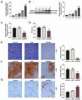
Wang, Wei, Chen et al
J Musculoskelet Neuronal Interact (2026) 26 (1), 124-133 DOI: 10.22540/JMNI-26-124
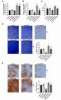
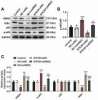
AI Summary: OriGene products, specifically the negative control siRNA (siNC; TR30023) and negative control plasmid (NC; PS100093), were used as experimental controls in gene silencing and overexpression studies to investigate the roles of ARID2 and STK39 in mesenchymal stem cell differentiation in osteoporosis research.
Snippet: ding negative controls (siNC;TR30023 and NC;PS100093), were obtained from OriGene (Rockville, MD, USA). BMSCs were allocated to the following groups: siNC, siARID2, NC + siNC, NC + siARID2, STK39 overexpression + siNC, and STK39 overexpression + siARID2. For transduction, 1
Renal cancer cell-derived amphiregulin recruits mesenchymal stromal cells, induces their glycolytic switch, and promotes tumour growth
Popławski, Grzanka, Skirecki et al
bioRxiv (2025)
Popławski, Grzanka, Skirecki et al
bioRxiv (2025)
AI Summary: OriGene’s pLenti-C-mGFP-P2A-Puro_AREG, pLenti-C-mGFP-P2A-Puro_FN1, and pLenti-C-mGFP-P2A-Puro vectors were used to manipulate gene expression in renal cancer and mesenchymal stromal cells, enabling the study of amphiregulin’s role in MSC recruitment, metabolic reprogramming, and tumour growth.
Snippet: Vectors pLenti-C-mGFP-P2A-Puro_AREG (Origene CAT#: RC203150L4), pLenti-C-mGFP-P2A-Puro_FN1 (Origene CAT#: RC212860L4), and empty vector pLenti-C-mGFP-P2A-Puro (CAT#: PS100093) were purchased from Origene (Rockville, MD)
Showing 1-6 of 39 papers.
Powered by BizGenius
*Delivery time may vary from web posted schedule. Occasional delays may occur due to unforeseen
complexities in the preparation of your product. International customers may expect an additional 1-2 weeks
in shipping.
Related Products
- Price:
- Actual Price:
Welcome to OriGene AI!
I'm your AI-powered guide to everything OriGene.
Ask me anything:
- Product specs
- Ordering help
- Technical questions
- How to find exactly what your experiment needs
Prefer a live agent? Connect with us by clicking the green chat icon, as seen in the image below or email our team at custsupport@origene.com.
