
pCMV6-AC-3DDK Mammalian Expression Vector

$670.00
In Stock*
Specifications
| Product Data | |
| C-Tag | 3DDK |
|---|---|
| E. coli Selection | Ampicillin (100 ug/mL) |
| Mammalian Cell Selection | Neomycin |
| Expression Promoter | CMV |
| Features |
|
| Download Vector Sequence | |
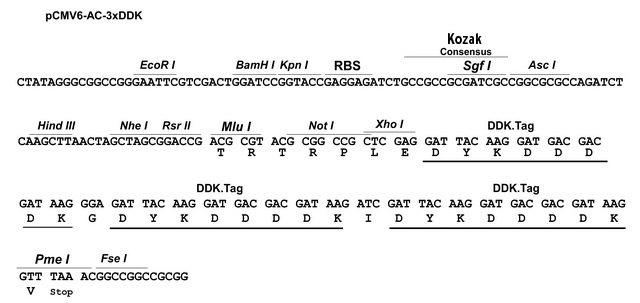
| Schematic of the multiple cloning sites |
|
| Shipping | Ambient |
Reviews


Documents
Resources
Citations
RSPO2 Coordinates with GDF9:BMP15 Heterodimers to Promote Granulosa Cell and Oocyte Development in Mice
Wang, Li, You et al
Adv Sci (Weinh) (2025)
Wang, Li, You et al
Adv Sci (Weinh) (2025)
Cited by 9
AI Summary: OriGene’s pCMV6-AC-3DDK vector (Cat# PS100057) was used to clone coding regions for transfection experiments in mouse granulosa cells, enabling the functional studies of RSPO2 and its coordination with GDF9:BMP15 in oocyte and granulosa cell development.
Snippet: 6 coding regions were cloned into the pCMV6-AC-3DDK vector (Cat# PS100057, Origene, Rockville, Maryland, USA). Mouse granulosa cells at 50–60% confluence were transfected with 1.0 µg of each plasmid using Lipo6000 transfection reagent (Cat # C0526, Beyotime, China). …
LSM14B is an Oocyte-Specific RNA-Binding Protein Indispensable for Maternal mRNA Metabolism and Oocyte Development in Mice
Li, Zhao, Yang et al
Adv Sci (Weinh) (2023) 10 (18), e2300043 DOI: 10.1002/advs.202300043
Li, Zhao, Yang et al
Adv Sci (Weinh) (2023) 10 (18), e2300043 DOI: 10.1002/advs.202300043
Cited by 33
AI Summary: OriGene's pCMV6-AC-3DDK vector and pCMV6-AN-mKate plasmid were used to generate reporter constructs for functional assays investigating the role of LSM14B in maternal mRNA regulation during mouse oocyte development.
Snippet: To prepare the construct for this assay, the sequence of fluorescent protein mKate was first amplified by PCR using the pCMV6‐AN‐mKate plasmid DNA as template, and cloned into pCMV6‐AC‐3DDK (Origene, USA) vector. The resulted pCMV6‐AC‐mKate‐3DDK construct was then used as the destination vector for cloning the Mastl‐3′UTR. Mastl‐3′UTR was amplified by PCR using the mouse ooc;- Mammalian oogenesis ...
SARS-CoV-2 spike protein enhances MAP4K3/GLK-induced ACE2 stability in COVID-19
Chuang, Hsueh, Hsu et al
EMBO Mol Med (2022) 14 (9), e15904 DOI: 10.15252/emmm.202215904
Chuang, Hsueh, Hsu et al
EMBO Mol Med (2022) 14 (9), e15904 DOI: 10.15252/emmm.202215904
Cited by 24
AI Summary: OriGene’s pCMV6-AC-3DDK vector was used to clone and express human ACE2 cDNA and its mutants, enabling the study of ACE2 stability and function in the context of SARS-CoV-2 infection in this research.
Snippet: tagged or 3xMyc‐tagged human ACE2 cDNA (NCBI accession number: NM_021804.3) were generated by cloning the cDNA from HCC827 cells by RT–PCR and then subcloning into the vector pCMV6‐AC‐3DDK (Origene) or pCMV‐3Tag‐9 (Agilent Technologies). The plasmids encoding ACE2 (S776A), ACE2 (S783A), ACE2 (S776/783A), ACE2 (S776E), ACE2 (S783E), ACE2 (S776/783E), and ACE2 (Y781F) were generated by
Compounds targeting OSBPL7 increase ABCA1-dependent cholesterol efflux preserving kidney function in two models of kidney disease
Wright, Varona Santos, Kemmer et al
Nat Commun (2021) 12 (1), 4662 DOI: 10.1038/s41467-021-24890-3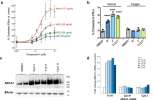
Wright, Varona Santos, Kemmer et al
Nat Commun (2021) 12 (1), 4662 DOI: 10.1038/s41467-021-24890-3
Cited by 62
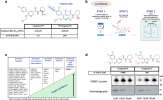
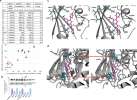
AI Summary: OriGene products, specifically the OSBPL7 Myc-DDK-tagged expression plasmid and the anti-DDK (FLAG) antibody, were used in this study to overexpress and detect OSBPL7 protein, enabling the identification of OSBPL7 as the molecular target of novel compounds that enhance cholesterol efflux and protect kidney function.
Echinoderm Microtubule Associated Protein Like 1 Is Indispensable for Oocyte Spindle Assembly and Meiotic Progression in Mice
Yin, Zhang, Wang et al
Front Cell Dev Biol (2021) 9, 687522 DOI: 10.3389/fcell.2021.687522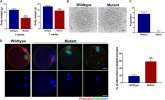
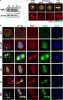
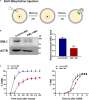
Yin, Zhang, Wang et al
Front Cell Dev Biol (2021) 9, 687522 DOI: 10.3389/fcell.2021.687522
Cited by 17
AI Summary: In this study, OriGene’s EML1-specific morpholinos (Gene-specific morpholino oligos) were used to knock down EML1 expression in mouse oocytes, enabling the authors to investigate EML1’s essential role in oocyte spindle assembly and meiotic progression.
DUSP11 Attenuates Lipopolysaccharide-Induced Macrophage Activation by Targeting TAK1
Yang, Chuang, Tsai et al
J. Immunol. (2020)
Yang, Chuang, Tsai et al
J. Immunol. (2020)
Cited by 18
Showing 1-6 of 10 papers.
Powered by BizGenius
*Delivery time may vary from web posted schedule. Occasional delays may occur due to unforeseen
complexities in the preparation of your product. International customers may expect an additional 1-2 weeks
in shipping.
Related Products
- Price:
- Actual Price:
Welcome to OriGene AI!
I'm your AI-powered guide to everything OriGene.
Ask me anything:
- Product specs
- Ordering help
- Technical questions
- How to find exactly what your experiment needs
Prefer a live agent? Connect with us by clicking the green chat icon, as seen in the image below or email our team at custsupport@origene.com.
