
pCMV6-AN-mGFP Mammalian Expression Vector

$670.00
In Stock*
Specifications
| Product Data | |
| N-Tag | mGFP |
|---|---|
| E. coli Selection | Ampicillin (100 ug/mL) |
| Mammalian Cell Selection | Neomycin |
| Expression Promoter | CMV |
| Features |
|
| Download Vector Sequence | |
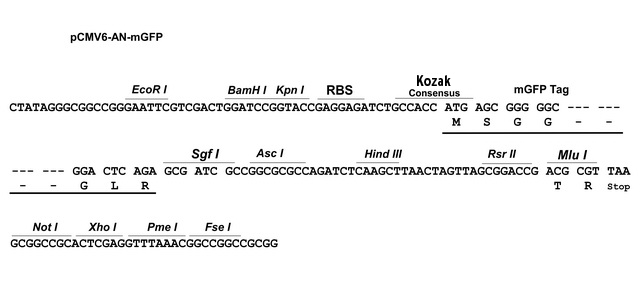
| Schematic of the multiple cloning sites |
|
| Shipping | Ambient |
Reviews


Documents
Resources
Citations
Detection by super-resolution microscopy of viral proteins inside bloodborne extracellular vesicles
Singh, Santos, Herndon et al
Extracell Vesicles Circ Nucleic Acids (2023) 4 (4), 557-67 DOI: 10.20517/evcna.2023.46
Singh, Santos, Herndon et al
Extracell Vesicles Circ Nucleic Acids (2023) 4 (4), 557-67 DOI: 10.20517/evcna.2023.46
Cited by 19
Snippet: Using Lipofectamine 3000 (#L3000008, Thermo Fisher Scientific), FEMX-I cells were transfected with the pCMV6-AN-mGFP mammalian expression vector (#PS100048, OriGene) to express green fluorescent protein (GFP). Transfected cells were selected by introducing 400 µg/mL of Geneticin (G418 Sulfate, #10131027, Thermo Fisher Scientific) into the culture medium. Selection antibiotics were removed from the
The PRR14 heterochromatin tether encodes modular domains that mediate and regulate nuclear lamina targeting
Dunlevy, Medvedeva, Wilson et al
J Cell Sci (2020) 133 (10) DOI: 10.1242/jcs.240416
Dunlevy, Medvedeva, Wilson et al
J Cell Sci (2020) 133 (10) DOI: 10.1242/jcs.240416
Cited by 28
AI Summary: In this study, OriGene products, specifically the PRR14 Myc-DDK tagged cDNA (OriGene RC224601) and PPP2R1A Myc-DDK tagged cDNA (OriGene RC200176), were used to express and analyze the roles of PRR14 and PPP2R1A in investigating the mechanisms of nuclear lamina targeting and regulation.
MAP4K3/GLK promotes lung cancer metastasis by phosphorylating and activating IQGAP1
Chuang, Chang, Teng et al
Cancer Res. (2019)
Chuang, Chang, Teng et al
Cancer Res. (2019)
AI Summary: OriGene products, specifically the pCMV6-AN-3DDK, pCMV6-AC-HA, pCMV6-AC-mCFP, and pCMV6-AN-mGFP expression vectors, were used to generate tagged GLK constructs for studying the interaction and functional effects of GLK and IQGAP1 in lung cancer metastasis.
Snippet: the Flag-tagged clone into the vector pCMV6-AN-3DDK or pCMV6-AC-HA (OriGene,) insert from the HA-tagged GLK plasmid into the vector pCMV6-AC-mCFP and pCMV6-AN-mGFP (OriGene), respectively. The plasmids expressing YFP-fused
Domain analysis of PNKP/XRCC1 interactions: influence of genetic variants of XRCC1
Mani, Mermershtain, Abdou et al
J. Biol. Chem. (2018)
Mani, Mermershtain, Abdou et al
J. Biol. Chem. (2018)
AI Summary: OriGene’s pEX-N-His bacterial expression plasmid was used to clone and express full-length XRCC1 and its 166-436 residue fragment, enabling the study of XRCC1-PNKP interactions and the functional impact of XRCC1 genetic variants in this research.
Snippet: The selected colonies were checked by DNA sequence verification. The cDNA encoding full- length XRCC1 and residues 166-436 was amplified by PCR and inserted into the bacterial expression plasmid pEX-N-His (OriGene, Rockville, MD) using AscI-RsrII restriction
Phosphorylation of MCPH1 isoforms during mitosis followed by isoform-specific degradation by APC/C-CDH1
Meyer, Dunn, Vidler et al
FASEB J. (2018)
Meyer, Dunn, Vidler et al
FASEB J. (2018)
AI Summary: OriGene’s MCPH1-L expression plasmid (PS100048) was used to generate an N-terminal GFP-tagged MCPH1-L construct, enabling the study of MCPH1 isoform regulation during mitosis in this research.
Snippet: Texas, USA). This plas- mid was used as a template to subclone MCPH1-L into an ex- pression plasmid with an N-terminal green fluorescent protein (GFP) tag (PS100048;OriGene Technologies, Rockville, MD, USA). Plasmids
The Protein Encoded by the CCDC170 Breast Cancer Gene Functions to Organize the Golgi-Microtubule Network
Jiang, Li, Poleshko et al
EBioMedicine (2017) 22, 28-43 DOI: 10.1016/j.ebiom.2017.06.024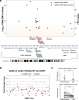
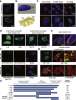
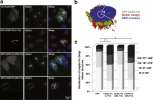
Jiang, Li, Poleshko et al
EBioMedicine (2017) 22, 28-43 DOI: 10.1016/j.ebiom.2017.06.024
Cited by 37
AI Summary: In this study, OriGene products—including the CCDC170 Myc-DDK-tagged cDNA (RC210885) and CCDC170-specific shRNA (TL312285)—were used to manipulate CCDC170 gene expression, enabling the authors to investigate its role in organizing the Golgi-microtubule network in breast cancer cells.
Showing 1-6 of 20 papers.
Powered by BizGenius
*Delivery time may vary from web posted schedule. Occasional delays may occur due to unforeseen
complexities in the preparation of your product. International customers may expect an additional 1-2 weeks
in shipping.
Related Products
- Price:
- Actual Price:
Welcome to OriGene AI!
I'm your AI-powered guide to everything OriGene.
Ask me anything:
- Product specs
- Ordering help
- Technical questions
- How to find exactly what your experiment needs
Prefer a live agent? Connect with us by clicking the green chat icon, as seen in the image below or email our team at custsupport@origene.com.
