
pCMV6-AC-mGFP Mammalian Expression Vector

$670.00
In Stock*
Specifications
| Product Data | |
| C-Tag | mGFP |
|---|---|
| E. coli Selection | Ampicillin (100 ug/mL) |
| Mammalian Cell Selection | Neomycin |
| Expression Promoter | CMV |
| Features |
|
| Download Vector Sequence | |
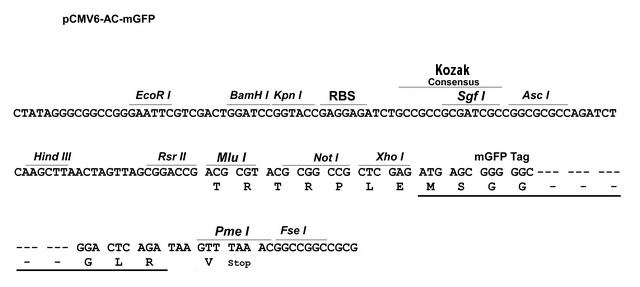
| Schematic of the multiple cloning sites |
|
| Shipping | Ambient |
Reviews


Documents
Resources
Citations
eIF2B localisation and its regulation during the integrated stress response is cell-type specific
Hanson, Ribeiro de Oliveira, Cross et al
iScience (2024)
Hanson, Ribeiro de Oliveira, Cross et al
iScience (2024)
Cited by 6
AI Summary: OriGene products, specifically the pCMV6-AC-tGFP plasmid vectors encoding EIF2B5 and EIF2S1, were used to generate and verify expression constructs for studying eIF2B localisation and regulation in this research.
Snippet: pCMV6-AC-tGFP plasmid vector encoding EIF2B5 and EIF2S1 was purchased from 697 OriGene (Rockville, Maryland, USA). The coding open reading frame of EIF2B5 from 698 the pCMV6-AC-tGFP vector was cloned into an empty pCMV6-AC-mGFP and empty 699 pCMV6-AC-mRFP vectors. The constructs were verified by sequencing
Mutations of the DNA repair gene PNKP in a patient with microcephaly, seizures, and developmental delay (MCSZ) presenting with a high-grade brain tumor
Jiang, Murray, Cole et al
Sci Rep (2022) 12 (1), 5386 DOI: 10.1038/s41598-022-09097-w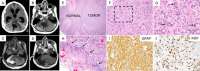
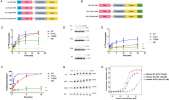
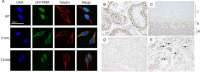
Jiang, Murray, Cole et al
Sci Rep (2022) 12 (1), 5386 DOI: 10.1038/s41598-022-09097-w
Cited by 14
AI Summary: In this study, OriGene products including the PNKP Myc-DDK-tagged expression plasmid (OriGene RC221591) and PNKP-specific shRNA (OriGene TL313527) were used to investigate the functional effects of patient-derived PNKP mutations on protein expression, subcellular localization, and DNA repair activity.
Snippet: ional NES responsible for relocalizing NPM to the cytoplasm. Expression of mutant PNKP proteins revealed several consequences that together raise the possibility that PNKP mutations could lead to tumorigenesis as well as MCSZ. As seen with other PNKP mutations, the level of the mutant proteins, particularly the T323M PNKP, was significantly depressed. Taking this into account together with its se
Inactivation of SERCA2 Cys674 accelerates aortic aneurysms by suppressing PPARγ
Que, Shu, Wang et al
Br J Pharmacol (2021) 178 (11), 2305-2323 DOI: 10.1111/bph.15411
Que, Shu, Wang et al
Br J Pharmacol (2021) 178 (11), 2305-2323 DOI: 10.1111/bph.15411
Cited by 19
AI Summary: In this study, OriGene’s PPARγ2 expression plasmid (Cat# RC211674) and SERCA2 expression plasmid (Cat# RC201070) were used to investigate the molecular mechanisms by which SERCA2 Cys674 inactivation accelerates aortic aneurysm formation, specifically by enabling overexpression experiments to assess the role of PPARγ and SERCA2 in smooth muscle cell phenotypic modulation.
Changes in Fluorescence Recovery After Photobleaching (FRAP) as an indicator of SOX9 transcription factor activity
Govindaraj, Hendriks, Lidke et al
Biochim Biophys Acta Gene Regul Mech (2018)
Govindaraj, Hendriks, Lidke et al
Biochim Biophys Acta Gene Regul Mech (2018)
AI Summary: OriGene products SOX9 cDNA (RC208944) and mGFP (PS100040) were used to construct SOX9-mGFP fusion proteins, enabling the study of SOX9 transcription factor activity via FRAP in this paper.
Snippet: ;The vector expressing SOX9-mGFP was constructed by cloning mGFP (PS100040, Origene) with the C-terminal of wild type SOX9 (RC208944, Origene) using SgfI and MluI restriction sites. … Non-dimerizing and non-DNA binding mutated SOX9-mGFP, A76E and W143R respectively, were generated from SOX9-mGFP by site-directed mutagenesis (210518, Agilent). …
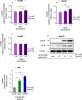
Functional Variant in the GCKR Gene Affects Lactate Levels Differentially in the Fasting State and During Hyperglycemia
López Rodríguez, Fernandes Silva, Vangipurapu et al
Sci Rep (2018) 8 (1), 15989 DOI: 10.1038/s41598-018-34501-9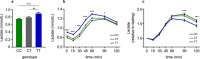
López Rodríguez, Fernandes Silva, Vangipurapu et al
Sci Rep (2018) 8 (1), 15989 DOI: 10.1038/s41598-018-34501-9
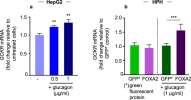
AI Summary: OriGene products contributed to this paper by providing plasmids expressing human GCK (SC127236), GKRP (SC119244), and the control vector pCMV6-XL4, which were used to transfect HepG2 cells and study the effects of GCKR expression on lactate production.
Snippet: 7 °C in 5% CO2 in a humidified incubator overnight before further manipulations. LACTATE ASSAY IN HEPG2 AND HPH CELLS HepG2 cells were cotransfected with plasmids expressing human GCK (SC127236, Origene) and GKRP (SC119244, Origene) or GCK and the control vector pCMV6-XL4 (Origene) in 1:0, 1:1 and 1:3 plasmid molar ratios (_GCK_ to _GCKR_;_GCK_ to pCMV6-XL4). All transfections were carried o
Transient receptor potential vanilloid 4 (TRPV4) activation by arachidonic acid requires protein kinase A-mediated phosphorylation
Cao, Anishkin, Zinkevich et al
J. Biol. Chem. (2018)
Cao, Anishkin, Zinkevich et al
J. Biol. Chem. (2018)
Showing 1-6 of 18 papers.
Powered by BizGenius
*Delivery time may vary from web posted schedule. Occasional delays may occur due to unforeseen
complexities in the preparation of your product. International customers may expect an additional 1-2 weeks
in shipping.
Related Products
- Price:
- Actual Price:
Welcome to OriGene AI!
I'm your AI-powered guide to everything OriGene.
Ask me anything:
- Product specs
- Ordering help
- Technical questions
- How to find exactly what your experiment needs
Prefer a live agent? Connect with us by clicking the green chat icon, as seen in the image below or email our team at custsupport@origene.com.
