
pCMV6-AN-His-HA Mammalian Expression Vector

$670.00
In Stock*
Specifications
| Product Data | |
| N-Tag | His-HA |
|---|---|
| E. coli Selection | Ampicillin (100 ug/mL) |
| Mammalian Cell Selection | Neomycin |
| Expression Promoter | CMV |
| Features |
|
| Download Vector Sequence | |
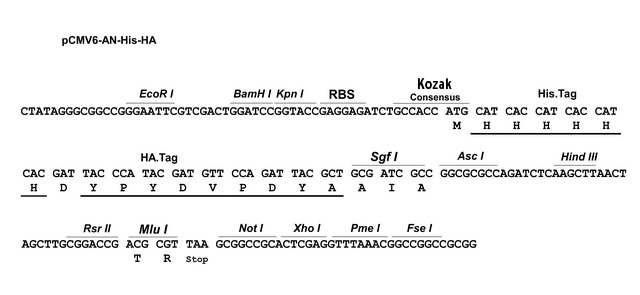
| Schematic of the multiple cloning sites |
|
| Shipping | Ambient |
Reviews


Documents
Resources
Citations
Hyperconserved Elements in Human 5'UTRs Shape Essential Post-transcriptional Regulatory Networks
Zuccotti, Peroni, Potrich et al
Front Mol Biosci (2020) 7, 220 DOI: 10.3389/fmolb.2020.00220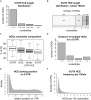
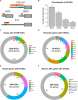
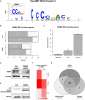
Zuccotti, Peroni, Potrich et al
Front Mol Biosci (2020) 7, 220 DOI: 10.3389/fmolb.2020.00220
Cited by 10
AI Summary: OriGene products, specifically the RBMX Myc-DDK Tagged ORF Clone (Cat# RC221307), were used in this study to overexpress RBMX and investigate its role as an RNA-binding protein regulating post-transcriptional networks via hyperconserved 5'UTR elements.
ASCs-Exosomes Recover Coupling Efficiency and Mitochondrial Membrane Potential in an in vitro Model of ALS
Calabria, Scambi, Bonafede et al
Front Neurosci (2019) 13, 1070 DOI: 10.3389/fnins.2019.01070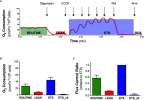
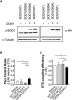
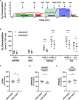
Calabria, Scambi, Bonafede et al
Front Neurosci (2019) 13, 1070 DOI: 10.3389/fnins.2019.01070
Cited by 84
AI Summary: OriGene contributed to this study by providing the human SOD1 (G93A) expression plasmid (OriGene, Cat# RC208601L4), which was used to generate the NSC-34(G93A) cell model for investigating mitochondrial dysfunction in ALS.
The Anti-Apoptotic Effect of ASC-Exosomes in an In Vitro ALS Model and Their Proteomic Analysis
Bonafede, Brandi, Manfredi et al
Cells (2019) 8 (9) DOI: 10.3390/cells8091087
Bonafede, Brandi, Manfredi et al
Cells (2019) 8 (9) DOI: 10.3390/cells8091087
AI Summary: In this study, the pCMV6-AN-His-HA plasmid (PS100017, OriGene) was used to construct a vector expressing the mutant hSOD1 gene, enabling the creation of an in vitro ALS model to investigate the neuroprotective effects of ASC-derived exosomes.
Snippet: The amplified fragment was digested with Sgf I and MluI enzymes and cloned into the pCMV6-AN-His-HA plasmid (PS100017, OriGene, Rockville, MD, USA) to give the vector pCMV6-HIS-HA-SOD1(G93A), expressing the mutant hSOD1 gene in fusion with an amino Cached
The hnRNP raly regulates PRMT1 expression and interacts with the ALS-linked protein FUS: implication for reciprocal cellular localization
Gasperini, Rossi, Cornella et al
Mol. Biol. Cell (2018)
Gasperini, Rossi, Cornella et al
Mol. Biol. Cell (2018)
AI Summary: OriGene products, specifically the pCMV6-Entry and pCMV6-HIS-HA-hFUS wt vectors, were used to generate expression constructs for c-MYC-tagged and HIS-HA-tagged human FUS protein, enabling the study of FUS interactions and localization in this research.
Snippet: polymerase (New England BioLabs) and then cloned in frame with either EGFP (pEGFP-N1, Clontech, in BglII and AgeI restriction sites), or c-MYC (pCMV6-Entry, Origene, in NheI (OriGene) to generate the vector pCMV6-HIS-HA-hFUS wt , expressing the hFUS gene
An homeotic post-transcriptional network controlled by the RNA-binding protein RBMX
Zuccotti, Peroni, Potrich et al
bioRxiv (2018)
Zuccotti, Peroni, Potrich et al
bioRxiv (2018)
Snippet: The amplified fragment was digested with 479 the SgfI and MluI restriction enzymes and cloned into the pCMV6-AN-His-HA plasmid 480 (PS100017, OriGene, Rockville, MD) to obtain the pCMV6-HIS-HA-RBMX vector, expressing 481 the gene fused with an amino-terminal polyhistidine (His) tag and a hemagglutinin (HA) epitope
HuD Is a Neural Translation Enhancer Acting on mTORC1-Responsive Genes and Counteracted by the Y3 Small Non-coding RNA
Tebaldi, Zuccotti, Peroni et al
Mol. Cell (2018) 71 (2), 256-270.e10 DOI: 10.1016/j.molcel.2018.06.032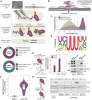
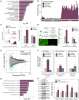
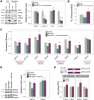
Tebaldi, Zuccotti, Peroni et al
Mol. Cell (2018) 71 (2), 256-270.e10 DOI: 10.1016/j.molcel.2018.06.032
AI Summary: OriGene contributed the pCMV6-AN-His-HA plasmid (catalog number PS100017), which was used as a recombinant DNA tool in the study to investigate the role of HuD in neural translation and mTORC1-responsive genes.
Snippet: GGTTATCAGAACTTATTAACATTAGTGTCACTAAAG TTGGTATACAACCCCCCACTGCTAAATTTGACTG GCTTTTT Köhn et al., 2015 N/A ------------------------- Recombinant DNA ------------------------- pCMV6-AN-His-HA Origene Catalog number PS100017 pCMV6-His-HA-HuD This study N/A pCMV6-His-HA-HuD (R248K) This study N/A pLenti CMV/TO His-HA-HuD This study N/A pGEM-T-Y3wt Köhn et al., 2015;... GGTTATCAGAACTTATTAACATTAGTGTCACTAAAG TTGGTATACAACCCCCCACTGCTAAATTTGACTG GCTTTTT Köhn et al., 2015 N/A ------------------------- Recombinant DNA ------------------------- pCMV6-AN-His-HA Origene Catalog number PS100017 pCMV6-His-HA-HuD This study N/A pCMV6-His-HA-HuD (R248K) This study N/A pLenti CMV/TO His-HA-HuD This study N/A pGEM-T-Y3wt Köhn et al., 2015
Showing 1-6 of 10 papers.
Powered by BizGenius
*Delivery time may vary from web posted schedule. Occasional delays may occur due to unforeseen
complexities in the preparation of your product. International customers may expect an additional 1-2 weeks
in shipping.
Related Products
- Price:
- Actual Price:
Welcome to OriGene AI!
I'm your AI-powered guide to everything OriGene.
Ask me anything:
- Product specs
- Ordering help
- Technical questions
- How to find exactly what your experiment needs
Prefer a live agent? Connect with us by clicking the green chat icon, as seen in the image below or email our team at custsupport@origene.com.
