
pCMV6-AN-His Mammalian Expression Vector

$670.00
In Stock*
Specifications
| Product Data | |
| N-Tag | His |
|---|---|
| E. coli Selection | Ampicillin (100 ug/mL) |
| Mammalian Cell Selection | Neomycin |
| Expression Promoter | CMV |
| Features |
|
| Download Vector Sequence | |
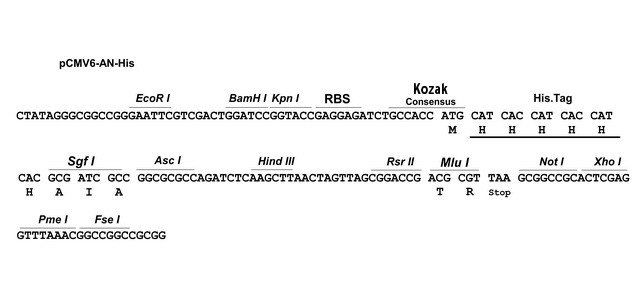
| Schematic of the multiple cloning sites |
|
| Shipping | Ambient |
Reviews


Documents
Resources
Citations
Biallelic Loss-of-Function Variants in BICD1 Are Associated with Peripheral Neuropathy and Hearing Loss
Hirsch, Chung, Novoselov et al
Int J Mol Sci (2023) 24 (10) DOI: 10.3390/ijms24108897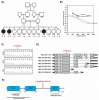
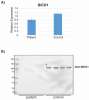
Hirsch, Chung, Novoselov et al
Int J Mol Sci (2023) 24 (10) DOI: 10.3390/ijms24108897
Cited by 1
AI Summary: OriGene products contributed to this study by providing the BICD1 cDNA construct (RG218807) and the pCMV6-AN-His mammalian expression vector (#PS100011), which were used for cloning and expression analyses to investigate the impact of BICD1 variants on protein production.
Snippet: build 11, Bio-Rad) was used to prepare the images. 4.6. BIDC1 cDNA Construct’s Western Blotting A BIDC1 cDNA construct containing the coding sequence of transcript 1 (NM_001714) was purchased from ORIGENE (RG218807). The BICD1 cDNA was subsequently cloned into the open reading frame of the pCMV6-AN-His mammalian expression vector (ORIGENE, #PS100011) using SgfI and MluI. Next, site-directed mut
Lipid transporter TMEM24/C2CD2L is a Ca2+-regulated component of ER-plasma membrane contacts in mammalian neurons
Sun, Guillén-Samander, Bian et al
PNAS (2019) 116 (12), 5775-5784 DOI: 10.1073/pnas.1820156116
Sun, Guillén-Samander, Bian et al
PNAS (2019) 116 (12), 5775-5784 DOI: 10.1073/pnas.1820156116
AI Summary: In this study, the pCMV6-An-His vector from OriGene was used to express human E-Syt1SMP-C2AB protein in Expi293 cells for liposome tethering assays, contributing to the investigation of lipid transport mechanisms at ER-plasma membrane contacts in neurons.
Snippet: Liposome Tethering Assays. Human E-Syt1SMP-C2AB (residues 93–634) was amplified by PCR and cloned using AscI and NotI sites into the pCMV6-An-His vector (Origene) for Expi293 cell expression. Human TMEM24SMP-C2 (36-414) and C2CD2SMP-C2 (39-405) were cloned using NheI and XhoI sites into pET28a vector (Novagen)
In Vitro Assays to Measure the Membrane Tethering and Lipid Transport Activities of the Extended Synaptotagmins
Bian, De Camilli
Methods Mol. Biol. (2019) 1949, 201-212 DOI: 10.1007/978-1-4939-9136-5_15
Bian, De Camilli
Methods Mol. Biol. (2019) 1949, 201-212 DOI: 10.1007/978-1-4939-9136-5_15
Snippet: 2 Materials. 2.1 Expression and Purification of E-Syt1 cyto. 1. Plasmids: pCMV6-AN-His vector (eg, OriGene) containing the region coding for residues 93-1104 of human E-Syt1 (see [5, 10] for detailed information for making this construct). 2. Expi293F cells
The inositol 5-phosphatase INPP5K participates in the fine control of ER organization
Dong, Zhu, Benedetti et al
J. Cell Biol. (2018)
Dong, Zhu, Benedetti et al
J. Cell Biol. (2018)
AI Summary: OriGene's pCMV6-AN-His vector was used to clone the coding sequences of mouse INPP5K, enabling the study of INPP5K's role in ER organization in this paper.
Snippet: Coding sequences of mouse INPP5K was cloned into a modified pCMV6-AN-His vector (OriGene), which has a GFP tag inserted just after His tag. Active site mutation D210A was constructed by site directed mutagenesis
Cutting Edge: Mitochondrial Assembly of the NLRP3 Inflammasome Complex Is Initiated at Priming
Elliott, Miller, Banoth et al
J. Immunol. (2018) 200 (9), 3047-3052 DOI: 10.4049/jimmunol.1701723

Elliott, Miller, Banoth et al
J. Immunol. (2018) 200 (9), 3047-3052 DOI: 10.4049/jimmunol.1701723
AI Summary: OriGene Technologies provided pCMV6 entry plasmids expressing murine caspase-1 and caspase-3 with C-terminal Myc and DDK (FLAG) tags, as well as empty and His-tagged vector controls, which were essential for protein expression and functional studies in this paper.
Snippet: Plasmids expressing murine caspase-1 and caspase-3 with C-terminal Myc and DDK (FLAG) tags (pCMV6 entry) and empty vectors for expression of N-terminal Myc-DDK (pCMV6-AN-Myc-DDK) and N- and C-terminal His-tagged proteins (pCMV6-AN-His and pCMV6-AC-His, respectively) were obtained from OriGene Technologies. …
Ca2+ releases E-Syt1 autoinhibition to couple ER-plasma membrane tethering with lipid transport
Bian, Saheki, De Camilli
EMBO J. (2017)
Bian, Saheki, De Camilli
EMBO J. (2017)
AI Summary: OriGene’s pCMV6-An-His vector was used to clone various E-Syt1 constructs for protein expression in Expi293 cells, enabling the functional analyses described in the study.
Snippet: The regions coding for residues 93–1,104 (E‐Syt1cyto), 93–941 (SMP‐C2ABCD), 93–634 (SMP‐C2AB), 315–1,104 (C2ABCDE), 624–973 (C2CD), and 936–1,104 (C2E) of human E‐Syt1 were amplified by PCR and cloned using AscI and NotI sites into the pCMV6‐An‐His vector (OriGene) for Expi293 cell expression
Showing 1-6 of 12 papers.
Powered by BizGenius
*Delivery time may vary from web posted schedule. Occasional delays may occur due to unforeseen
complexities in the preparation of your product. International customers may expect an additional 1-2 weeks
in shipping.
Related Products
- Price:
- Actual Price:
Welcome to OriGene AI!
I'm your AI-powered guide to everything OriGene.
Ask me anything:
- Product specs
- Ordering help
- Technical questions
- How to find exactly what your experiment needs
Prefer a live agent? Connect with us by clicking the green chat icon, as seen in the image below or email our team at custsupport@origene.com.
