
pCMV6-AC-Myc-DDK Mammalian Expression Vector

$670.00
In Stock*
Specifications
| Product Data | |
| C-Tag | Myc-DDK |
|---|---|
| E. coli Selection | Ampicillin (100 ug/mL) |
| Mammalian Cell Selection | Neomycin |
| Expression Promoter | CMV |
| Features |
|
| Download Vector Sequence | |
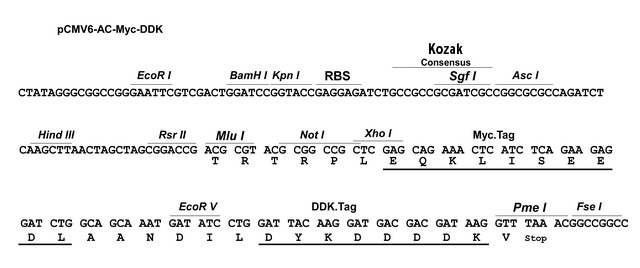
| Schematic of the multiple cloning sites |
|
| Shipping | Ambient |
Reviews


Documents
Resources
Citations
From Rare to Common: Genetic Insights into TLR7 Variants in a Multicentric Spanish Study on COVID-19 Severity
Antolí, Vargas-Parra, Sierra-Fortuny et al
J Clin Immunol (2025) 45 (1), 100 DOI: 10.1007/s10875-025-01892-0
Antolí, Vargas-Parra, Sierra-Fortuny et al
J Clin Immunol (2025) 45 (1), 100 DOI: 10.1007/s10875-025-01892-0
Cited by 6
AI Summary: OriGene products contributed to this study by providing the TLR7 expression plasmid (RC207515) and the pCMV6-AC-Myc-DDK mammalian expression vector (PS100007), which were used to generate TLR7 constructs for functional assays assessing the impact of TLR7 variants on COVID-19 severity.
Snippet: ted with 10% (v/v) fetal bovine serum (A5256701, Thermo Fisher Scientific) and maintained at 37°C with 5% CO2. Plasmids A TLR7 vector template (pCMV6-TLR7) was generated by inserting TLR7 (RC207515, OriGene, Rockville, MD, USA) into a pCMV6-AC-Myc-DDK Mammalian Expression Vector (PS100007;OriGene). The In-Fusion Snap Assembly Value Bundle (638,946, Takara Bio USA, San Jose, CA, USA) was used t
Clinical and electrophysiological features of SCN8A variants causing episodic or chronic ataxia
Lyu, Boßelmann, Johannesen et al
eBioMedicine (2023) 98, 104855 DOI: 10.1016/j.ebiom.2023.104855
Lyu, Boßelmann, Johannesen et al
eBioMedicine (2023) 98, 104855 DOI: 10.1016/j.ebiom.2023.104855
Cited by 27
AI Summary: OriGene’s human NaV1.6 channel α-subunit (PS100007) was used as the template for mutagenesis to generate TTX-insensitive SCN8A variants, enabling functional studies of disease-associated mutations in this research.
Snippet: … Mutagenesis Mutagenesis was performed as previously described, the human NaV1.6 channel α-subunit (Origene, PS100007) was modified to be tetrodotoxin (TTX, a neurotoxin blocking NaV channels in nerve cells) insensitive by introducing a point mutation (c.1112 A > G, p.Y371C).17 Ataxia-related SCN;Mutagenesis was performed as previously described, the human NaV1.6 channel α-subunit (Origene, PS100007) was modified to be tetrodotoxin (TTX, a neurotoxin blocking NaV channels in nerve cells) insensitive by introducing a point mutation (c.1112 A G, p.Y371C)
Ultrarare Loss-of-Function Mutations in the Genes Encoding the Ionotropic Glutamate Receptors of Kainate Subtypes Associated with Schizophrenia Disrupt the Interaction with PSD95
Hu, Wu, Hsu et al
J Pers Med (2022) 12 (5) DOI: 10.3390/jpm12050783
Hu, Wu, Hsu et al
J Pers Med (2022) 12 (5) DOI: 10.3390/jpm12050783
Cited by 13
AI Summary: OriGene products, including pCMV6-Myc-DDK-tagged GRIK1 (RC222898), GRIK2 (RC222369), DLG4 (RC215178) plasmids, and the pCMV6-Myc-DDK and pCMV6-AC-GFP vectors, were used to express and study the functional effects of mutant and wild-type kainate receptor genes in cell-based assays for this schizophrenia research.
Tmem160 contributes to the establishment of discrete nerve injury-induced pain behaviors in male mice
Segelcke, Fischer, Hütte et al
Cell Rep (2021) 37 (12), 110152 DOI: 10.1016/j.celrep.2021.110152
Segelcke, Fischer, Hütte et al
Cell Rep (2021) 37 (12), 110152 DOI: 10.1016/j.celrep.2021.110152
Cited by 35
AI Summary: OriGene’s pCMV6-TMEM160-Myc-DDK plasmid (Cat# PS100007) was used in this study to investigate the role of Tmem160 in nerve injury-induced neuropathic pain behaviors in male mice.
Snippet: … Here, we demonstrate the significance of the transmembrane protein (Tmem) 160 for nerve injury-induced neuropathic pain. An extensive behavioral assessment Save;HyPer-mito-YFP Kind gift from Prof. Dr. Michael Müller, UMG Goettingen N/A pCDNA3.1-myc-His Invitrogen Cat# V80020 pCMV6-TMEM160-Myc-DDK Origene CAT# PS100007
Interferons and viruses induce a novel truncated ACE2 isoform and not the full-length SARS-CoV-2 receptor
Onabajo, Banday, Stanifer et al
Nat Genet (2020) 52 (12), 1283-1293 DOI: 10.1038/s41588-020-00731-9
Onabajo, Banday, Stanifer et al
Nat Genet (2020) 52 (12), 1283-1293 DOI: 10.1038/s41588-020-00731-9
Cited by 272
AI Summary: OriGene products contributed to this study by providing ACE2 expression plasmids with C-terminal GFP tag (RG208442) and Myc–DDK tag (RC208442), as well as the control vector pCMV6-AC-Myc-DDK, which were used for functional and expression analyses of ACE2 isoforms.
Snippet: Severe acute respiratory syndrome coronavirus 2 (SARS-CoV-2), which causes COVID-19, utilizes angiotensin-converting enzyme 2 (ACE2) for entry into target cells. ACE2 has been proposed as an interferon-stimulated gene (ISG). Thus, interferon-induced variability;ACE2 with a C-terminal GFP tag (RG208442) and a Myc–DDK tag (RC208442) were purchased from Origene. …
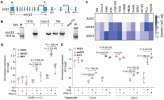
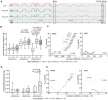
Interferons and viruses induce a novel primate-specific isoform dACE2 and not the SARS-CoV-2 receptor ACE2
Onabajo, Banday, Yan et al
bioRxiv (2020)
Onabajo, Banday, Yan et al
bioRxiv (2020)
Cited by 25
AI Summary: OriGene products, specifically the ACE2 (RC208442) and dACE2 (RC228003) cDNA clones, were used in this study to express and characterize the functions of ACE2 isoforms, enabling the discovery that only the novel dACE2, and not ACE2, is induced by interferons and does not facilitate SARS-CoV-2 entry.
Showing 1-6 of 20 papers.
Powered by BizGenius
*Delivery time may vary from web posted schedule. Occasional delays may occur due to unforeseen
complexities in the preparation of your product. International customers may expect an additional 1-2 weeks
in shipping.
Related Products
- Price:
- Actual Price:
Welcome to OriGene AI!
I'm your AI-powered guide to everything OriGene.
Ask me anything:
- Product specs
- Ordering help
- Technical questions
- How to find exactly what your experiment needs
Prefer a live agent? Connect with us by clicking the green chat icon, as seen in the image below or email our team at custsupport@origene.com.
