
pCMV6-AC-Myc Mammalian Expression Vector

$670.00
In Stock*
Specifications
| Product Data | |
| C-Tag | Myc |
|---|---|
| E. coli Selection | Ampicillin (100 ug/mL) |
| Mammalian Cell Selection | Neomycin |
| Expression Promoter | CMV |
| Features |
|
| Download Vector Sequence | |
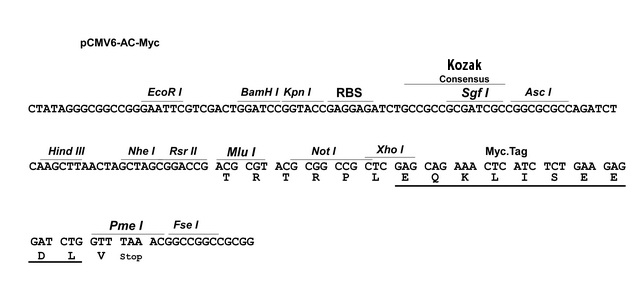
| Schematic of the multiple cloning sites |
|
| Shipping | Ambient |
Reviews


Documents
Resources
Citations
Effect of TDP43-CTFs35 on Brain Endothelial Cell Functions in Cerebral Ischemic Injury
Xu, Zhang, Jiang et al
Mol Neurobiol (2022) 59 (7), 4593-4611 DOI: 10.1007/s12035-022-02869-5
Xu, Zhang, Jiang et al
Mol Neurobiol (2022) 59 (7), 4593-4611 DOI: 10.1007/s12035-022-02869-5
Cited by 15
AI Summary: OriGene’s pCMV6-AC-Myc vector (PS100003) encoding mutant mouse TAR DNA-binding protein (Tardbp) C-terminal fragments (CTFs35) was used to overexpress TDP43-CTFs35 in brain endothelial cells, enabling the study of its effects on tight junction protein expression and cell migration in cerebral ischemic injury.
Snippet: Pathological changes in the brain endothelium play an important role in the progression of ischemic stroke and the compromised BBB under ischemic stroke conditions Save;70% confluence, the cells were transfected with the pCMV6-AC-Myc vector (PS100003, OriGene Technologies, Rockville, MD, USA) encoding mutant mouse TAR DNA-binding protein (Tardbp) (NM_145556) C-terminal fragments (CTFs35, 978 bp) for 4.5 h using Lipofectamine 3000 (Thermo Fisher Scientific)
The TDP43 CFTS Affect Brain Endothelial Cell Functions by Regulating YAP and Tight Junction Proteins in Cerebral Ischemic Injury
Xu, Zhang, Jiang et al
Research Square (2021)
Xu, Zhang, Jiang et al
Research Square (2021)
Cited by 2
LHCGR and ALMS1 defects likely cooperate in the development of polycystic ovary syndrome indicated by double-mutant mice
Yu, Wang, Tao et al
J Genet Genomics (2021) 48 (5), 384-395 DOI: 10.1016/j.jgg.2021.03.014
Yu, Wang, Tao et al
J Genet Genomics (2021) 48 (5), 384-395 DOI: 10.1016/j.jgg.2021.03.014
Cited by 13
AI Summary: In this study, OriGene's ALMS1 shRNA (TG319658) and LHCGR shRNA (TG319658) were used to knock down gene expression in KGN cells, enabling the researchers to investigate the functional roles of ALMS1 and LHCGR mutations in the development of polycystic ovary syndrome (PCOS) phenotypes.
Cip2a/miR-301a feedback loop promotes cell proliferation and invasion of triple-negative breast cancer
Yin, Chen, Luo et al
J Cancer (2019) 10 (24), 5964-5974 DOI: 10.7150/jca.35704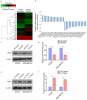
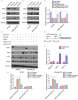
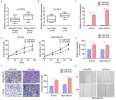
Yin, Chen, Luo et al
J Cancer (2019) 10 (24), 5964-5974 DOI: 10.7150/jca.35704
AI Summary: OriGene products pCMV6-E2F1, pCMV6-c-myc, and pCMV6-XL5 empty plasmid were used in this study to investigate the molecular mechanisms underlying the Cip2a/miR-301a feedback loop in triple-negative breast cancer cell proliferation and invasion.
Snippet: pCMV6-E2F1, pCMV6-c-myc, and pCMV6-XL5 empty plasmid was purchased from Origene (Rockville, MD). …miR-301a-expressing retroviruses, Cip2a-expressing retroviruses were purchased from GENECHEM (Shanghai, China). The Cip2a short hairpin RNA (shRNA)
Iterative, multiplexed CRISPR-mediated gene editing for functional analysis of complex protease gene clusters
Callies, Tadeo, Simper et al
J. Biol. Chem. (2019)
Callies, Tadeo, Simper et al
J. Biol. Chem. (2019)
AI Summary: OriGene’s pCMV6-AC-Myc expression plasmids (cat. no. PS100003) were used to express C-terminal Myc-tagged wildtype and mutant variants of mouse Tmprss11 cDNA, enabling functional analysis of specific protease gene variants in the study.
Snippet: pCMV6-AC-Myc expression plasmids (cat. no. PS100003, OriGene Technologies, Rockville, MD) carrying C-terminal Myc-tagged wildtype and mutant variants of mouse Tmprss11 cDNA were synthesized by Blue Heron Biotech (Seattle, WA)
GLK-IKKβ signaling induces dimerization and translocation of the AhR-RORγt complex in IL-17A induction and autoimmune disease
Chuang, Tsai, Hsueh et al
Sci Adv (2018) 4 (9), eaat5401 DOI: 10.1126/sciadv.aat5401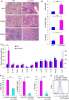
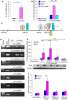
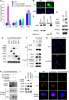
Chuang, Tsai, Hsueh et al
Sci Adv (2018) 4 (9), eaat5401 DOI: 10.1126/sciadv.aat5401
AI Summary: OriGene products, specifically the pCMV6-AC-CFP, pCMV6-AC-YFP, pCMV6-AC-Myc, pCMV6-AC-HA, and pCMV6-AC-Flag vectors, were used to construct plasmids for expressing tagged proteins (such as PKCθ and AhR) that enabled the study of protein interactions and signaling mechanisms underlying IL-17A induction in autoimmune disease.
Snippet: PKCθ, HA-tagged AhR, and Flag-tagged PKCθ plasmids were constructed by subcloning individual complementary DNAs into pCMV6-AC-CFP, pCMV6-AC-YFP, pCMV6-AC-Myc, pCMV6-AC-HA, or pCMV6-AC-Flag vector (OriGene Technologies). …PKCθ, HA-tagged AhR, and Flag-tagged PKCθ plasmids were constructed by subcloning individual complementary DNAs into pCMV6-AC-CFP, pCMV6-AC-YFP, pCMV6-AC-Myc, pCMV6-AC-HA, or pCMV6-AC-Flag vector (OriGene Technologies). …
Showing 1-6 of 16 papers.
Powered by BizGenius
*Delivery time may vary from web posted schedule. Occasional delays may occur due to unforeseen
complexities in the preparation of your product. International customers may expect an additional 1-2 weeks
in shipping.
Related Products
- Price:
- Actual Price:
Welcome to OriGene AI!
I'm your AI-powered guide to everything OriGene.
Ask me anything:
- Product specs
- Ordering help
- Technical questions
- How to find exactly what your experiment needs
Prefer a live agent? Connect with us by clicking the green chat icon, as seen in the image below or email our team at custsupport@origene.com.
