
pLenti-C-GFP Lentiviral Gene Expression Vector

$880.00
In Stock*
Specifications
| Product Data | |
| C-Tag | GFP |
|---|---|
| E. coli Selection | Chloramphenicol (34 ug/mL) |
| Expression Promoter | CMV |
| Features | This Lenti vector is a third generation of lentiviral vector.
|
| Download Vector Sequence | |
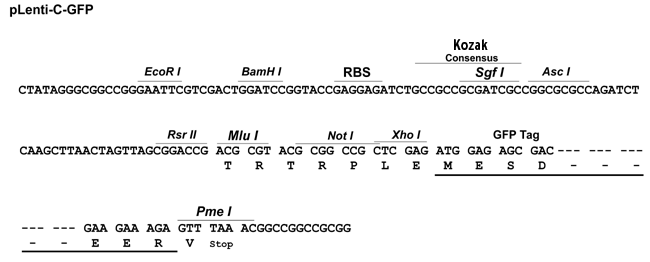
| Schematic of the multiple cloning sites |
|
| Shipping | Ambient |
Reviews


Documents
Resources
Citations
HIV-1 envelope glycoprotein modulates CXCR4 clustering and dynamics on the T cell membrane
Quijada-Freire, Santiago, García-Cuesta et al
Elife (2026) 15 DOI: 10.7554/eLife.110354
Quijada-Freire, Santiago, García-Cuesta et al
Elife (2026) 15 DOI: 10.7554/eLife.110354
AI Summary: OriGene’s plGFP plasmid (#PS100065) was used as a reporter gene in transfection experiments to facilitate the production and analysis of virus-like particles in the study of HIV-1 envelope glycoprotein effects on CXCR4 clustering and dynamics.
Snippet: above with the co-transfection of a reporter gene (8 μg plGFP;#PS100065, OriGene, Rockville, MD) instead of the double transfection. Supernatants were collected 48 hr post-transfection, filtered through 0.45 µm filters, aliquoted, and stored at –80 °C. Expression of gp
Reviewer #1 (Public review): HIV-1 Envelope glycoprotein modulates CXCR4 clustering and dynamics on the T cell membrane
Quijada-Freire, Santiago, García-Cuesta et al
elife (2026)
Quijada-Freire, Santiago, García-Cuesta et al
elife (2026)
AI Summary: OriGene's plGFP plasmid (#PS100065) was used for transfection to generate virus-like particles, enabling the study of HIV-1 Env-induced CXCR4 clustering on T cell membranes in this research.
Snippet: porter gene (8 μg plGFP;#PS100065, OriGene, Rockville, MD) instead of the double transfection. Supernatants were collected 48 hours post-transfection, filtered through 0.45 µm filters, aliquoted, and stored at −80°C. Expression of gp120 and p24 was ass
HIV-1 Envelope glycoprotein modulates CXCR4 clustering and dynamics on the T cell membrane
Quijada‐Freire, Santiago, García‐Cuesta et al
bioRxiv (2025)
Quijada‐Freire, Santiago, García‐Cuesta et al
bioRxiv (2025)
AI Summary: OriGene’s plGFP reporter gene plasmid (#PS100065) was used for co-transfection to generate HIV-1 virus-like particles in this study, enabling the investigation of how HIV-1 Env proteins affect CXCR4 clustering on T cells.
Snippet: performed as above with the co-transfection of a reporter gene (8 μg plGFP;#PS100065, OriGene, Rockville, MD) instead of the double transfection. Supernatants were collected 48 hours post-transfection, filtered through 0.45 µm filters, aliquoted, and stored at -80°C. Expression of gp120 and p24 was assessed by western
Thymoquinone upregulates IL17RD in controlling the growth and metastasis of triple negative breast cancer cells in vitro
Khan, Zheng, Fu et al
BMC Cancer (2022) 22 (1), 707 DOI: 10.1186/s12885-022-09782-z
Khan, Zheng, Fu et al
BMC Cancer (2022) 22 (1), 707 DOI: 10.1186/s12885-022-09782-z
Cited by 10
AI Summary: OriGene’s IL17RD-human 29mer shRNA constructs in a lentiviral GFP vector were used to knock down IL17RD expression in BT-549 triple negative breast cancer cells, enabling the study of IL17RD’s role in thymoquinone-mediated inhibition of cancer growth and metastasis.
Snippet: … IL17RD knockdown IL17RD was knocked down by shRNA technology. IL17RD-human 29mer shRNA constructs in the lentiviral GFP vector were purchased from OriGene tech (Rockville, USA), and shRNA specific to IL17RD was introduced into BT-549 cells via transduction following OriGene HuSHTM shRNA application guideline. IL17RD-human 29mer shRNA sequences a;- were purchased from OriGene tech (Rockville, USA), and shRNA specific to IL17RD was introduced into BT-549 cells via transduction following OriGene HuSHTM shRNA Save Cached;IL17RD was knocked down by shRNA technology. IL17RD-human 29mer shRNA constructs in the lentiviral GFP vector were purchased from OriGene tech (Rockville, USA), and shRNA specific to IL17RD was introduced into BT-549 cells via transduction following OriGene HuSHTM shRNA application guideline. IL17RD-human 29mer shRNA sequences are as follows: GCCGAAGGTCTTTCTCTGCTATTCCAGT
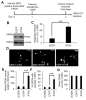
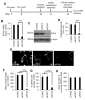
Overexpression of Reticulon 3 Enhances CNS Axon Regeneration and Functional Recovery after Traumatic Injury
Alhajlah, Thompson, Ahmed
Cells (2021) 10 (8) DOI: 10.3390/cells10082015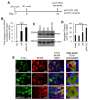
Alhajlah, Thompson, Ahmed
Cells (2021) 10 (8) DOI: 10.3390/cells10082015
Cited by 11
AI Summary: OriGene contributed to this study by providing the CMV promoter-driven rat RTN3 plasmid (#RR200211L3), which was used to overexpress RTN3 in dorsal root ganglion and retinal cells to investigate its role in CNS axon regeneration.
Snippet: o overexpress RTN3 in DRGN and retinal cells in vitro, a CMV promoter-driven rat RTN3 plasmid was purchased from Origene, Rockville, MD, USA (#RR200211L3)
The exon-junction complex helicase eIF4A3 controls cell fate via coordinated regulation of ribosome biogenesis and translational output
Kanellis, Espinoza, Zisi et al
Sci Adv (2021) 7 (32) DOI: 10.1126/sciadv.abf7561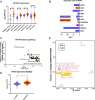
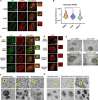
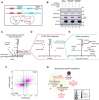
Kanellis, Espinoza, Zisi et al
Sci Adv (2021) 7 (32) DOI: 10.1126/sciadv.abf7561
Cited by 81
AI Summary: OriGene’s pCMV6-eIF4A3 (vector: PS100001) plasmid was used as the source for EIF4A3 cDNA, enabling the generation of constructs for functional studies of eIF4A3 in cell fate and ribosome biogenesis.
Snippet: mycin (1 μg/ml) for 72 hours or until all nontransduced control cells were killed. For the production of DOX-FLAG-eIF4A3(WT/mutant)–sheIF4A3-U2OS cells, EIF4A3 was PCR-amplified from pCMV6-eIF4A3 (Origene, vector: PS100001) using the primer set provided in table S4B and cloned into a N-FLAG–tagged pENTR4 plasmid, which was produced by inserting an oligo-annealed V5-sequence into a pENTR4 vect
Showing 1-6 of 17 papers.
Powered by BizGenius
*Delivery time may vary from web posted schedule. Occasional delays may occur due to unforeseen
complexities in the preparation of your product. International customers may expect an additional 1-2 weeks
in shipping.
Related Products
- Price:
- Actual Price:
Welcome to OriGene AI!
I'm your AI-powered guide to everything OriGene.
Ask me anything:
- Product specs
- Ordering help
- Technical questions
- How to find exactly what your experiment needs
Prefer a live agent? Connect with us by clicking the green chat icon, as seen in the image below or email our team at custsupport@origene.com.
