
pEX-1 Bacterial Expression Vector

$470.00
In Stock*
Specifications

Reviews


Documents
Resources
Citations
Mig-6 Inhibits Autophagy in HCC Cell Lines by Modulating miR-193a-3p
Qu, Tian, Hong et al
Int J Med Sci (2022) 19 (2), 338-351 DOI: 10.7150/ijms.66040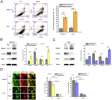
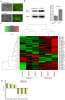
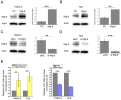
Qu, Tian, Hong et al
Int J Med Sci (2022) 19 (2), 338-351 DOI: 10.7150/ijms.66040
Cited by 15
AI Summary: In this study, OriGene’s human Mig-6 overexpression plasmid (RC209726) and Mig-6 shRNA plasmids (TG311478, TG311479) were used to manipulate Mig-6 expression in HCC cell lines, enabling the authors to investigate the role of Mig-6 in regulating apoptosis and autophagy via miR-193a-3p.
TGFBR3L is an inhibin B co-receptor that regulates female fertility
Brûlé, Wang, Li et al
Sci Adv (2021) 7 (51), eabl4391 DOI: 10.1126/sciadv.abl4391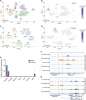
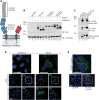
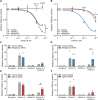
Brûlé, Wang, Li et al
Sci Adv (2021) 7 (51), eabl4391 DOI: 10.1126/sciadv.abl4391
Cited by 40
AI Summary: OriGene’s human TGFBR3L expression vector was used to express TGFBR3L in heterologous cells, enabling the authors to study its role as an inhibin B co-receptor in female fertility.
Snippet: When we expressed human TGFBR3L in heterologous cells using a commercially sourced expression vector (OriGene), the protein Revised human TGFBR3L-Myc-DDK was made in-house by excising the 5′ end of the coding sequence from the OriGene Save;When we expressed human TGFBR3L in heterologous cells using a commercially sourced expression vector (OriGene),
Warfarin and vitamin K compete for binding to Phe55 in human VKOR
Czogalla, Biswas, Höning et al
Nat. Struct. Mol. Biol. (2016)
Czogalla, Biswas, Höning et al
Nat. Struct. Mol. Biol. (2016)
AI Summary: OriGene’s F9 expression vector (cat. no. SC126517) was used to express F9 in the study, enabling functional assays to investigate how specific VKOR mutations affect vitamin K and warfarin binding.
Snippet: For critical residues suspected to influence vitamin K binding, site-directed mutagenesis was performed. For expression of only F9, an expression vector from Origene was used (cat. no. SC 126517). Human NQO1 and VKORC1L1 cDNAs were independently cloned together with F9 cDNA into the pIRES vector
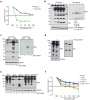
A common genetic variation of melanoma inhibitory activity-2 labels a subtype of pancreatic adenocarcinoma with high endoplasmic reticulum stress levels
Kong, Wu, Valkovska et al
Sci Rep (2015) 5, 8109 DOI: 10.1038/srep08109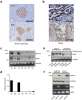
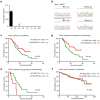
Kong, Wu, Valkovska et al
Sci Rep (2015) 5, 8109 DOI: 10.1038/srep08109
Cited by 20
AI Summary: OriGene’s HNF1A expression vector (RC211201) was used to transiently express HNF1A in pancreatic cancer cells, enabling the study of its role in regulating MIA2 expression and ER stress in this research on pancreatic adenocarcinoma subtypes.
Snippet: … Su86.86 cells were transfected with different MIA2 expressing vectors using the LipofectamineH 2000 transfection reagent (Invitrogen, Carlsbad, California) according to the manufacturer’s instructions. For transient expression of HNF1A, the expression vector from Origene was used (RC211201, Origene, Suite 200 Rockville, MD). …
Canavanine induces insulin release via activation of imidazoline I-3 receptors
Yang, Niu, Chen et al
Clin. Exp. Pharmacol. Physiol. (2014)
Yang, Niu, Chen et al
Clin. Exp. Pharmacol. Physiol. (2014)
Cited by 8
AI Summary: OriGene products contributed to this study by providing the human nischarin (NISCH) expression vector and specific antibodies for NISCH and DDK, which were used to create and characterize transfected CHO-K1 cells expressing imidazoline receptors for investigating canavanine’s effects.
Snippet: human nischarin (NISCH), a mouse homologue of the human imidazoline receptor antisera-selective (IRAS) protein, and an expression vector (Origene, Rockville, MD, USA) ... specific for NISCH and DDK (Origene, Rockville, MD, USA) as described previously (19). ... Cite SaveSaving
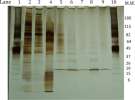
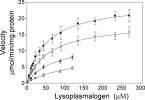
Purification, identification, and cloning of lysoplasmalogenase, the enzyme that catalyzes hydrolysis of the vinyl ether bond of lysoplasmalogen
Wu, Pfeiffer, Calhoon et al
J. Biol. Chem. (2011) 286 (28), 24916-30 DOI: 10.1074/jbc.M111.247163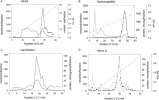
Wu, Pfeiffer, Calhoon et al
J. Biol. Chem. (2011) 286 (28), 24916-30 DOI: 10.1074/jbc.M111.247163
Cited by 2
AI Summary: OriGene's anti-DDK antibodies were used in this study for Western blot analyses to detect and confirm the expression of TMEM86b protein following its overexpression and cloning.
Snippet: Plasmalogen levels are decreased in the peroxisomal disorders (5), Alzheimer disease (6), and Down syndrome (7), and they are elevated in tumors and in cell lines derived from tumors (8). Moreover, the ... 9126), and antibodies against DDK were from OriGene Technologies, Inc
Showing 1-6 of 7 papers.
Powered by BizGenius
*Delivery time may vary from web posted schedule. Occasional delays may occur due to unforeseen
complexities in the preparation of your product. International customers may expect an additional 1-2 weeks
in shipping.
Related Products
- Price:
- Actual Price:
Welcome to OriGene AI!
I'm your AI-powered guide to everything OriGene.
Ask me anything:
- Product specs
- Ordering help
- Technical questions
- How to find exactly what your experiment needs
Prefer a live agent? Connect with us by clicking the green chat icon, as seen in the image below or email our team at custsupport@origene.com.
