
USP8 Human siRNA Oligo Duplex (Locus ID 9101)

$518.00
In Stock*
Specifications
| Product Data | |
| Purity | HPLC purified |
|---|---|
| Quality Control | Tested by ESI-MS |
| Sequences | Available with shipment |
| Components |
USP8 (Human) - 3 unique 27mer siRNA duplexes - 2 nmol each (Locus ID 9101)Included - SR30004, Trilencer-27 Universal Scrambled Negative Control siRNA Duplex - 2 nmolIncluded - SR30005, RNAse free siRNA Duplex Resuspension Buffer - 2 ml
|
| Stability | One year from date of shipment when stored at -20°C. |
| Shipping | Ambient |
| # of Transfections | Approximately 330 transfections/2nmol in 24-well plate under optimized conditions (final conc. 10 nM). |
| Note | Single siRNA duplex (10nmol) can be ordered. |
| Reference Data | |
| RefSeq | NM_001128610, NM_001128611, NM_001283049, NM_005154 |
| UniProt ID | P40818 |
| Synonyms | HumORF8; PITA4; SPG59; UBPY |
| Summary | This gene encodes a protein that belongs to the ubiquitin-specific processing protease family of proteins. The encoded protein is thought to regulate the morphology of the endosome by ubiquitination of proteins on this organelle and is involved in cargo sorting and membrane trafficking at the early endosome stage. This protein is required for the cell to enter the S phase of the cell cycle and also functions as a positive regulator in the Hedgehog signaling pathway in development. Pseudogenes of this gene are present on chromosomes 2 and 6. Alternate splicing results in multiple transcript variants. provided by RefSeq, Sep 2013 |
| Performance Guaranteed | OriGene guarantees that at least two of the three Dicer-Substrate duplexes in the kit will provide at least 70% or more knockdown of the target mRNA when used at 10 nM concentration by quantitative RT-PCR when the TYE-563 fluorescent transfection control duplex (cat# SR30002) indicates that >90% of the cells have been transfected and the HPRT positive control (cat# SR30003) provides 90% knockdown efficiency. For non-conforming siRNA, requests for replacement product must be made within ninety (90) days from the date of delivery of the siRNA kit. To arrange for a free replacement with newly designed duplexes, please contact Technical Services at techsupport@origene.com. Please provide your data indicating the transfection efficiency and measurement of gene expression knockdown compared to the scrambled siRNA control (quantitative RT-PCR data required). |
Reviews


Documents
| Product Manuals |
| FAQs |
| SDS |
Resources
Citations
Down-regulation of USP8 Inhibits Cholangiocarcinoma Cell Proliferation and Invasion
Jing, Chen, Chen et al
Cancer Manag Res (2020) 12, 2185-2194 DOI: 10.2147/CMAR.S234586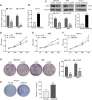
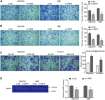
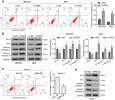
Jing, Chen, Chen et al
Cancer Manag Res (2020) 12, 2185-2194 DOI: 10.2147/CMAR.S234586
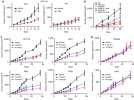
AI Summary: OriGene contributed to this study by providing the siRNA targeting USP8 (si-USP8) and the siRNA Negative Control (si-NC), which were used to investigate the effects of USP8 knockdown on cholangiocarcinoma cell proliferation and invasion.
Snippet: The siRNA targeting USP8 (si-USP8) was synthesized by OriGene (Beijing, China), and siRNA Negative Control (OriGene) was used as negative control (si-NC). The siRNA-USP8 sequences were 5ʹ-CCAAAGAGAAAGGAGCAAT-3ʹ (529-548);- The siRNA targeting USP8 (si-USP8) was synthesized by OriGene (Beijing, China), and siRNA Negative Control (OriGene) was used as negative control (si-NC). The siRNA-USP8 sequences were 5ʹ-CCAAAGAGAAAGGAGCAAT-3ʹ (529-548)
Oncogenic PIK3CA mutations reprogram glutamine metabolism in colorectal cancer
Hao, Samuels, Li et al
Nat Commun (2016) 7, 11971 DOI: 10.1038/ncomms11971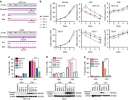
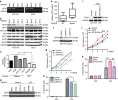
Hao, Samuels, Li et al
Nat Commun (2016) 7, 11971 DOI: 10.1038/ncomms11971
Cited by 304
AI Summary: In this study, OriGene products such as PIK3CA expression plasmids and shRNA lentiviral particles were used to manipulate gene expression and investigate how PIK3CA mutations reprogram glutamine metabolism in colorectal cancer cells.
Snippet: This study, however, revealed a novel p110α–PDK1–RSK2–ATF4–GPT2 pathway that regulates glutamine metabolism. … While our previous studies showed that AKT signalling drives metastasis of PIK3CA mutant tumours39, here we propose the p110α–PDK1–RSK2–ATF4–GPT2 signaling axis reprogrammes glutamine metabolism that is required to generate energy and metabolites to sustain rapid growth in PIK3CA mutant tumours
Showing 1-2 of 2 papers.
Powered by BizGenius
*Delivery time may vary from web posted schedule. Occasional delays may occur due to unforeseen
complexities in the preparation of your product. International customers may expect an additional 1-2 weeks
in shipping.
Related Products
- Price:
- Actual Price:
Welcome to OriGene AI!
I'm your AI-powered guide to everything OriGene.
Ask me anything:
- Product specs
- Ordering help
- Technical questions
- How to find exactly what your experiment needs
Prefer a live agent? Connect with us by clicking the green chat icon, as seen in the image below or email our team at custsupport@origene.com.
