
Nov Mouse shRNA Plasmid (Locus ID 18133)
SKU
TL515862
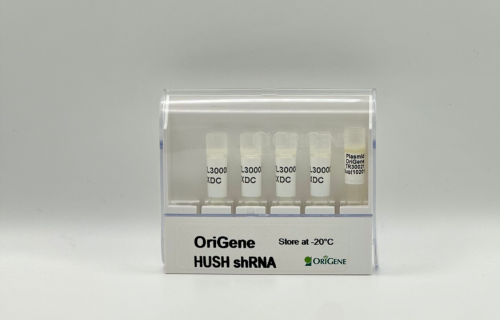
Nov - Mouse, 4 unique 29mer shRNA constructs in lentiviral GFP vector, 5µg of each construct provided
$1,013.00
2 Weeks*
Specifications
| Product Data | |
| Locus ID | 18133 |
|---|---|
| Synonyms | C130088N23Rik; CCN3 |
| Vector | pGFP-C-shLenti |
| E. coli Selection | Chloramphenicol (34 ug/ml) |
| Mammalian Cell Selection | Puromycin |
| Format | Lentiviral plasmids |
| Components | Nov - Mouse, 4 unique 29mer shRNA constructs in lentiviral GFP vector(Gene ID = 18133). 5µg purified plasmid DNA per construct29-mer scrambled shRNA cassette in pGFP-C-shLenti Vector, TR30021, included for free. |
| RefSeq | BC003774, NM_010930, NM_010930.1, NM_010930.2, NM_010930.3, NM_010930.4 |
| UniProt ID | Q64299 |
| Summary | Immediate-early protein playing a role in various cellular processes including proliferation, adhesion, migration, differentiation and survival. Acts by binding to integrins or membrane receptors such as NOTCH1. Essential regulator of hematopoietic stem and progenitor cell function. Inhibits myogenic differentiation through the activation of Notch-signaling pathway. Inhibits vascular smooth muscle cells proliferation by increasing expression of cell-cycle regulators such as CDKN2B or CDKN1A independently of TGFB1 signaling. Ligand of integrins ITGAV:ITGB3 and ITGA5:ITGB1, acts directly upon endothelial cells to stimulate pro-angiogenic activities and induces angiogenesis. In endothelial cells, supports cell adhesion, induces directed cell migration (chemotaxis) and promotes cell survival. Plays also a role in cutaneous wound healing acting as integrin receptor ligand. Supports skin fibroblast adhesion through ITGA5:ITGB1 and ITGA6:ITGB1 and induces fibroblast chemotaxis through ITGAV:ITGB5. Seems to enhance bFGF-induced DNA synthesis in fibroblasts (By similarity). Involved in bone regeneration as a negative regulator (PubMed:23653360). Enhances the articular chondrocytic phenotype, whereas it repressed the one representing endochondral ossification (By similarity). Impairs pancreatic beta-cell function, inhibits beta-cell proliferation and insulin secretion (PubMed:23705021). Plays a role as negative regulator of endothelial pro-inflammatory activation reducing monocyte adhesion, its anti-inflammatory effects occur secondary to the inhibition of NF-kappaB signaling pathway (By similarity). Contributes to the control and coordination of inflammatory processes in atherosclerosis (PubMed:24722330). Attenuates inflammatory pain through regulation of IL1B- and TNF-induced MMP9, MMP2 and CCL2 expression. Inhibits MMP9 expression through ITGB1 engagement (By similarity).UniProtKB/Swiss-Prot Function |
| shRNA Design | These shRNA constructs were designed against multiple splice variants at this gene locus. To be certain that your variant of interest is targeted, please contact techsupport@origene.com. If you need a special design or shRNA sequence, please utilize our custom shRNA service. |
| Storage | Store at -20°C |
| Shipping | Ambient |
Reviews


Documents
Resources
Citations
*Delivery time may vary from web posted schedule. Occasional delays may occur due to unforeseen
complexities in the preparation of your product. International customers may expect an additional 1-2 weeks
in shipping.
Related Products
- Price:
- Actual Price:
Welcome to OriGene AI!
I'm your AI-powered guide to everything OriGene.
Ask me anything:
- Product specs
- Ordering help
- Technical questions
- How to find exactly what your experiment needs
Prefer a live agent? Connect with us by clicking the green chat icon, as seen in the image below or email our team at custsupport@origene.com.
