
Chek1 Mouse shRNA Plasmid (Locus ID 12649)
SKU
TL515360
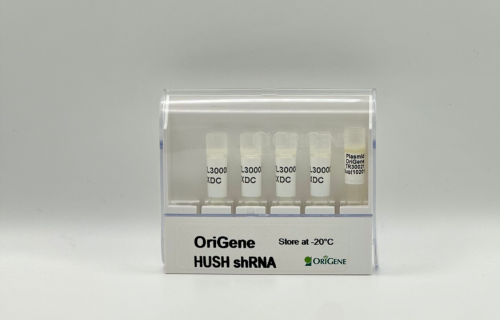
Chek1 - Mouse, 4 unique 29mer shRNA constructs in lentiviral GFP vector, 5µg of each construct provided
$1,013.00
2 Weeks*
Specifications
| Product Data | |
| Locus ID | 12649 |
|---|---|
| Synonyms | C85740; Chk1; rad27 |
| Vector | pGFP-C-shLenti |
| E. coli Selection | Chloramphenicol (34 ug/ml) |
| Mammalian Cell Selection | Puromycin |
| Format | Lentiviral plasmids |
| Components | Chek1 - Mouse, 4 unique 29mer shRNA constructs in lentiviral GFP vector(Gene ID = 12649). 5µg purified plasmid DNA per construct29-mer scrambled shRNA cassette in pGFP-C-shLenti Vector, TR30021, included for free. |
| RefSeq | BC100386, NM_007691, NM_007691.1, NM_007691.2, NM_007691.3, NM_007691.4, NM_007691.5, BC037613, BC053394, BC064445 |
| UniProt ID | O35280 |
| Summary | Serine/threonine-protein kinase which is required for checkpoint-mediated cell cycle arrest and activation of DNA repair in response to the presence of DNA damage or unreplicated DNA. May also negatively regulate cell cycle progression during unperturbed cell cycles. This regulation is achieved by a number of mechanisms that together help to preserve the integrity of the genome. Recognizes the substrate consensus sequence R-X-X-S/T. Binds to and phosphorylates CDC25A, CDC25B and CDC25C. This inhibits their activity through proteasomal degradation, nucleo-cytoplasmic shuttling and inhibition by proteins of the 13-3-3 family. Inhibition of CDC25 leads to increased inhibitory tyrosine phosphorylation of CDK-cyclin complexes and blocks cell cycle progression. Also phosphorylates NEK6. Binds to and phosphorylates RAD51 at 'Thr-309', which promotes the release of RAD51 from BRCA2 and enhances the association of RAD51 with chromatin, thereby promoting DNA repair by homologous recombination. Phosphorylates multiple sites within the C-terminus of TP53, which promotes activation of TP53 by acetylation and promotes cell cycle arrest and suppression of cellular proliferation. Also promotes repair of DNA cross-links through phosphorylation of FANCE. Binds to and phosphorylates TLK1, which prevents the TLK1-dependent phosphorylation of the chromatin assembly factor ASF1A. This may enhance chromatin assembly both in the presence or absence of DNA damage. May also play a role in replication fork maintenance through regulation of PCNA (By similarity). May regulate the transcription of genes that regulate cell-cycle progression through the phosphorylation of histones. Phosphorylates histone H3.1 (to form H3T11ph), which leads to epigenetic inhibition of a subset of genes. May also phosphorylate RB1 to promote its interaction with the E2F family of transcription factors and subsequent cell cycle arrest.UniProtKB/Swiss-Prot Function |
| shRNA Design | These shRNA constructs were designed against multiple splice variants at this gene locus. To be certain that your variant of interest is targeted, please contact techsupport@origene.com. If you need a special design or shRNA sequence, please utilize our custom shRNA service. |
| Storage | Store at -20°C |
| Shipping | Ambient |
Reviews


Documents
Resources
Citations
*Delivery time may vary from web posted schedule. Occasional delays may occur due to unforeseen
complexities in the preparation of your product. International customers may expect an additional 1-2 weeks
in shipping.
Related Products
- Price:
- Actual Price:
Welcome to OriGene AI!
I'm your AI-powered guide to everything OriGene.
Ask me anything:
- Product specs
- Ordering help
- Technical questions
- How to find exactly what your experiment needs
Prefer a live agent? Connect with us by clicking the green chat icon, as seen in the image below or email our team at custsupport@origene.com.
