
Pin1 Mouse shRNA Plasmid (Locus ID 23988)
SKU
TL515212
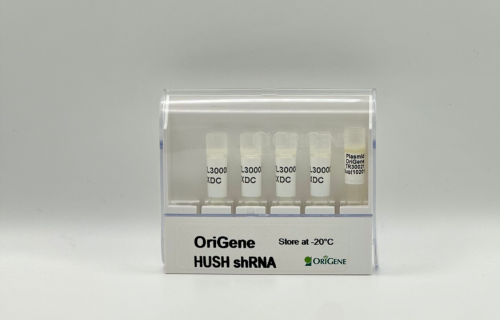
Pin1 - Mouse, 4 unique 29mer shRNA constructs in lentiviral GFP vector, 5µg of each construct provided
$1,013.00
2 Weeks*
Specifications
| Product Data | |
| Locus ID | 23988 |
|---|---|
| Synonyms | 0610025L01Rik; D9Bwg1161e |
| Vector | pGFP-C-shLenti |
| E. coli Selection | Chloramphenicol (34 ug/ml) |
| Mammalian Cell Selection | Puromycin |
| Format | Lentiviral plasmids |
| Components | Pin1 - Mouse, 4 unique 29mer shRNA constructs in lentiviral GFP vector(Gene ID = 23988). 5µg purified plasmid DNA per construct29-mer scrambled shRNA cassette in pGFP-C-shLenti Vector, TR30021, included for free. |
| RefSeq | BC038254, NM_023371, NM_023371.1, NM_023371.2, NM_023371.3, NM_001364495, NM_023371.4 |
| UniProt ID | Q9QUR7 |
| Summary | Peptidyl-prolyl cis/trans isomerase (PPIase) that binds to and isomerizes specific phosphorylated Ser/Thr-Pro (pSer/Thr-Pro) motifs. By inducing conformational changes in a subset of phosphorylated proteins, acts as a molecular switch in multiple cellular processes. Displays a preference for an acidic residue N-terminal to the isomerized proline bond. Regulates mitosis presumably by interacting with NIMA and attenuating its mitosis-promoting activity. Down-regulates kinase activity of BTK. Can transactivate multiple oncogenes and induce centrosome amplification, chromosome instability and cell transformation. Required for the efficient dephosphorylation and recycling of RAF1 after mitogen activation (By similarity). Binds and targets PML and BCL6 for degradation in a phosphorylation-dependent manner (PubMed:17828269). Acts as a regulator of JNK cascade by binding to phosphorylated FBXW7, disrupting FBXW7 dimerization and promoting FBXW7 autoubiquitination and degradation: degradation of FBXW7 leads to subsequent stabilization of JUN (By similarity). May facilitate the ubiquitination and proteasomal degradation of RBBP8/CtIP through CUL3/KLHL15 E3 ubiquitin-protein ligase complex, hence favors DNA double-strand repair through error-prone non-homologous end joining (NHEJ) over error-free, RBBP8-mediated homologous recombination (HR) (By similarity).UniProtKB/Swiss-Prot Function |
| shRNA Design | These shRNA constructs were designed against multiple splice variants at this gene locus. To be certain that your variant of interest is targeted, please contact techsupport@origene.com. If you need a special design or shRNA sequence, please utilize our custom shRNA service. |
| Storage | Store at -20°C |
| Shipping | Ambient |
Reviews


Documents
Resources
Citations
Hyperthermia stress activates heat shock protein expression via propyl isomerase 1 regulation with heat shock factor 1
Wang, Fu, Lee et al
Mol. Cell. Biol. (2013)
Wang, Fu, Lee et al
Mol. Cell. Biol. (2013)
AI Summary: In this study, the mouse PIN1 expression plasmid from OriGene was used to investigate the regulatory role of PIN1 in heat shock protein expression and cellular stress responses.
Snippet: HSP70B-Luc plasmid was kindly provided by Dr. Barry Trink (Division of Head and 135 Neck Cancer Research). The mouse PIN1 expression plasmid was purchased from 136 Origene. The 3HSE-Luc reporter plasmid was constructed by the insertion of three 137 Page
Showing 1-1 of 1 papers.
Powered by BizGenius
*Delivery time may vary from web posted schedule. Occasional delays may occur due to unforeseen
complexities in the preparation of your product. International customers may expect an additional 1-2 weeks
in shipping.
Related Products
- Price:
- Actual Price:
Welcome to OriGene AI!
I'm your AI-powered guide to everything OriGene.
Ask me anything:
- Product specs
- Ordering help
- Technical questions
- How to find exactly what your experiment needs
Prefer a live agent? Connect with us by clicking the green chat icon, as seen in the image below or email our team at custsupport@origene.com.
