
Nfkb2 Mouse shRNA Plasmid (Locus ID 18034)
SKU
TL513640
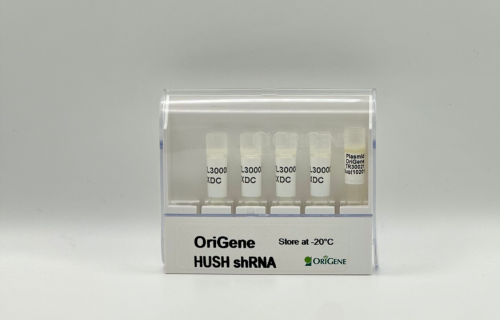
Nfkb2 - Mouse, 4 unique 29mer shRNA constructs in lentiviral GFP vector, 5µg of each construct provided
$1,013.00
2 Weeks*
Specifications
| Product Data | |
| Locus ID | 18034 |
|---|---|
| Synonyms | lyt; NF-kappaB2; p49; p49/p100; p50B; p52 |
| Vector | pGFP-C-shLenti |
| E. coli Selection | Chloramphenicol (34 ug/ml) |
| Mammalian Cell Selection | Puromycin |
| Format | Lentiviral plasmids |
| Components | Nfkb2 - Mouse, 4 unique 29mer shRNA constructs in lentiviral GFP vector(Gene ID = 18034). 5µg purified plasmid DNA per construct29-mer scrambled shRNA cassette in pGFP-C-shLenti Vector, TR30021, included for free. |
| RefSeq | BC027423, NM_001177369, NM_001177370, NM_019408, NM_019408.1, NM_019408.2, NM_019408.3, NM_001177369.1 |
| UniProt ID | Q9WTK5 |
| Summary | NF-kappa-B is a pleiotropic transcription factor present in almost all cell types and is the endpoint of a series of signal transduction events that are initiated by a vast array of stimuli related to many biological processes such as inflammation, immunity, differentiation, cell growth, tumorigenesis and apoptosis. NF-kappa-B is a homo- or heterodimeric complex formed by the Rel-like domain-containing proteins RELA/p65, RELB, NFKB1/p105, NFKB1/p50, REL and NFKB2/p52. The dimers bind at kappa-B sites in the DNA of their target genes and the individual dimers have distinct preferences for different kappa-B sites that they can bind with distinguishable affinity and specificity. Different dimer combinations act as transcriptional activators or repressors, respectively. NF-kappa-B is controlled by various mechanisms of post-translational modification and subcellular compartmentalization as well as by interactions with other cofactors or corepressors. NF-kappa-B complexes are held in the cytoplasm in an inactive state complexed with members of the NF-kappa-B inhibitor (I-kappa-B) family. In a conventional activation pathway, I-kappa-B is phosphorylated by I-kappa-B kinases (IKKs) in response to different activators, subsequently degraded thus liberating the active NF-kappa-B complex which translocates to the nucleus. In a non-canonical activation pathway, the MAP3K14-activated CHUK/IKKA homodimer phosphorylates NFKB2/p100 associated with RelB, inducing its proteolytic processing to NFKB2/p52 and the formation of NF-kappa-B RelB-p52 complexes. The NF-kappa-B heterodimeric RelB-p52 complex is a transcriptional activator. The NF-kappa-B p52-p52 homodimer is a transcriptional repressor. NFKB2 appears to have dual functions such as cytoplasmic retention of attached NF-kappa-B proteins by p100 and generation of p52 by a cotranslational processing. The proteasome-mediated process ensures the production of both p52 and p100 and preserves their independent function. p52 binds to the kappa-B consensus sequence 5'-GGRNNYYCC-3', located in the enhancer region of genes involved in immune response and acute phase reactions. p52 and p100 are respectively the minor and major form; the processing of p100 being relatively poor. Isoform p49 is a subunit of the NF-kappa-B protein complex, which stimulates the HIV enhancer in synergy with p65 (By similarity). In concert with RELB, regulates the circadian clock by repressing the transcriptional activator activity of the CLOCK-ARNTL/BMAL1 heterodimer.UniProtKB/Swiss-Prot Function |
| shRNA Design | These shRNA constructs were designed against multiple splice variants at this gene locus. To be certain that your variant of interest is targeted, please contact techsupport@origene.com. If you need a special design or shRNA sequence, please utilize our custom shRNA service. |
| Storage | Store at -20°C |
| Shipping | Ambient |
Reviews


Documents
Resources
Citations
*Delivery time may vary from web posted schedule. Occasional delays may occur due to unforeseen
complexities in the preparation of your product. International customers may expect an additional 1-2 weeks
in shipping.
Related Products
- Price:
- Actual Price:
Welcome to OriGene AI!
I'm your AI-powered guide to everything OriGene.
Ask me anything:
- Product specs
- Ordering help
- Technical questions
- How to find exactly what your experiment needs
Prefer a live agent? Connect with us by clicking the green chat icon, as seen in the image below or email our team at custsupport@origene.com.
