
Nf1 Mouse shRNA Plasmid (Locus ID 18015)
SKU
TL509076
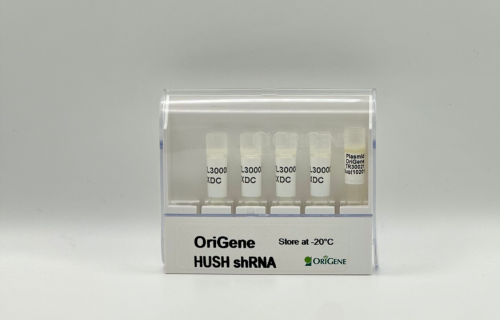
Nf1 - Mouse, 4 unique 29mer shRNA constructs in lentiviral GFP vector, 5µg of each construct provided
$1,013.00
In Stock*
Specifications
| Product Data | |
| Locus ID | 18015 |
|---|---|
| Synonyms | AW494271; Dsk9; E030030H24Rik; Mhdadsk9; Nf-1 |
| Vector | pGFP-C-shLenti |
| E. coli Selection | Chloramphenicol (34 ug/ml) |
| Mammalian Cell Selection | Puromycin |
| Format | Lentiviral plasmids |
| Components | Nf1 - Mouse, 4 unique 29mer shRNA constructs in lentiviral GFP vector(Gene ID = 18015). 5µg purified plasmid DNA per construct29-mer scrambled shRNA cassette in pGFP-C-shLenti Vector, TR30021, included for free. |
| RefSeq | NM_010897, NM_010897.1, NM_010897.2, BC172619 |
| UniProt ID | Q04690 |
| Summary | Stimulates the GTPase activity of Ras. NF1 shows greater affinity for Ras GAP, but lower specific activity. May be a regulator of Ras activity.UniProtKB/Swiss-Prot Function |
| shRNA Design | These shRNA constructs were designed against multiple splice variants at this gene locus. To be certain that your variant of interest is targeted, please contact techsupport@origene.com. If you need a special design or shRNA sequence, please utilize our custom shRNA service. |
| Storage | Store at -20°C |
| Shipping | Ambient |
Reviews


Documents
Resources
Citations
Pathogenic mutations in neurofibromin identifies a leucine-rich domain regulating glioma cell invasiveness
Fadhlullah, Halim, Yeo et al
Oncogene (2019) 38 (27), 5367-5380 DOI: 10.1038/s41388-019-0809-3
Fadhlullah, Halim, Yeo et al
Oncogene (2019) 38 (27), 5367-5380 DOI: 10.1038/s41388-019-0809-3
AI Summary: In this study, OriGene products such as the NF1 shRNA (OriGene, Cat# TL313755) and NF1 expression plasmids (OriGene, Cat# RC209832) were used to manipulate NF1 expression in glioma cells, enabling the authors to investigate the role of the NF1 leucine-rich domain in regulating glioma cell invasiveness.
Snippet: … NF1, a tumor suppressor gene and RAS-GTPase, is one of the highly mutated genes in GBM. Dysregulated NF1 expression promotes cell invasion, proliferation, and tumorigenesis. Loss of NF1 expression in glioblastoma is associated with increased aggressiveness of the tumor. Here, we show that NF1-loss in patient-derived glioma cells using shRNA increases self-renewal, heightens cell invasion, and promotes mesenchymal subtype and epithelial mesenchymal transition-specific gene expression that enhances tumorigenesis. …Moreover, under conditions tested, the NF1-LRD fails to hydrolyze Ras-GTP to Ras-GDP, suggesting that its suppressive function is independent of Ras signaling. We further demonstrate that rare variants within the NF1-LRD domain found in a subset of the patients are pathogenic and reduce NF1-LRD's invasion suppressive function. Taken together, our results show, for the first time, that NF1-LRD inhibits glioma invasion, and provides evidence of a previously unrecognized function of NF1-LRD in glioma biology
Showing 1-1 of 1 papers.
Powered by BizGenius
*Delivery time may vary from web posted schedule. Occasional delays may occur due to unforeseen
complexities in the preparation of your product. International customers may expect an additional 1-2 weeks
in shipping.
Related Products
- Price:
- Actual Price:
Welcome to OriGene AI!
I'm your AI-powered guide to everything OriGene.
Ask me anything:
- Product specs
- Ordering help
- Technical questions
- How to find exactly what your experiment needs
Prefer a live agent? Connect with us by clicking the green chat icon, as seen in the image below or email our team at custsupport@origene.com.
