
Mertk Mouse shRNA Plasmid (Locus ID 17289)
SKU
TL501335
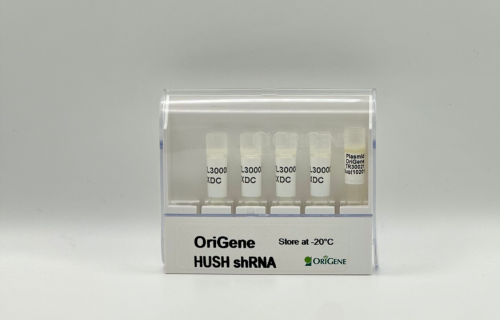
Mertk - Mouse, 4 unique 29mer shRNA constructs in lentiviral GFP vector, 5µg of each construct provided
$1,013.00
In Stock*
Specifications
| Product Data | |
| Locus ID | 17289 |
|---|---|
| Synonyms | Eyk; Mer; nmf12; Nyk |
| Vector | pGFP-C-shLenti |
| E. coli Selection | Chloramphenicol (34 ug/ml) |
| Mammalian Cell Selection | Puromycin |
| Format | Lentiviral plasmids |
| Components | Mertk - Mouse, 4 unique 29mer shRNA constructs in lentiviral GFP vector(Gene ID = 17289). 5µg purified plasmid DNA per construct29-mer scrambled shRNA cassette in pGFP-C-shLenti Vector, TR30021, included for free. |
| RefSeq | NM_008587, NM_008587.1, NM_008587.2, BC156360, BC157109 |
| UniProt ID | Q60805 |
| Summary | Receptor tyrosine kinase that transduces signals from the extracellular matrix into the cytoplasm by binding to several ligands including LGALS3, TUB, TULP1 or GAS6. Regulates many physiological processes including cell survival, migration, differentiation, and phagocytosis of apoptotic cells (efferocytosis). Ligand binding at the cell surface induces autophosphorylation of MERTK on its intracellular domain that provides docking sites for downstream signaling molecules. Following activation by ligand, interacts with GRB2 or PLCG2 and induces phosphorylation of MAPK1, MAPK2, FAK/PTK2 or RAC1. MERTK signaling plays a role in various processes such as macrophage clearance of apoptotic cells, platelet aggregation, cytoskeleton reorganization and engulfment. Functions in the retinal pigment epithelium (RPE) as a regulator of rod outer segments fragments phagocytosis. Plays also an important role in inhibition of Toll-like receptors (TLRs)-mediated innate immune response by activating STAT1, which selectively induces production of suppressors of cytokine signaling SOCS1 and SOCS3.UniProtKB/Swiss-Prot Function |
| shRNA Design | These shRNA constructs were designed against multiple splice variants at this gene locus. To be certain that your variant of interest is targeted, please contact techsupport@origene.com. If you need a special design or shRNA sequence, please utilize our custom shRNA service. |
| Storage | Store at -20°C |
| Shipping | Ambient |
Reviews


Documents
Resources
Citations
Dendrogenin A drives LXR to trigger lethal autophagy in cancers
Segala, David, de Medina et al
Nat Commun (2017) 8 (1), 1903 DOI: 10.1038/s41467-017-01948-9
Segala, David, de Medina et al
Nat Commun (2017) 8 (1), 1903 DOI: 10.1038/s41467-017-01948-9
AI Summary: OriGene’s 29 mer shRNA constructs in pRS retroviral vectors targeting Nur77 and NOR1 were used for gene knockdown experiments to investigate the role of these genes in Dendrogenin A-induced lethal autophagy in cancer cells.
Snippet: For the KD of Nur77 and NOR1 in KG1, 29 mer shRNA constructs in pRS retroviral vectors targeting Nur77 and NOR1 were purchased from Origene
Acute and Temporal Expression of TNF-α-stimulated Gene 6 Product,TSG-6,in Mesenchymal Stem Cells Creates Microenvironments Required for Their Successul Transplantation into the Muscle Tissue
Torihashi, Ho, Kawakubo et al
J. Biol. Chem. (2015)
Torihashi, Ho, Kawakubo et al
J. Biol. Chem. (2015)
AI Summary: OriGene products contributed to this study by providing mouse-specific 29 mer shRNA constructs in the U6 plasmid vector pRFP-C-RS (TF517014C) and a non-effective scrambled pRFP-C-RS vector, which were used to knock down TSG6 expression in mesenchymal stem cells to assess its role in cell transplantation and muscle tissue integration.
Snippet: Mouse unique 29 mer shRNA constructs in U6 plasmid vector pRFP-C-RS (TF517014C) and non-effective scrambled pRFP-C-RS vector were purchased from OriGene Technologies Inc. (OriGene Rockville, MD, www.origene.com). ... Cite SaveSaving
With-No-Lysine Kinase 3 (WNK3) stimulates glioma invasion by regulating cell volume
Haas, Cuddapah, Watkins et al
Am. J. Physiol., Cell Physiol. (2011) 301 (5), C1150-60 DOI: 10.1152/ajpcell.00203.2011
Haas, Cuddapah, Watkins et al
Am. J. Physiol., Cell Physiol. (2011) 301 (5), C1150-60 DOI: 10.1152/ajpcell.00203.2011
Cited by 65
AI Summary: OriGene contributed to this study by providing the shRNA constructs (RS vector targeting WNK3 and nonsilencing control) used to achieve stable knockdown of WNK3, enabling the authors to investigate WNK3's role in glioma cell invasion and volume regulation.
Snippet: Ions must be concentrated intracellularly to favor their efflux down electrochemical gradients to provide this function, and previous research ... RS vector containing either a nonsilencing, scrambled sequence (NS) or one of four sequences targeting WNK3 (Origene, Rockville, MD).
In vivo imaging of HIF-active tumors by an oxygen-dependent degradation protein probe with an interchangeable labeling system
Kuchimaru, Kadonosono, Tanaka et al
PLoS One (2010) 5 (12), e15736 DOI: 10.1371/journal.pone.0015736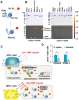
Kuchimaru, Kadonosono, Tanaka et al
PLoS One (2010) 5 (12), e15736 DOI: 10.1371/journal.pone.0015736
Cited by 37
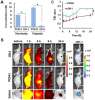
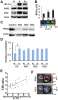
AI Summary: In this study, OriGene products including the pCMV6-Entry-HIF1A plasmid and anti-HIF1A antibody (TA500138) were used to construct and validate the HIF activity probe, supporting the development and characterization of the POH protein for imaging HIF-active tumors.
Showing 1-4 of 4 papers.
Powered by BizGenius
*Delivery time may vary from web posted schedule. Occasional delays may occur due to unforeseen
complexities in the preparation of your product. International customers may expect an additional 1-2 weeks
in shipping.
Related Products
- Price:
- Actual Price:
Welcome to OriGene AI!
I'm your AI-powered guide to everything OriGene.
Ask me anything:
- Product specs
- Ordering help
- Technical questions
- How to find exactly what your experiment needs
Prefer a live agent? Connect with us by clicking the green chat icon, as seen in the image below or email our team at custsupport@origene.com.
