
H2 Mouse shRNA Plasmid (Locus ID 14968)
SKU
TL500911
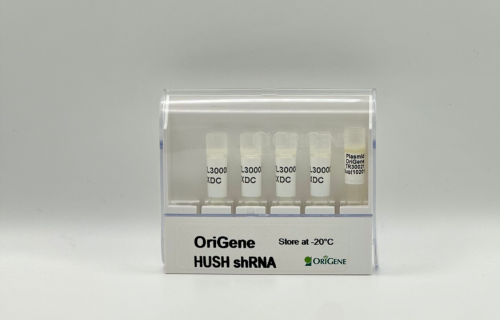
H2 - Mouse, 4 unique 29mer shRNA constructs in lentiviral GFP vector, 5µg of each construct provided
$1,013.00
2 Weeks*
Specifications
| Product Data | |
| Locus ID | 14968 |
|---|---|
| Synonyms | 4.7H; 5.3H; 6.9H; 9.5H; 15H; 27b; 37b; 37c; 15006; 0610037M15Rik; A-beta-2; A-beta2; A130038H09Rik; Aalpha; Abeta; AI323765; AI385589; AI845868; BE136769; C920025E04Rik; CRW2; D17H6S112E; D130003B22Rik; E-alpha-f; E-beta-b; EG630499; ENSMUSG00000079507; Gm7035; Gm11132; gs14-2; H-2Aa; H-2Ab; H-2D; H-2D4; H-2Ea; H-2Eb; H-2Eb2; H-2I; H-2K; H-2K(d); H-2K1; H-2K1K; H-2K2; H-2Ke2; H-2Ke6; H-2M1; H-2M2; H-2M3; H-2M5; H-2Ma; H-2Mb1; H-2Mb2; H-2Oa; H-2Ob; H-2Q1; H-2Q2; H-2Q4; H-2Q5; H-2Q6; H-2Q7; H-2Q8; H-2Q10; H-2T3; H-2T9; H-2T10; H-2T17; H-2T22; H-2T23; H-2T24; H2-Ab; H2-Ab2; H2-B1; H2-D; H2-Ea; H2-Eb; H2-Gs10; H2-IAb2; H2-K; H2-K1; H2-Ma; H2-Mb1; H2-Mb2; H2-Qa-Mb1; H2-Qa1; H2-T17; H2-Tw3; H2Aa; H2Eb; Hmt; Hsd17b8; I-A; I-Aalpha; I-Abeta; I-Ealpha; Ia-1; Ia-2; Ia-3; Ia-4; Ia-5; Ia1; Ia2; Ia3; Ia4; Ia5; IAalpha; IAb; Iebeta2; K-f; Ke-2; Ke-6; Ke6; M3a; M9; Mb1; MMS10-T; Ms10t; Ob; Ped; Pfdn6; Q1; Q1b; Q1d; Q1k; Q9; Q10; Qa-1; Qa-1(b); Qa-2; Qa-4; Qa-5; Qa-6; Qa-7; Qa-8; Qa1; Qa4; Qa5; Qa6; Qa7; Qa8; Qa10; Qat-4; Qat-5; Qb-1; Qb1; Qed-1; R4B2; Ring2; Rmcs1; T18c; T18c(37); T22b; T23b; T23d; Thy19.4; TL |
| Vector | pGFP-C-shLenti |
| E. coli Selection | Chloramphenicol (34 ug/ml) |
| Mammalian Cell Selection | Puromycin |
| Format | Lentiviral plasmids |
| Components | H2 - Mouse, 4 unique 29mer shRNA constructs in lentiviral GFP vector(Gene ID = 14968). 5µg purified plasmid DNA per construct29-mer scrambled shRNA cassette in pGFP-C-shLenti Vector, TR30021, included for free. |
| RefSeq | BC106107, NM_010381.1 |
| Summary | This locus belongs to the class II major histocompatibility complex (MHC) family of genes, which encode immune response (Ia) antigens that function in the T-cell-dependent immune response. This family member has multiple haplotypes, some of which result in the production of an E-alpha subunit that combines with an E-beta subunit to form a functional E complex at the cell surface. Other haplotypes, including that of the reference genome allele, contain mutations and they thus represent polymorphic pseudogenes that do not produce functional products. These mutations include frameshifting indels, nonsense mutations, and deletions of larger regions. The reference genome haplotype contains a deletion at the 5' end of the gene, including the core promoter region and the transcription start site, and therefore no transcripts result from this haplotype. provided by RefSeq, Aug 2010 |
| shRNA Design | These shRNA constructs were designed against multiple splice variants at this gene locus. To be certain that your variant of interest is targeted, please contact techsupport@origene.com. If you need a special design or shRNA sequence, please utilize our custom shRNA service. |
| Storage | Store at -20°C |
| Shipping | Ambient |
Reviews


Documents
Resources
Citations
*Delivery time may vary from web posted schedule. Occasional delays may occur due to unforeseen
complexities in the preparation of your product. International customers may expect an additional 1-2 weeks
in shipping.
Related Products
- Price:
- Actual Price:
Welcome to OriGene AI!
I'm your AI-powered guide to everything OriGene.
Ask me anything:
- Product specs
- Ordering help
- Technical questions
- How to find exactly what your experiment needs
Prefer a live agent? Connect with us by clicking the green chat icon, as seen in the image below or email our team at custsupport@origene.com.
