
Dpp4 Mouse shRNA Plasmid (Locus ID 13482)
SKU
TL500553
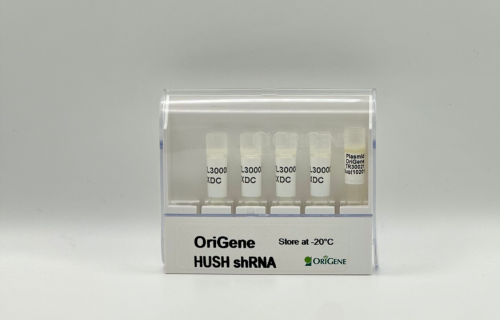
Dpp4 - Mouse, 4 unique 29mer shRNA constructs in lentiviral GFP vector, 5µg of each construct provided
$1,013.00
In Stock*
Specifications
| Product Data | |
| Locus ID | 13482 |
|---|---|
| Synonyms | Cd26; Dpp-4; THAM |
| Vector | pGFP-C-shLenti |
| E. coli Selection | Chloramphenicol (34 ug/ml) |
| Mammalian Cell Selection | Puromycin |
| Format | Lentiviral plasmids |
| Components | Dpp4 - Mouse, 4 unique 29mer shRNA constructs in lentiviral GFP vector(Gene ID = 13482). 5µg purified plasmid DNA per construct29-mer scrambled shRNA cassette in pGFP-C-shLenti Vector, TR30021, included for free. |
| RefSeq | BC022183, NM_001159543, NM_010074, NM_010074.1, NM_010074.2, NM_010074.3, NM_001159543.1 |
| UniProt ID | P28843 |
| Summary | Cell surface glycoprotein receptor involved in the costimulatory signal essential for T-cell receptor (TCR)-mediated T-cell activation. Acts as a positive regulator of T-cell coactivation, by binding at least ADA, CAV1, IGF2R, and PTPRC. Its binding to CAV1 and CARD11 induces T-cell proliferation and NF-kappa-B activation in a T-cell receptor/CD3-dependent manner. Its interaction with ADA also regulates lymphocyte-epithelial cell adhesion. In association with FAP is involved in the pericellular proteolysis of the extracellular matrix (ECM), the migration and invasion of endothelial cells into the ECM. May be involved in the promotion of lymphatic endothelial cells adhesion, migration and tube formation. When overexpressed, enhanced cell proliferation, a process inhibited by GPC3. Acts also as a serine exopeptidase with a dipeptidyl peptidase activity that regulates various physiological processes by cleaving peptides in the circulation, including many chemokines, mitogenic growth factors, neuropeptides and peptide hormones. Removes N-terminal dipeptides sequentially from polypeptides having unsubstituted N-termini provided that the penultimate residue is proline.UniProtKB/Swiss-Prot Function |
| shRNA Design | These shRNA constructs were designed against multiple splice variants at this gene locus. To be certain that your variant of interest is targeted, please contact techsupport@origene.com. If you need a special design or shRNA sequence, please utilize our custom shRNA service. |
| Storage | Store at -20°C |
| Shipping | Ambient |
Reviews


Documents
Resources
Citations
Dipeptidyl peptidase 4 contributes to Alzheimer's disease-like defects in a mouse model and is increased in sporadic Alzheimer's disease brains
Valverde, Dunys, Lorivel et al
J Biol Chem (2021) 297 (2), 100963 DOI: 10.1016/j.jbc.2021.100963
Valverde, Dunys, Lorivel et al
J Biol Chem (2021) 297 (2), 100963 DOI: 10.1016/j.jbc.2021.100963
Cited by 24
AI Summary: OriGene's pGFP-C-shLenti vector (Cat. No. TR30023) and mouse CD26 (DPP4) shRNA (TL500553) were used in this study to genetically reduce DPP4 expression, enabling the authors to investigate its role in Alzheimer's disease-like defects in a mouse model.
Snippet: he CMV promoter. shRNA constructs TCATCACCGTGCCAATAGTTCTGCTGAGC (shDPP4) and GCACTACCAGAGCTA ACTCAGATAGTT (shScr) were inserted in the vector pGFP-C-sh Lenti under the U6 promoter (Cat. No. T R30023, OriGene). Gene-specific mouse shRNA sequences are TL500553 CD26 (Gene ID 13482) Mouse shRNA under the U6 promoter. Two- to three-month-old WT and 3xTg-AD mice were anesthetized by intraperitoneal inje
Showing 1-1 of 1 papers.
Powered by BizGenius
*Delivery time may vary from web posted schedule. Occasional delays may occur due to unforeseen
complexities in the preparation of your product. International customers may expect an additional 1-2 weeks
in shipping.
Related Products
- Price:
- Actual Price:
Welcome to OriGene AI!
I'm your AI-powered guide to everything OriGene.
Ask me anything:
- Product specs
- Ordering help
- Technical questions
- How to find exactly what your experiment needs
Prefer a live agent? Connect with us by clicking the green chat icon, as seen in the image below or email our team at custsupport@origene.com.
