
Dll1 Mouse shRNA Plasmid (Locus ID 13388)
SKU
TL500534
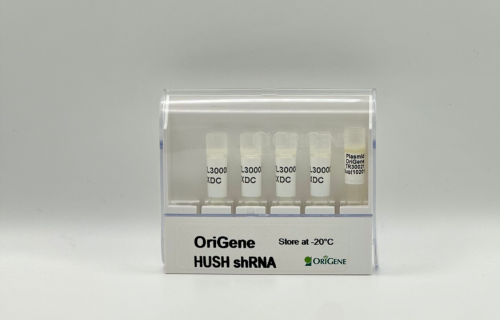
Dll1 - Mouse, 4 unique 29mer shRNA constructs in lentiviral GFP vector, 5µg of each construct provided
$1,013.00
2 Weeks*
Specifications
| Product Data | |
| Locus ID | 13388 |
|---|---|
| Synonyms | Delta1 |
| Vector | pGFP-C-shLenti |
| E. coli Selection | Chloramphenicol (34 ug/ml) |
| Mammalian Cell Selection | Puromycin |
| Format | Lentiviral plasmids |
| Components | Dll1 - Mouse, 4 unique 29mer shRNA constructs in lentiviral GFP vector(Gene ID = 13388). 5µg purified plasmid DNA per construct29-mer scrambled shRNA cassette in pGFP-C-shLenti Vector, TR30021, included for free. |
| RefSeq | BC057400, BC065063, NM_007865, NM_007865.1, NM_007865.2, NM_007865.3 |
| UniProt ID | Q61483 |
| Summary | Transmembrane ligand protein of NOTCH1, NOTCH2 and NOTCH3 receptors that binds the extracellular domain (ECD) of Notch receptor in a cis and trans fashion manner (PubMed:21985982, PubMed:10958687). Following transinteraction, ligand cells produce mechanical force that depends of a clathrin-mediated endocytosis, requiring ligand ubiquitination, EPN1 interaction, and actin polymerisation; these events promote Notch receptor extracellular domain (NECD) transendocytosis and triggers Notch signaling through induction of cleavage, hyperphosphorylation, and nuclear accumulation of the intracellular domain of Notch receptors (NICD) (PubMed:10958687, PubMed:18676613). Is required for embryonic development and maintenance of adult stem cells in many different tissues and immune systeme; the DLL1-induced Notch signaling is mediated through an intercellular communication that regulates cell lineage, cell specification, cell patterning and morphogenesis through effects on differentiation and proliferation (PubMed:17194759, PubMed:19562077, PubMed:18997111, PubMed:23695674, PubMed:16495313, PubMed:21238454, PubMed:22282195, PubMed:7671806, PubMed:17960184, PubMed:22529374, PubMed:19389377, PubMed:23699523, PubMed:19144989, PubMed:23688253, PubMed:23806616, PubMed:26114479, PubMed:22940113, PubMed:25220152, PubMed:20081190, PubMed:21572390, PubMed:22096075). Plays a role in brain development at different level, namely by regulating neuronal differentiation of neural precursor cells via cell-cell interaction, most likely through the lateral inhibitory system in an endogenous level dependent-manner (PubMed:7671806, PubMed:18997111). During neocortex development, Dll1-Notch signaling transmission is mediated by dynamic interactions between intermediate neurogenic progenitors and radial glia; the cell-cell interactions are mediated via dynamic and transient elongation processes, likely to reactivate/maintain Notch activity in neighboring progenitors, and coordinate progenitor cell division and differentiation across radial and zonal boundaries (PubMed:23699523). During cerebellar development, regulates Bergmann glial monolayer formation and its morphological maturation through a Notch signaling pathway (PubMed:23688253). At the retina and spinal cord level, regulates neurogenesis by preventing the premature differentiation of neural progenitors and also by maintaining progenitors in spinal cord through Notch signaling pathway (PubMed:19389377, PubMed:26114479). Also controls neurogenesis of the neural tube in a progenitor domain-specific fashion along the dorsoventral axis (PubMed:20081190). Maintains quiescence of neural stem cells and plays a role as a fate determinant that segregates asymmetrically to one daughter cell during neural stem cells mitosis, resulting in neuronal differentiation in Dll1-inheriting cell (PubMed:23695674). Plays a role in immune systeme development, namely the development of all T-cells and marginal zone (MZ) B cells (PubMed:15146182, PubMed:19217325). Blocks the differentiation of progenitor cells into the B-cell lineage while promoting the emergence of a population of cells with the characteristics of a T-cell/NK-cell precursor (By similarity). Upon MMP14 cleavage, negatively regulates Notch signaling in haematopoietic progenitor cells to specifically maintain normal B-cell development in bone marrow (PubMed:21572390). Also plays a role during muscle development. During early development, inhibits myoblasts differentiation from the medial dermomyotomal lip and later regulates progenitor cell differentiation (PubMed:17194759). Directly modulates cell adhesion and basal lamina formation in satellite cells through Notch signaling. Maintains myogenic progenitors pool by suppressing differentiation through down-regulation of MYOD1 and is required for satellite cell homing and PAX7 expression (PubMed:22940113). During craniofacial and trunk myogenesis suppresses differentiation of cranial mesoderm-derived and somite-derived muscle via MYOD1 regulation but in cranial mes |
| shRNA Design | These shRNA constructs were designed against multiple splice variants at this gene locus. To be certain that your variant of interest is targeted, please contact techsupport@origene.com. If you need a special design or shRNA sequence, please utilize our custom shRNA service. |
| Storage | Store at -20°C |
| Shipping | Ambient |
Reviews


Documents
Resources
Citations
Temperature sensitivity of Notch signaling underlies species-specific developmental plasticity and robustness in amniote brains
Nomura, Nagao, Shirai et al
Nat Commun (2022) 13 (1), 96 DOI: 10.1038/s41467-021-27707-5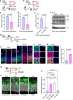
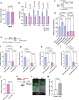
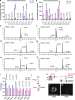
Nomura, Nagao, Shirai et al
Nat Commun (2022) 13 (1), 96 DOI: 10.1038/s41467-021-27707-5
Cited by 15
AI Summary: OriGene products pCMV-mouse Dll1 and pCMV-mouse Dll4 were used in this study to investigate the role of Delta-like ligands in temperature-dependent Notch signaling during amniote brain development.
Snippet: namin 2 K44A, Addgene #22301), HA-Ubiquitin (Addgene #18712), pHR_SFFV_LaG17_synNotch_TetRVP64 (Addgene #79128), pHR_EGFPligand (Addgene #79129), pCS2-Notch1 FL-6MT (Addgene #41728), pCMV-mouse Dll1 (OriGene), pCMV-mouse Dll4 (OriGene), p6872 pHAGE-N-V5-MAML1-FL (Addgene #37048), and pHes1-GFPd2 (Addgene #14808). pCS2-Notch1 L468A was constructed by site-directed mutagenesis using the PrimeSTAR Mu
Showing 1-1 of 1 papers.
Powered by BizGenius
*Delivery time may vary from web posted schedule. Occasional delays may occur due to unforeseen
complexities in the preparation of your product. International customers may expect an additional 1-2 weeks
in shipping.
Related Products
- Price:
- Actual Price:
Welcome to OriGene AI!
I'm your AI-powered guide to everything OriGene.
Ask me anything:
- Product specs
- Ordering help
- Technical questions
- How to find exactly what your experiment needs
Prefer a live agent? Connect with us by clicking the green chat icon, as seen in the image below or email our team at custsupport@origene.com.
