
FOXD3 Human shRNA Plasmid Kit (Locus ID 27022)
SKU
TL312939
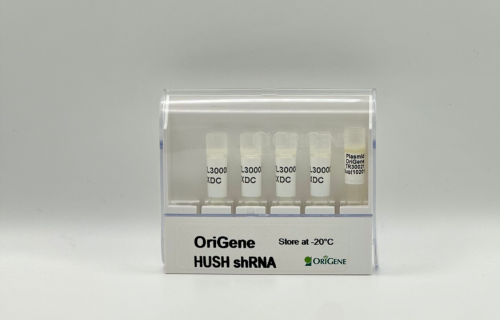
FOXD3 - Human, 4 unique 29mer shRNA constructs in lentiviral GFP vector, 5µg of each construct provided
$1,013.00
In Stock*
Specifications
| Product Data | |
| Locus ID | 27022 |
|---|---|
| Synonyms | AIS1; Genesis; HFH2; VAMAS2 |
| Vector | pGFP-C-shLenti |
| E. coli Selection | Chloramphenicol (34 ug/ml) |
| Mammalian Cell Selection | Puromycin |
| Format | Lentiviral plasmids |
| Components | FOXD3 - Human, 4 unique 29mer shRNA constructs in lentiviral GFP vector(Gene ID = 27022). 5µg purified plasmid DNA per construct29-mer scrambled shRNA cassette in pGFP-C-shLenti Vector, TR30021, included for free. |
| RefSeq | NM_012183, NM_012183.1, NM_012183.2, BC172266, BC172572, NM_012183.3 |
| UniProt ID | Q9UJU5 |
| Summary | This gene belongs to the forkhead family of transcription factors which is characterized by a distinct forkhead domain. Mutations in this gene cause autoimmune susceptibility 1. provided by RefSeq, Nov 2008 |
| shRNA Design | These shRNA constructs were designed against multiple splice variants at this gene locus. To be certain that your variant of interest is targeted, please contact techsupport@origene.com. If you need a special design or shRNA sequence, please utilize our custom shRNA service. |
| Storage | Store at -20°C |
| Shipping | Ambient |
Reviews


Documents
Resources
Citations
Activation of Tyrosine Metabolism in CD13+ Cancer Stem Cells Drives Relapse in Hepatocellular Carcinoma
Sun, Zhang, Chen et al
Cancer Res Treat (2020) 52 (2), 604-621 DOI: 10.4143/crt.2019.444
Sun, Zhang, Chen et al
Cancer Res Treat (2020) 52 (2), 604-621 DOI: 10.4143/crt.2019.444
Cited by 49
AI Summary: OriGene products, specifically the anti-CD13 antibody (TA327322) and Foxd3 expression plasmid (RC206636), were used in this study to identify and manipulate CD13+ cancer stem cells and to analyze Foxd3 function, thereby enabling investigation of the molecular mechanisms underlying relapse in hepatocellular carcinoma.
Showing 1-1 of 1 papers.
Powered by BizGenius
*Delivery time may vary from web posted schedule. Occasional delays may occur due to unforeseen
complexities in the preparation of your product. International customers may expect an additional 1-2 weeks
in shipping.
Related Products
- Price:
- Actual Price:
Welcome to OriGene AI!
I'm your AI-powered guide to everything OriGene.
Ask me anything:
- Product specs
- Ordering help
- Technical questions
- How to find exactly what your experiment needs
Prefer a live agent? Connect with us by clicking the green chat icon, as seen in the image below or email our team at custsupport@origene.com.
