
GLTSCR2 Human shRNA Plasmid Kit (Locus ID 29997)
SKU
TL304310
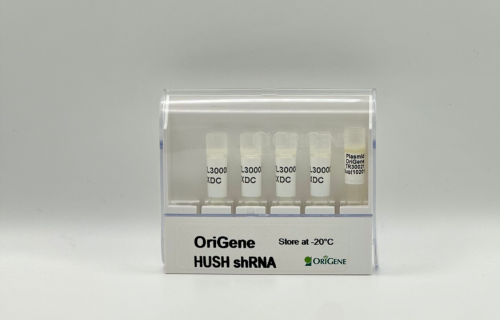
GLTSCR2 - Human, 4 unique 29mer shRNA constructs in lentiviral GFP vector, 5µg of each construct provided
$1,013.00
2 Weeks*
Specifications
| Product Data | |
| Locus ID | 29997 |
|---|---|
| Synonyms | GLTSCR2; PICT-1; PICT1 |
| Vector | pGFP-C-shLenti |
| E. coli Selection | Chloramphenicol (34 ug/ml) |
| Mammalian Cell Selection | Puromycin |
| Format | Lentiviral plasmids |
| Components | GLTSCR2 - Human, 4 unique 29mer shRNA constructs in lentiviral GFP vector(Gene ID = 29997). 5µg purified plasmid DNA per construct29-mer scrambled shRNA cassette in pGFP-C-shLenti Vector, TR30021, included for free. |
| RefSeq | NM_015710, NM_015710.1, NM_015710.2, NM_015710.3, NM_015710.4, BC010095, BC010095.2, BC004229, BC006311, BC007248, BC013203, BC013235, BC013307, BC014009, BC039869 |
| UniProt ID | Q9NZM5 |
| Summary | Nucleolar protein which is involved in the integration of the 5S RNP into the ribosomal large subunit during ribosome biogenesis (PubMed:24120868). In ribosome biogenesis, may also play a role in rRNA transcription (PubMed:27729611). Also functions as a nucleolar sensor that regulates the activation of p53/TP53 in response to ribosome biogenesis perturbation, DNA damage and other stress conditions (PubMed:21741933, PubMed:24120868, PubMed:27829214). DNA damage or perturbation of ribosome biogenesis disrupt the interaction between NOP53 and RPL11 allowing RPL11 transport to the nucleoplasm where it can inhibit MDM2 and allow p53/TP53 activation (PubMed:24120868, PubMed:27829214). It may also positively regulate the function of p53/TP53 in cell cycle arrest and apoptosis through direct interaction, preventing its MDM2-dependent ubiquitin-mediated proteasomal degradation (PubMed:22522597). Originally identified as a tumor suppressor, it may also play a role in cell proliferation and apoptosis by positively regulating the stability of PTEN, thereby antagonizing the PI3K-AKT/PKB signaling pathway (PubMed:15355975, PubMed:16971513, PubMed:27729611). May also inhibit cell proliferation and increase apoptosis through its interaction with NF2 (PubMed:21167305). May negatively regulate NPM1 by regulating its nucleoplasmic localization, oligomerization and ubiquitin-mediated proteasomal degradation (PubMed:25818168). Thereby, may prevent NPM1 interaction with MYC and negatively regulate transcription mediated by the MYC-NPM1 complex (PubMed:25956029). May also regulate cellular aerobic respiration (PubMed:24556985). In the cellular response to viral infection, may play a role in the attenuation of interferon-beta through the inhibition of DDX58/RIG-1 (PubMed:27824081).UniProtKB/Swiss-Prot Function |
| shRNA Design | These shRNA constructs were designed against multiple splice variants at this gene locus. To be certain that your variant of interest is targeted, please contact techsupport@origene.com. If you need a special design or shRNA sequence, please utilize our custom shRNA service. |
| Storage | Store at -20°C |
| Shipping | Ambient |
Reviews


Documents
Resources
Citations
*Delivery time may vary from web posted schedule. Occasional delays may occur due to unforeseen
complexities in the preparation of your product. International customers may expect an additional 1-2 weeks
in shipping.
Related Products
- Price:
- Actual Price:
Welcome to OriGene AI!
I'm your AI-powered guide to everything OriGene.
Ask me anything:
- Product specs
- Ordering help
- Technical questions
- How to find exactly what your experiment needs
Prefer a live agent? Connect with us by clicking the green chat icon, as seen in the image below or email our team at custsupport@origene.com.
