
Trp53 Mouse shRNA Plasmid (Locus ID 22059)
SKU
TG500002
Trp53 - Mouse, 4 unique 29mer shRNA constructs in retroviral GFP vector, 5µg of each construct provided

$883.00
In Stock*
Specifications
| Product Data | |
| Locus ID | 22059 |
|---|---|
| Synonyms | bbl; bfy; bhy; p4; p5; p44; p53; Tp53 |
| Vector | pGFP-V-RS |
| E. coli Selection | Kanamycin |
| Mammalian Cell Selection | Puromycin |
| Format | Retroviral plasmids |
| Components | Trp53 - Mouse, 4 unique 29mer shRNA constructs in retroviral GFP vector(Gene ID = 22059). 5µg purified plasmid DNA per construct29-mer scrambled shRNA cassette in pGFP-V-RS Vector, TR30013, included for free. |
| RefSeq | BC005448, NM_001127233, NM_011640, NM_011640.1, NM_011640.2, NM_011640.3, NM_001127233.1 |
| UniProt ID | P02340 |
| Summary | This gene encodes tumor protein p53, which responds to diverse cellular stresses to regulate target genes that induce cell cycle arrest, apoptosis, senescence, DNA repair, or changes in metabolism. p53 protein is expressed at low level in normal cells and at a high level in a variety of transformed cell lines, where it's believed to contribute to transformation and malignancy. p53 is a DNA-binding protein containing transcription activation, DNA-binding, and oligomerization domains. It is postulated to bind to a p53-binding site and activate expression of downstream genes that inhibit growth and/or invasion, and thus function as a tumor suppressor. Mice deficient for this gene are developmentally normal but are susceptible to spontaneous tumors. Evidence to date shows that this gene contains one promoter, in contrast to alternative promoters of the human gene, and transcribes a few of splice variants which encode different isoforms, although the biological validity or the full-length nature of some variants has not been determined. provided by RefSeq, Jul 2008 |
| shRNA Design | These shRNA constructs were designed against multiple splice variants at this gene locus. To be certain that your variant of interest is targeted, please contact techsupport@origene.com. If you need a special design or shRNA sequence, please utilize our custom shRNA service. |
| Storage | Store at -20°C |
| Shipping | Ambient |
Reviews


Documents
Resources
Citations
Maternal Obesity Programs Senescence Signaling and Glucose Metabolism in Osteo-Progenitors From Rat and Human
Chen, Lazarenko, Blackburn et al
Endocrinology (2016) 157 (11), 4172-4183 DOI: 10.1210/en.2016-1408
Chen, Lazarenko, Blackburn et al
Endocrinology (2016) 157 (11), 4172-4183 DOI: 10.1210/en.2016-1408
Cited by 51
AI Summary: In this study, OriGene's p53 (MR204077L4) and p21 (MR200764L4) overexpression plasmids were used to investigate how increased p53/p21 signaling mediates cell senescence and alters glucose metabolism in fetal osteo-progenitors affected by maternal obesity.
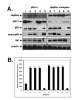
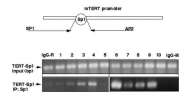
Dual regulation of TERT activity through transcription and splicing by DeltaNP63alpha
Vorovich, Ratovitski
Aging (Albany NY) (2008) 1 (1), 58-67 DOI: 10.18632/aging.100003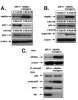
Vorovich, Ratovitski
Aging (Albany NY) (2008) 1 (1), 58-67 DOI: 10.18632/aging.100003
Cited by 10
AI Summary: OriGene products, specifically the p63 (NM_003722) cDNA clone and SIRT1 (NM_012238) cDNA clone, were used for overexpression studies to investigate how DeltaNp63alpha regulates TERT activity through both transcriptional and splicing mechanisms in mouse and human keratinocytes.
Showing 1-2 of 2 papers.
Powered by BizGenius
*Delivery time may vary from web posted schedule. Occasional delays may occur due to unforeseen
complexities in the preparation of your product. International customers may expect an additional 1-2 weeks
in shipping.
Related Products
- Price:
- Actual Price:
Welcome to OriGene AI!
I'm your AI-powered guide to everything OriGene.
Ask me anything:
- Product specs
- Ordering help
- Technical questions
- How to find exactly what your experiment needs
Prefer a live agent? Connect with us by clicking the green chat icon, as seen in the image below or email our team at custsupport@origene.com.
