
Hspa1a Mouse shRNA Plasmid (Locus ID 193740)
SKU
TF515699
Hspa1a - Mouse, 4 unique 29mer shRNA constructs in retroviral RFP vector, 5µg of each construct provided

$883.00
In Stock*
Specifications
| Product Data | |
| Locus ID | 193740 |
|---|---|
| Synonyms | hsp68; Hsp70-3; Hsp70.3; hsp70A1; Hsp72 |
| Vector | pRFP-C-RS |
| E. coli Selection | Chloramphenicol (34 ug/ml) |
| Mammalian Cell Selection | Puromycin |
| Format | Retroviral plasmids |
| Components | Hspa1a - Mouse, 4 unique 29mer shRNA constructs in retroviral RFP vector(Gene ID = 193740). 5µg purified plasmid DNA per construct29-mer scrambled shRNA cassette in pRFP-C-RS Vector, TR30015, included for free. |
| RefSeq | BC054782, NM_010479, NM_010479.1, NM_010479.2, BC032044, BC157921 |
| UniProt ID | Q61696 |
| Summary | Molecular chaperone implicated in a wide variety of cellular processes, including protection of the proteome from stress, folding and transport of newly synthesized polypeptides, activation of proteolysis of misfolded proteins and the formation and dissociation of protein complexes. Plays a pivotal role in the protein quality control system, ensuring the correct folding of proteins, the re-folding of misfolded proteins and controlling the targeting of proteins for subsequent degradation. This is achieved through cycles of ATP binding, ATP hydrolysis and ADP release, mediated by co-chaperones. The co-chaperones have been shown to not only regulate different steps of the ATPase cycle, but they also have an individual specificity such that one co-chaperone may promote folding of a substrate while another may promote degradation. The affinity for polypeptides is regulated by its nucleotide bound state. In the ATP-bound form, it has a low affinity for substrate proteins. However, upon hydrolysis of the ATP to ADP, it undergoes a conformational change that increases its affinity for substrate proteins. It goes through repeated cycles of ATP hydrolysis and nucleotide exchange, which permits cycles of substrate binding and release. The co-chaperones are of three types: J-domain co-chaperones such as HSP40s (stimulate ATPase hydrolysis by HSP70), the nucleotide exchange factors (NEF) such as BAG1/2/3 (facilitate conversion of HSP70 from the ADP-bound to the ATP-bound state thereby promoting substrate release), and the TPR domain chaperones such as HOPX and STUB1. Maintains protein homeostasis during cellular stress through two opposing mechanisms: protein refolding and degradation. Its acetylation/deacetylation state determines whether it functions in protein refolding or protein degradation by controlling the competitive binding of co-chaperones HOPX and STUB1. During the early stress response, the acetylated form binds to HOPX which assists in chaperone-mediated protein refolding, thereafter, it is deacetylated and binds to ubiquitin ligase STUB1 that promotes ubiquitin-mediated protein degradation. Regulates centrosome integrity during mitosis, and is required for the maintenance of a functional mitotic centrosome that supports the assembly of a bipolar mitotic spindle. Enhances STUB1-mediated SMAD3 ubiquitination and degradation and facilitates STUB1-mediated inhibition of TGF-beta signaling. Essential for STUB1-mediated ubiquitination and degradation of FOXP3 in regulatory T-cells (Treg) during inflammation. Negatively regulates heat shock-induced HSF1 transcriptional activity during the attenuation and recovery phase period of the heat shock response.UniProtKB/Swiss-Prot Function |
| shRNA Design | These shRNA constructs were designed against multiple splice variants at this gene locus. To be certain that your variant of interest is targeted, please contact techsupport@origene.com. If you need a special design or shRNA sequence, please utilize our custom shRNA service. |
| Storage | Store at -20°C |
| Shipping | Ambient |
Reviews


Documents
Resources
Citations
DNAJB3 attenuates metabolic stress and promotes glucose uptake by eliciting Glut4 translocation
Arredouani, Diane, Khattab et al
Sci Rep (2019) 9 (1), 4772 DOI: 10.1038/s41598-019-41244-8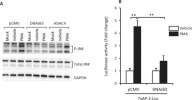
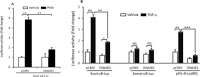
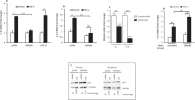
Arredouani, Diane, Khattab et al
Sci Rep (2019) 9 (1), 4772 DOI: 10.1038/s41598-019-41244-8
AI Summary: OriGene products pCMV-DNAJB3 and pCMV-HSPA1A plasmids were used to overexpress human DNAJB3 and HSP-72 in cells, enabling the study of their effects on metabolic stress and glucose uptake in this research.
Snippet: All the cells were used before the 25 th passage. Plasmids and silencing RNA. pCMV-DNAJB3 and pCMV-HSPA1A plasmids were purchased from Origene (Origene Technologies, Inc., Rockvile, MD). They encode the human DNAJB3 and HSP-72, respectively
A biosensor-based framework to measure latent proteostasis capacity
Wood, Ormsby, Radwan et al
Nat Commun (2018) 9 (1), 287 DOI: 10.1038/s41467-017-02562-5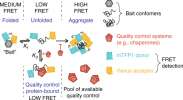
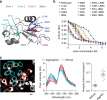
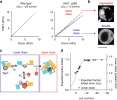
Wood, Ormsby, Radwan et al
Nat Commun (2018) 9 (1), 287 DOI: 10.1038/s41467-017-02562-5
AI Summary: OriGene products pCMV6-AC BAG1, pCMV6-AC HSF1, and pCMV6-Entry myc-HSP70AA1 plasmids were used in this study to overexpress BAG1, HSF1, and HSP70AA1, enabling the authors to investigate how these proteins modulate proteostasis capacity using their biosensor-based framework.
Snippet: pCMV6-AC BAG1 (cat# SC319483), pCMV6-AC HSF1 (cat# SC321225) and pCMV6-Entry myc-HSP70AA1 (cat# RC212496) were purchased from Origene
Showing 1-2 of 2 papers.
Powered by BizGenius
*Delivery time may vary from web posted schedule. Occasional delays may occur due to unforeseen
complexities in the preparation of your product. International customers may expect an additional 1-2 weeks
in shipping.
Related Products
- Price:
- Actual Price:
Welcome to OriGene AI!
I'm your AI-powered guide to everything OriGene.
Ask me anything:
- Product specs
- Ordering help
- Technical questions
- How to find exactly what your experiment needs
Prefer a live agent? Connect with us by clicking the green chat icon, as seen in the image below or email our team at custsupport@origene.com.
