
pRFP-C-RS shRNA Vector

$670.00
In Stock*
Specifications
| Product Data | |
| Control Type | Negative |
|---|---|
| Fluorescent Label | RFP |
| Mammalian Cell Selection | Puromycin |
| Viral Packaging | Retroviral |
| Features |
|
| Download Vector Sequence | |
| Components | 1 vial of 5 ug lyophilized pRFP-C-RS shRNA cloning vector |
| Quality Control | This vector was sequence verified and functionally validated. |
| Storage | Store the vector DNA at -20°C. |
| Stability | Vector DNA is stable for at least one year from date of receipt when stored at -20°C. |
| Shipping | Blue Ice |
Reviews


Documents
| Product Manuals |
| FAQs |
| SDS |
Resources
Citations
Neutrophil Gelatinase-Associated Lipocalin Protects Acinar Cells From Cerulein-Induced Damage During Acute Pancreatitis
Bhatia, Muniyan, Thompson et al
Pancreas (2020) 49 (10), 1297-1306 DOI: 10.1097/MPA.0000000000001690
Bhatia, Muniyan, Thompson et al
Pancreas (2020) 49 (10), 1297-1306 DOI: 10.1097/MPA.0000000000001690
AI Summary: OriGene products contributed to this study by providing the 24p3R overexpression construct (cat. no. MR226001) and the 24p3R shRNA plasmid in pRFP-C-RS vector (cat. no. TR30014), which were used to manipulate 24p3R expression and investigate its role in acinar cell response to NGAL during acute pancreatitis.
HECTD1 regulates the expression of SNAIL: Implications for epithelial‑mesenchymal transition
Wang, De Geyter, Jia et al
Int J Oncol (2020)
Wang, De Geyter, Jia et al
Int J Oncol (2020)
Cited by 24
AI Summary: OriGene products, specifically the HECTD1 shRNA constructs (cat. no. TF304134) and the shRNA control (cat. no. TR30014), were used to knock down HECTD1 expression, enabling the study of its role in regulating SNAIL stability and epithelial-mesenchymal transition in cervical cancer cells.
Aberrant KIF20A Expression Is Associated with Adverse Clinical Outcome and Promotes Tumor Progression in Prostate Cancer
Zhang, Chai, Shen et al
Dis. Markers (2019) 2019, 4782730 DOI: 10.1155/2019/4782730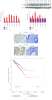
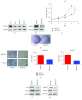
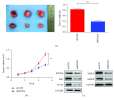
Zhang, Chai, Shen et al
Dis. Markers (2019) 2019, 4782730 DOI: 10.1155/2019/4782730
AI Summary: OriGene's KIF20A human shRNA plasmid (TG311916) and HuSH shRNA RFP Cloning Vector (TR30014) were used to knock down KIF20A expression in prostate cancer cells, enabling the study of its role in tumor progression.
Snippet: To knock down KIF20A in PCa cells, C4-2 cells were seeded in six-well plates and then a prepared plasmid was added (OriGene, KIF20A human shRNA plasmid, TG311916, HuSH shRNA RFP Cloning Vector, TR30014, USA) that was mixed with a Transfection Reagent Cached
KIF20A Affects the Prognosis of Bladder Cancer by Promoting the Proliferation and Metastasis of Bladder Cancer Cells
Shen, Yang, Zhang et al
Disease Markers (2019) 2019, 1-9 DOI: 10.1155/2019/4863182
Shen, Yang, Zhang et al
Disease Markers (2019) 2019, 1-9 DOI: 10.1155/2019/4863182
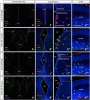
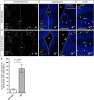
In utero electroporation induces cell death and alters embryonic microglia morphology and expression signatures in the developing hypothalamus
Rosin, Kurrasch
J Neuroinflammation (2018) 15 (1), 181 DOI: 10.1186/s12974-018-1213-6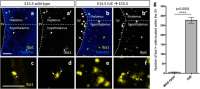
Rosin, Kurrasch
J Neuroinflammation (2018) 15 (1), 181 DOI: 10.1186/s12974-018-1213-6
AI Summary: In this study, the OriGene pRFP-C-RS expression vector (TR30014) was used as one of the plasmids for in utero electroporation to label cells in embryonic mouse brains, enabling the investigation of how this technique affects microglia morphology and gene expression.
Snippet: In addition, the pCIC-Ascl1 expression vector, which contains a β-actin promoter/CMV enhancer upstream of the Ascl1 sequence and an IRES-mCherry cassette, and the pRFP-C-RS expression vector (TR30014, OriGene), which contains a CMV promoter and Cached
Calcium release mediated by redox-sensitive RyR2 channels has a central role in hippocampal structural plasticity and spatial memory
More, Bruna, Lobos et al
Antioxid. Redox Signal. (2018)
More, Bruna, Lobos et al
Antioxid. Redox Signal. (2018)
AI Summary: OriGene products, specifically the pRFP-C-RS and pRFP-C-RS (TR30014) vectors and plasmids containing a noneffective 29-mer scrambled shRNA cassette (TR30013 and TR30015), were used for shRNA-mediated down-regulation of RyR2 expression to investigate its role in hippocampal structural plasticity and spatial memory.
Showing 1-6 of 8 papers.
Powered by BizGenius
*Delivery time may vary from web posted schedule. Occasional delays may occur due to unforeseen
complexities in the preparation of your product. International customers may expect an additional 1-2 weeks
in shipping.
Related Products
- Price:
- Actual Price:
Welcome to OriGene AI!
I'm your AI-powered guide to everything OriGene.
Ask me anything:
- Product specs
- Ordering help
- Technical questions
- How to find exactly what your experiment needs
Prefer a live agent? Connect with us by clicking the green chat icon, as seen in the image below or email our team at custsupport@origene.com.
