
Cxcr4 Mouse shRNA Plasmid (Locus ID 12767)
SKU
TF500383
Cxcr4 - Mouse, 4 unique 29mer shRNA constructs in retroviral RFP vector, 5µg of each construct provided

$883.00
In Stock*
Specifications
| Product Data | |
| Locus ID | 12767 |
|---|---|
| Synonyms | b2b220Clo; CD184; Cmkar4; LESTR; PB-CKR; PBSF/SDF-1; Sdf1r |
| Vector | pRFP-C-RS |
| E. coli Selection | Chloramphenicol (34 ug/ml) |
| Mammalian Cell Selection | Puromycin |
| Format | Retroviral plasmids |
| Components | Cxcr4 - Mouse, 4 unique 29mer shRNA constructs in retroviral RFP vector(Gene ID = 12767). 5µg purified plasmid DNA per construct29-mer scrambled shRNA cassette in pRFP-C-RS Vector, TR30015, included for free. |
| RefSeq | BC031665, BC098322, NM_009911, NM_009911.1, NM_009911.2, NM_009911.3, NM_001356509 |
| UniProt ID | P70658 |
| Summary | Receptor for the C-X-C chemokine CXCL12/SDF-1 that transduces a signal by increasing intracellular calcium ion levels and enhancing MAPK1/MAPK3 activation (PubMed:8962122, PubMed:9295051, PubMed:9103415). Involved in the AKT signaling cascade (By similarity). Plays a role in regulation of cell migration, e.g. during wound healing. Acts as a receptor for extracellular ubiquitin; leading to enhanced intracellular calcium ions and reduced cellular cAMP levels. Binds bacterial lipopolysaccharide (LPS) et mediates LPS-induced inflammatory response, including TNF secretion by monocytes (By similarity). Involved in hematopoiesis and in cardiac ventricular septum formation (PubMed:9634237, PubMed:9634238, PubMed:9689100). Also plays an essential role in vascularization of the gastrointestinal tract, probably by regulating vascular branching and/or remodeling processes in endothelial cells (PubMed:9634237). Involved in cerebellar development. In the CNS, could mediate hippocampal-neuron survival (PubMed:9634238, PubMed:9689100).UniProtKB/Swiss-Prot Function |
| shRNA Design | These shRNA constructs were designed against multiple splice variants at this gene locus. To be certain that your variant of interest is targeted, please contact techsupport@origene.com. If you need a special design or shRNA sequence, please utilize our custom shRNA service. |
| Storage | Store at -20°C |
| Shipping | Ambient |
Reviews


Documents
Resources
Citations
CXCL12 loaded-dermal filler captures CXCR4 expressing melanoma circulating tumor cells
Ieranò, D'Alterio, Giarra et al
Cell Death Dis (2019) 10 (8), 562 DOI: 10.1038/s41419-019-1796-6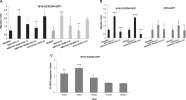
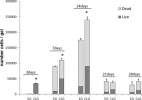
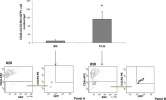
Ieranò, D'Alterio, Giarra et al
Cell Death Dis (2019) 10 (8), 562 DOI: 10.1038/s41419-019-1796-6
AI Summary: OriGene products pCMV6-AC-GFP Vector (TrueORF clone) and pCMV6-AC-h-CXCR4-GFP Vector (TrueORF clone) were used to transfect B16 cells, enabling the study of CXCR4-expressing melanoma cell migration and trapping by the CXCL12-loaded dermal filler in this research.
Snippet: reducing metastases. Materials and methods. Cell culture. B16 cells were transfected with 5 µg of pCMV6-AC-GFP Vector (TrueORF clone;Origene) or with 5 µg of pCMV6-AC-h-CXCR4-GFP Vector (TrueORF clone;Origene). B16
Myeloid Conditioning with c-kit-Targeted CAR-T Cells Enables Donor Stem Cell Engraftment
Arai, Choi, Corsino et al
Mol Ther (2018) 26 (5), 1181-1197 DOI: 10.1016/j.ymthe.2018.03.003
Arai, Choi, Corsino et al
Mol Ther (2018) 26 (5), 1181-1197 DOI: 10.1016/j.ymthe.2018.03.003
Cited by 62
AI Summary: In this study, OriGene’s pBMN CXCR4 (OriGene, MC210630) plasmid was used to transduce c-kit CAR-T cells, enhancing their migration to bone marrow and enabling effective stem cell engraftment in recipient mice.
Showing 1-2 of 2 papers.
Powered by BizGenius
*Delivery time may vary from web posted schedule. Occasional delays may occur due to unforeseen
complexities in the preparation of your product. International customers may expect an additional 1-2 weeks
in shipping.
Related Products
- Price:
- Actual Price:
Welcome to OriGene AI!
I'm your AI-powered guide to everything OriGene.
Ask me anything:
- Product specs
- Ordering help
- Technical questions
- How to find exactly what your experiment needs
Prefer a live agent? Connect with us by clicking the green chat icon, as seen in the image below or email our team at custsupport@origene.com.
