
ATP5F1D Human shRNA Lentiviral Particle (Locus ID 513)

SKU
TL320088V
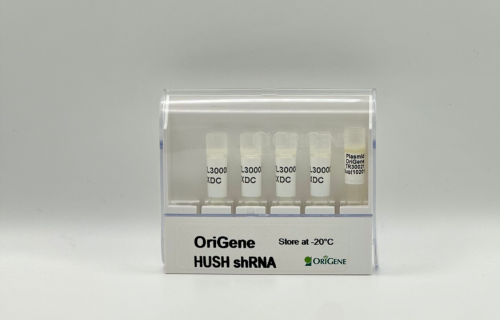
ATP5D - Human shRNA lentiviral particles (4 unique 29mer target-specific shRNA, 1 scramble control), 0.5 ml each, >10^7 TU/ml.
$1,731.00
5 Weeks*
Specifications
| Product Data | |
| Locus ID | 513 |
|---|---|
| Synonyms | ATP5D; MC5DN5 |
| Vector | pGFP-C-shLenti |
| E. coli Selection | Chloramphenicol (34 ug/ml) |
| Mammalian Cell Selection | Puromycin |
| Format | Lentiviral particles |
| Components | ATP5D - Human shRNA lentiviral particles (4 unique 29mer target-specific shRNA, 1 scramble control), 0.5 ml each, >10^7 TU/ml. |
| RefSeq | NM_001001975, NM_001687, NM_001001975.1, NM_001687.1, NM_001687.2, NM_001687.3, NM_001687.4, BC004426, BC004426.1, BC002389, BC018079, BC018817, BC050458, BC058927, NM_001001975.2, NM_001687.5 |
| UniProt ID | P30049 |
| Summary | This gene encodes a subunit of mitochondrial ATP synthase. Mitochondrial ATP synthase catalyzes ATP synthesis, utilizing an electrochemical gradient of protons across the inner membrane during oxidative phosphorylation. ATP synthase is composed of two linked multi-subunit complexes: the soluble catalytic core, F1, and the membrane-spanning component, Fo, comprising the proton channel. The catalytic portion of mitochondrial ATP synthase consists of 5 different subunits (alpha, beta, gamma, delta, and epsilon) assembled with a stoichiometry of 3 alpha, 3 beta, and a single representative of the other 3. The proton channel consists of three main subunits (a, b, c). This gene encodes the delta subunit of the catalytic core. Alternatively spliced transcript variants encoding the same isoform have been identified. provided by RefSeq, Jul 2008 |
| shRNA Design | These shRNA constructs were designed against multiple splice variants at this gene locus. To be certain that your variant of interest is targeted, please contact techsupport@origene.com. If you need a special design or shRNA sequence, please utilize our custom shRNA service. |
| Performance Guaranteed | OriGene guarantees that the sequences in the shRNA expression cassettes are verified to correspond to the target gene with 100% identity. One of the four constructs at minimum are guaranteed to produce 70% or more gene expression knock-down provided a minimum transfection efficiency of 80% is achieved. Western Blot data is recommended over qPCR to evaluate the silencing effect of the shRNA constructs 72 hrs post transfection. To properly assess knockdown, the gene expression level from the included scramble control vector must be used in comparison with the target-specific shRNA transfected samples. For non-conforming shRNA, requests for replacement product must be made within ninety (90) days from the date of delivery of the shRNA kit. To arrange for a free replacement with newly designed constructs, please contact Technical Services at techsupport@origene.com. Please provide your data indicating the transfection efficiency and measurement of gene expression knockdown compared to the scrambled shRNA control (Western Blot data preferred). |
| Storage | Store at -80°C |
| Shipping | Dry Ice |
Reviews


Documents
Resources
Citations
*Delivery time may vary from web posted schedule. Occasional delays may occur due to unforeseen
complexities in the preparation of your product. International customers may expect an additional 1-2 weeks
in shipping.
Related Products
- Price:
- Actual Price:
Welcome to OriGene AI!
I'm your AI-powered guide to everything OriGene.
Ask me anything:
- Product specs
- Ordering help
- Technical questions
- How to find exactly what your experiment needs
Prefer a live agent? Connect with us by clicking the green chat icon, as seen in the image below or email our team at custsupport@origene.com.
