
Huntingtin Associated Protein 1 (HAP1) Human shRNA Lentiviral Particle (Locus ID 9001)

SKU
TL304153V
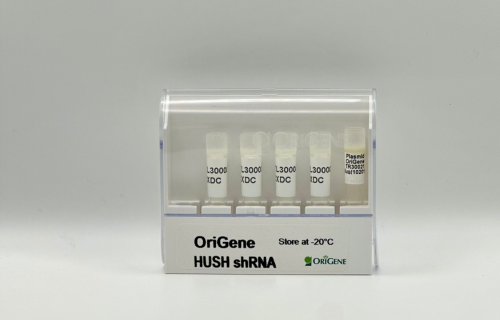
HAP1 - Human shRNA lentiviral particles (4 unique 29mer target-specific shRNA, 1 scramble control), 0.5 ml each, >10^7 TU/ml.
$1,731.00
5 Weeks*
Specifications
| Product Data | |
| Locus ID | 9001 |
|---|---|
| Synonyms | HAP2; hHLP1; HIP5; HLP |
| Vector | pGFP-C-shLenti |
| E. coli Selection | Chloramphenicol (34 ug/ml) |
| Mammalian Cell Selection | Puromycin |
| Format | Lentiviral particles |
| Components | HAP1 - Human shRNA lentiviral particles (4 unique 29mer target-specific shRNA, 1 scramble control), 0.5 ml each, >10^7 TU/ml. |
| RefSeq | NM_001079870, NM_001079871, NM_003949, NM_177977, NM_177977.1, NM_177977.2, NM_001079870.1, NM_001079871.1, NM_003949.2, BC156728, NM_001367459, NM_001367460, NM_001367461, NM_001367462, NM_177977.3 |
| UniProt ID | P54257 |
| Summary | Huntington's disease (HD), a neurodegenerative disorder characterized by loss of striatal neurons, is caused by an expansion of a polyglutamine tract in the HD protein huntingtin. This gene encodes a protein that interacts with huntingtin, with two cytoskeletal proteins (dynactin and pericentriolar autoantigen protein 1), and with a hepatocyte growth factor-regulated tyrosine kinase substrate. The interactions with cytoskeletal proteins and a kinase substrate suggest a role for this protein in vesicular trafficking or organelle transport. Several alternatively spliced transcript variants encoding different isoforms have been described for this gene. provided by RefSeq, Jul 2008 |
| shRNA Design | These shRNA constructs were designed against multiple splice variants at this gene locus. To be certain that your variant of interest is targeted, please contact techsupport@origene.com. If you need a special design or shRNA sequence, please utilize our custom shRNA service. |
| Performance Guaranteed | OriGene guarantees that the sequences in the shRNA expression cassettes are verified to correspond to the target gene with 100% identity. One of the four constructs at minimum are guaranteed to produce 70% or more gene expression knock-down provided a minimum transfection efficiency of 80% is achieved. Western Blot data is recommended over qPCR to evaluate the silencing effect of the shRNA constructs 72 hrs post transfection. To properly assess knockdown, the gene expression level from the included scramble control vector must be used in comparison with the target-specific shRNA transfected samples. For non-conforming shRNA, requests for replacement product must be made within ninety (90) days from the date of delivery of the shRNA kit. To arrange for a free replacement with newly designed constructs, please contact Technical Services at techsupport@origene.com. Please provide your data indicating the transfection efficiency and measurement of gene expression knockdown compared to the scrambled shRNA control (Western Blot data preferred). |
| Storage | Store at -80°C |
| Shipping | Dry Ice |
Reviews


Documents
Resources
Citations
The P5-type ATPase ATP13A1 modulates major histocompatibility complex I-related protein 1 (MR1)-mediated antigen presentation
Kulicke, De Zan, Hein et al
J Biol Chem (2021) 298 (2), 101542 DOI: 10.1016/j.jbc.2021.101542
Kulicke, De Zan, Hein et al
J Biol Chem (2021) 298 (2), 101542 DOI: 10.1016/j.jbc.2021.101542
Cited by 12
AI Summary: OriGene’s Turbofectin 8.0 transfection reagent was used to introduce CRISPR/Cas9 plasmids into HAP1 cells, enabling the gene editing experiments that identified ATP13A1 as a key regulator of MR1-mediated antigen presentation in this study.
Snippet: … HAP1 cells were transfected with 2 μg lentiCRISPR v2 bearing the sgRNA of interest in the presence of transfection reagent Turbofectin 8.0 (OriGene). … For in-depth validation of ATP13A1, three one-component CRISPR/Cas9 plasmids with;HAP1 cells were transfected with 2 μg lentiCRISPR v2 bearing the sgRNA of interest in the presence of transfection reagent Turbofectin 8.0 (OriGene). …
RanBP2/Nup358 enhances miRNA activity by sumoylating Argonautes
Shen, Wang, Truong et al
PLoS Genet (2021) 17 (2), e1009378 DOI: 10.1371/journal.pgen.1009378
Shen, Wang, Truong et al
PLoS Genet (2021) 17 (2), e1009378 DOI: 10.1371/journal.pgen.1009378
Cited by 37
AI Summary: OriGene’s Turbofectin 8.0 transfection reagent was used to efficiently introduce nucleic acids into HAP1 cells, facilitating key experiments in the study of RanBP2/Nup358’s role in enhancing miRNA activity by sumoylating Argonautes.
Snippet: ency of 70–80% using GenJet-OS in vitro transfection reagent for U2OS cells (SignaGen Laboratories, Gaithersburg, MD, USA) or JetPRIME for HEK293 cells (PolyPlus) or Turbofectin 8.0 for HAP1 cells (OriGene), following the manufacturer’s protocol. Lentiviral-mediated shRNA knockdown was carried out as described previously [82] with plasmids encoding shRNA against RanBP2 (shRNA1: TRCN0000003452;All cells were plated 24 h before transfection and transfected at a confluency of 70–80% using GenJet-OS in vitro transfection reagent for U2OS cells (SignaGen Laboratories, Gaithersburg, MD, USA) or JetPRIME for HEK293 cells (PolyPlus) or Turbofectin 8.0 for HAP1 cells (OriGene), following the manufacturer’s protocol
Transmembrane BAX Inhibitor-1 Motif Containing Protein 5 (TMBIM5) Sustains Mitochondrial Structure, Shape, and Function by Impacting the Mitochondrial Protein Synthesis Machinery
Seitaj, Maull, Zhang et al
Cells (2020) 9 (10) DOI: 10.3390/cells9102147
Seitaj, Maull, Zhang et al
Cells (2020) 9 (10) DOI: 10.3390/cells9102147
Cited by 29
AI Summary: OriGene's TurboFectin reagent was used in this study to transfect HAP1 cells with BRET-based ATP biosensor plasmids, enabling the researchers to measure cytosolic and mitochondrial ATP levels and assess the impact of TMBIM5 on mitochondrial function.
Snippet: …HAP1 WT and TMBIM5 KO cells were transiently transfected with plasmids carrying the bioluminescence energy transfer (BRET)-based ATP biosensor BTeam without targeting the signal sequence (for cyto-ATP determination) or targeted to mitochondria (for mito-ATP determination) using TurboFectin reagent (OriGene). …
Quantitative genetic screening reveals a Ragulator-FLCN feedback loop that regulates the mTORC1 pathway
De Zan, van Stiphout, Gapp et al
Sci Signal (2020) 13 (649) DOI: 10.1126/scisignal.aba5665
De Zan, van Stiphout, Gapp et al
Sci Signal (2020) 13 (649) DOI: 10.1126/scisignal.aba5665
Cited by 9
AI Summary: In this study, OriGene's TurboFectin 8.0 transfection reagent was used to introduce CRISPR constructs into HAP1 cells, enabling efficient genetic screening to investigate regulatory mechanisms of the mTORC1 pathway.
Snippet: HAP1 cells were transfected with 2 μg of lentiCRISPR v2 bearing the sgRNA of interest in the presence of transfection reagent TurboFectin 8.0 (OriGene). Transfection in HeLa and U2OS was carried out with 3 μg of lentiCRISPR v2 bearing the sgRNA of interest and FuGENE HD (Promega) at a ratio of 3:1 reagent/DNA. …
NOXA upregulation by the prohibitin-binding compound fluorizoline is transcriptionally regulated by integrated stress response-induced ATF3 and ATF4
Núñez-Vázquez, Sánchez-Vera, Saura-Esteller et al
FEBS J. (2020)
Núñez-Vázquez, Sánchez-Vera, Saura-Esteller et al
FEBS J. (2020)
Cited by 33
AI Summary: OriGene's Turbofectin transfection reagent was used to transfect HAP1 cells, enabling the functional studies of gene regulation and apoptosis mechanisms described in the paper.
Snippet: CCGTGGCCTACGGTGTG-3´;R: 5´-CGTTGACAATGGACGGCAAC-3´. HeLa cells were transfected overnight with Lipofectamine LTX Reagent (Thermo Fisher Scientific) and HAP1 cells with Turbofectin from Origene (Rockville, Maryland, United States)
Recognition of Semaphorin Proteins by P. sordellii Lethal Toxin Reveals Principles of Receptor Specificity in Clostridial Toxins
Lee, Beilhartz, Kucharska et al
Cell (2020) 182 (2), 345-356.e16 DOI: 10.1016/j.cell.2020.06.005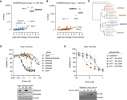
Lee, Beilhartz, Kucharska et al
Cell (2020) 182 (2), 345-356.e16 DOI: 10.1016/j.cell.2020.06.005
Cited by 46
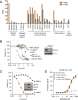
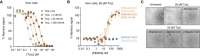
AI Summary: OriGene's TurboFectin Transfection Reagent (Cat#TF81001) was used in this study to facilitate the transfection of cells, enabling the functional analyses that led to the identification of semaphorins SEMA6A and SEMA6B as receptors for P. sordellii lethal toxin.
Snippet: bromide Sigma-Aldrich Cat#107689-10G Blasticidin S HCl Thermo Fisher Scientific Cat#A1113903 FBS, Qualified Thermo Fisher Scientific Cat#12483-020 TurboFectin Transfection Reagent Origene Technologies Cat#TF81001 Inositol hexakisphosphate Sigma-Aldrich Cat#P0109 Dithiothreitol BioBasic Inc. Cat#B0058 Penicillin-Streptomycin Thermo Fisher Scientific Cat#15140;mide Sigma-Aldrich Cat#107689-10G Blasticidin S HCl Thermo Fisher Scientific Cat#A1113903 FBS, Qualified Thermo Fisher Scientific Cat#12483-020 TurboFectin Transfection Reagent Origene Technologies Cat#TF81001 Inositol hexakisphosphate Sigma-Aldrich Cat#P0109 Dithiothreitol BioBasic Inc. …
Showing 1-6 of 19 papers.
Powered by BizGenius
*Delivery time may vary from web posted schedule. Occasional delays may occur due to unforeseen
complexities in the preparation of your product. International customers may expect an additional 1-2 weeks
in shipping.
Related Products
- Price:
- Actual Price:
Welcome to OriGene AI!
I'm your AI-powered guide to everything OriGene.
Ask me anything:
- Product specs
- Ordering help
- Technical questions
- How to find exactly what your experiment needs
Prefer a live agent? Connect with us by clicking the green chat icon, as seen in the image below or email our team at custsupport@origene.com.
