
Eif4e (BC085087) Mouse Recombinant Protein
SKU
TP502404
Purified recombinant protein of Mouse eukaryotic translation initiation factor 4E (cDNA clone MGC:103177 IMAGE:6438419), complete cds, with C-terminal MYC/DDK tag, expressed in HEK293T cells, 20ug

$1,020.00
4 Weeks*
Specifications
| Product Data | |
| Species | Mouse |
|---|---|
| Expression Host | HEK293 |
| Expression cDNA Clone or AA Sequence | |
| Tag | C-MYC/DDK |
| Predicted MW | 25.1 kDa |
| Concentration | >0.05 µg/µL as determined by microplate BCA method |
| Purity | > 80% as determined by SDS-PAGE and Coomassie blue staining |
| Buffer | 25 mM Tris-HCl, 100 mM glycine, pH 7.3, 10% glycerol |
| Note | For testing in cell culture applications, please filter before use. Note that you may experience some loss of protein during the filtration process. |
| Storage | Store at -80°C after receiving vials. |
| Stability | Stable for 12 months from the date of receipt of the product under proper storage and handling conditions. Avoid repeated freeze-thaw cycles. |
| Shipping | Dry Ice |
| Reference Data | |
| Locus ID | 13684 |
| UniProt ID | P63073 |
| Cytogenetics | 3 64.3 cM |
| RefSeq Size | 2366 |
| RefSeq ORF | 651 |
| Synonyms | Eif4e-ps, eIF-4E |
| Summary | This gene encodes a component of the eukaryotic translation initiation factor 4F complex, which recognizes the 7-methylguanosine cap structure at the 5' end of messenger RNAs. The encoded protein aids in translation initiation by recruiting ribosomes to the 5'-cap structure. Association of this protein with the 4F complex is the rate-limiting step in translation initiation. This gene acts as a proto-oncogene, and its expression and activation is associated with transformation and tumorigenesis. It has also been associated with autism spectrum disorders. Consistently, knockout of this gene results in increased translation of neuroligins, postsynaptic proteins linked to autism spectrum disorders. Pseudogenes of this gene are found on other chromosomes. Alternative splicing results in multiple transcript variants. provided by RefSeq, Sep 2015 |
Reviews


Documents
| FAQs |
| SDS |
Resources
| Recombinant Protein Resources |
Citations
The Parkinson's disease associated LRRK2 exhibits weaker in vitro phosphorylation of 4E-BP compared to autophosphorylation
Kumar, Greggio, Beilina et al
PLoS One (2010) 5 (1), e8730 DOI: 10.1371/journal.pone.0008730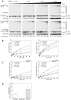
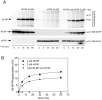
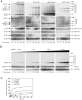
Kumar, Greggio, Beilina et al
PLoS One (2010) 5 (1), e8730 DOI: 10.1371/journal.pone.0008730
Cited by 95
AI Summary: In this study, OriGene products—including the TrueORF cDNA clones for LRRK2 (RC211447) and 4E-BP (RC201232)—were used to express these proteins in HEK cell lines and in vitro assays, enabling the authors to assess LRRK2’s ability to phosphorylate 4E-BP and compare it to autophosphorylation activity.
Showing 1-1 of 1 papers.
Powered by BizGenius
*Delivery time may vary from web posted schedule. Occasional delays may occur due to unforeseen
complexities in the preparation of your product. International customers may expect an additional 1-2 weeks
in shipping.
Related Products
- Price:
- Actual Price:
Welcome to OriGene AI!
I'm your AI-powered guide to everything OriGene.
Ask me anything:
- Product specs
- Ordering help
- Technical questions
- How to find exactly what your experiment needs
Prefer a live agent? Connect with us by clicking the green chat icon, as seen in the image below or email our team at custsupport@origene.com.
