
Bcl2 Binding component 3 (BBC3) (NM_001127240) Human Recombinant Protein

SKU
TP325345M
Recombinant protein of human BCL2 binding component 3 (BBC3), transcript variant 1, 100 µg

$2,950.00
4 Weeks*
Specifications
| Product Data | |
| Species | Human |
|---|---|
| Expression Host | HEK293 |
| Expression cDNA Clone or AA Sequence | |
| Tag | C-Myc/DDK |
| Predicted MW | 26.3 kDa |
| Concentration | >0.05 µg/µL as determined by microplate BCA method |
| Purity | > 80% as determined by SDS-PAGE and Coomassie blue staining |
| Buffer | 25 mM Tris-HCl, 100 mM glycine, pH 7.3, 10% glycerol |
| Preparation | Recombinant protein was captured through anti-DDK affinity column followed by conventional chromatography steps. |
| Note | For testing in cell culture applications, please filter before use. Note that you may experience some loss of protein during the filtration process. |
| Storage | Store at -80°C. |
| Stability | Stable for 12 months from the date of receipt of the product under proper storage and handling conditions. Avoid repeated freeze-thaw cycles. |
| Shipping | Dry Ice |
| Reference Data | |
| RefSeq | NP_001120712 |
| Locus ID | 27113 |
| UniProt ID | Q96PG8 |
| Cytogenetics | 19q13.32 |
| RefSeq ORF | 783 |
| Synonyms | JFY-1; JFY1; PUMA |
| Summary | This gene encodes a member of the BCL-2 family of proteins. This family member belongs to the BH3-only pro-apoptotic subclass. The protein cooperates with direct activator proteins to induce mitochondrial outer membrane permeabilization and apoptosis. It can bind to anti-apoptotic Bcl-2 family members to induce mitochondrial dysfunction and caspase activation. Because of its pro-apoptotic role, this gene is a potential drug target for cancer therapy and for tissue injury. Alternative splicing results in multiple transcript variants. provided by RefSeq, Dec 2011 |
| Protein Families | Druggable Genome |
| Protein Pathways | Huntington's disease, p53 signaling pathway |
Reviews


Documents
| FAQs |
| SDS |
Resources
| Recombinant Protein Resources |
Citations
Using CETSA assay and a mathematical model to reveal dual Bcl-2/Mcl-1 inhibition and on-target mechanism for ABT-199 and S1
Guo, Song, Xue et al
Eur J Pharm Sci (2020) 142, 105105 DOI: 10.1016/j.ejps.2019.105105
Guo, Song, Xue et al
Eur J Pharm Sci (2020) 142, 105105 DOI: 10.1016/j.ejps.2019.105105
Cited by 12
AI Summary: OriGene products contributed to this study by providing the Bcl-2 (Cat# TP300904) and Mcl-1 (Cat# TP301905) recombinant proteins used in the CETSA assays to assess drug-protein binding and target engagement.
Using CETSA assay and a mathematical model to reveal dual Bcl-2/Mcl-1 inhibition and on-target mechanism for ABT-199 and S1
Guo, Song, Xue et al
Eur J Pharm Sci (2019) 142, 105105 DOI: 10.1016/j.ejps.2019.105105
Guo, Song, Xue et al
Eur J Pharm Sci (2019) 142, 105105 DOI: 10.1016/j.ejps.2019.105105
AI Summary: OriGene products Bim (LY416580), Puma (TP325345), Bax (RC204368), and Bak (RC201216) were used in this study to investigate the roles of pro-apoptotic proteins in validating the on-target effects of BH3 mimetic drugs on Bcl-2 family proteins.
Snippet: Recombinant human Bcl-2 and Mcl-1 were obtained as our report described (Zhang et al., 2011), Bim (LY416580), Puma (TP325345), Bax (RC204368), Bak (RC201216) were purchased from OriGene (Beijing, China). Immunoblotting;- Recombinant human Bcl-2 and Mcl-1 were obtained as our report described (Zhang et al., 2011), Bim (LY416580), Puma (TP325345), Bax (RC204368), Bak (RC201216) were purchased from OriGene (Beijing, China). …
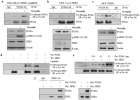
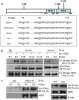
HER2 Phosphorylates and Destabilizes Pro-Apoptotic PUMA, Leading to Antagonized Apoptosis in Cancer Cells
Carpenter, Han, Paw et al
PLoS ONE (2013) 8 (11), e78836 DOI: 10.1371/journal.pone.0078836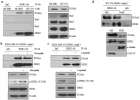
Carpenter, Han, Paw et al
PLoS ONE (2013) 8 (11), e78836 DOI: 10.1371/journal.pone.0078836
Cited by 21
AI Summary: OriGene’s recombinant human PUMA protein was used as a substrate in phosphorylation and dephosphorylation assays to investigate how HER2 modifies and destabilizes PUMA in cancer cells.
Snippet: Recombinant human PUMA protein (Origene, Rockville, MD) was dephosphorylated with recombinant human PTP1B protein at 30°C followed by PTP1B inactivation at 65°C. Dephosphorylated PUMA was then incubated with recombinant human HER2 protein (Promega ... Cite SaveSaving
Showing 1-3 of 3 papers.
Powered by BizGenius
*Delivery time may vary from web posted schedule. Occasional delays may occur due to unforeseen
complexities in the preparation of your product. International customers may expect an additional 1-2 weeks
in shipping.
Related Products
- Price:
- Actual Price:
Welcome to OriGene AI!
I'm your AI-powered guide to everything OriGene.
Ask me anything:
- Product specs
- Ordering help
- Technical questions
- How to find exactly what your experiment needs
Prefer a live agent? Connect with us by clicking the green chat icon, as seen in the image below or email our team at custsupport@origene.com.
