
DDX3 (DDX3X) (NM_001356) Human Recombinant Protein

SKU
TP304171M
Recombinant protein of human DEAD (Asp-Glu-Ala-Asp) box polypeptide 3, X-linked (DDX3X), 100 µg

$2,950.00
4 Weeks*
Specifications
| Product Data | |
| Species | Human |
|---|---|
| Expression Host | HEK293 |
| Expression cDNA Clone or AA Sequence | |
| Tag | C-Myc/DDK |
| Predicted MW | 73.1 kDa |
| Concentration | >0.1 µg/µL as determined by microplate BCA method |
| Purity | > 80% as determined by SDS-PAGE and Coomassie blue staining |
| Buffer | 25 mM Tris-HCl, 100 mM glycine, pH 7.3, 10% glycerol |
| Bioactivity | Biolayer interferometry (BLI) assay (PMID: 25496916) |
| Preparation | Recombinant protein was captured through anti-DDK affinity column followed by conventional chromatography steps. |
| Note | For testing in cell culture applications, please filter before use. Note that you may experience some loss of protein during the filtration process. |
| Storage | Store at -80°C. |
| Stability | Stable for 12 months from the date of receipt of the product under proper storage and handling conditions. Avoid repeated freeze-thaw cycles. |
| Shipping | Dry Ice |
| Reference Data | |
| RefSeq | NP_001347 |
| Locus ID | 1654 |
| UniProt ID | O00571 |
| Cytogenetics | Xp11.4 |
| RefSeq Size | 5433 |
| RefSeq ORF | 1986 |
| Synonyms | CAP-Rf; DBX; DDX3; DDX14; HLP2; MRX102; MRXSSB |
| Summary | The protein encoded by this gene is a member of the large DEAD-box protein family, that is defined by the presence of the conserved Asp-Glu-Ala-Asp (DEAD) motif, and has ATP-dependent RNA helicase activity. This protein has been reported to display a high level of RNA-independent ATPase activity, and unlike most DEAD-box helicases, the ATPase activity is thought to be stimulated by both RNA and DNA. This protein has multiple conserved domains and is thought to play roles in both the nucleus and cytoplasm. Nuclear roles include transcriptional regulation, mRNP assembly, pre-mRNA splicing, and mRNA export. In the cytoplasm, this protein is thought to be involved in translation, cellular signaling, and viral replication. Misregulation of this gene has been implicated in tumorigenesis. This gene has a paralog located in the nonrecombining region of the Y chromosome. Pseudogenes sharing similarity to both this gene and the DDX3Y paralog are found on chromosome 4 and the X chromosome. Alternative splicing results in multiple transcript variants. provided by RefSeq, Oct 2014 |
| Protein Categories | Chemokines, Growth Factors, Intracellular Proteins, Membrane Proteins |
| Protein Families | ES Cell Differentiation/IPS |
| Protein Pathways | RIG-I-like receptor signaling pathway |
Reviews


Documents
| FAQs |
| SDS |
Resources
| Recombinant Protein Resources |
Citations
Chemoproteomic profiling unveils binding and functional diversity of endogenous proteins that interact with endogenous triplex DNA
Xu, Ye, Zhang et al
Nat Chem (2024)
Xu, Ye, Zhang et al
Nat Chem (2024)
Cited by 16
RNA G-quadruplex structures control ribosomal protein production
Varshney, Cuesta, Herdy et al
Sci Rep (2021) 11 (1), 22735 DOI: 10.1038/s41598-021-01847-6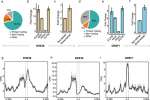
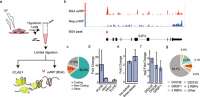
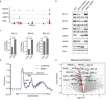
Varshney, Cuesta, Herdy et al
Sci Rep (2021) 11 (1), 22735 DOI: 10.1038/s41598-021-01847-6
Cited by 67
AI Summary: OriGene products contributed to this study by providing purified recombinant DDX3X protein (catalog number TP304171), which was used to investigate the interaction between G-quadruplex structures and G4-interacting proteins in the regulation of ribosomal protein production.
Snippet: rmed as in Zyner et al.43, using the NRAS G4 oligo 5′-UGU GGG AGG GGC GGG UCU GGG UGC-3′ and NRAS mG4 oligo 5′-UGU AGA AAG AGC AGA UCU AGA UGC-3′. Purified recombinant DDX3X was obtained from OriGene Technologies (TP304171) and recombinant DHX36 was purified as described in Chen13. In vitro translation 5′ UTRs from ribosomal protein mRNA preceded by a minimal T7 promoter and a HindIII r
A HIV-1 Tat mutant protein disrupts HIV-1 Rev function by targeting the DEAD-box RNA helicase DDX1
Lin, Sivakumaran, Jones et al
Retrovirology (2014) 11 (1), 121 DOI: 10.1186/PREACCEPT-7500780551442434
Lin, Sivakumaran, Jones et al
Retrovirology (2014) 11 (1), 121 DOI: 10.1186/PREACCEPT-7500780551442434
AI Summary: OriGene’s recombinant DDX1 and DDX3 proteins were used in this study to investigate and confirm the direct interaction between the HIV-1 Tat mutant Nullbasic and the cellular helicase DDX1, elucidating how Nullbasic disrupts HIV-1 Rev function.
Snippet: Recombinant proteins Recombinant DDX1 and DDX3 proteins were purchased from OriGene. The recombinant Nullbasic- FLAG-V5-6xHis was produced in E. coli strain BL21-AI (Invitrogen) transformed by pDEST42-Nullbasic-FLAG. A 200 ml culture was grown in Luria broth to log phase and induced with 0.2% arabinose and 1 mM IPTG
Showing 1-3 of 3 papers.
Powered by BizGenius
*Delivery time may vary from web posted schedule. Occasional delays may occur due to unforeseen
complexities in the preparation of your product. International customers may expect an additional 1-2 weeks
in shipping.
Related Products
- Price:
- Actual Price:
Welcome to OriGene AI!
I'm your AI-powered guide to everything OriGene.
Ask me anything:
- Product specs
- Ordering help
- Technical questions
- How to find exactly what your experiment needs
Prefer a live agent? Connect with us by clicking the green chat icon, as seen in the image below or email our team at custsupport@origene.com.
