
CD63 (NM_001780) Human Recombinant Protein


$9,200.00
6 Weeks*
Specifications
| Product Data | |
| Species | Human |
|---|---|
| Expression Host | HEK293 |
| Expression cDNA Clone or AA Sequence | |
| Tag | C-Myc/DDK |
| Predicted MW | 25.5 kDa |
| Concentration | >0.05 µg/µL as determined by microplate BCA method |
| Purity | > 80% as determined by SDS-PAGE and Coomassie blue staining |
| Buffer | 25 mM Tris-HCl, 100 mM glycine, pH 7.3, 10% glycerol |
| Preparation | Recombinant protein was captured through anti-DDK affinity column followed by conventional chromatography steps. |
| Note | For testing in cell culture applications, please filter before use. Note that you may experience some loss of protein during the filtration process. |
| Storage | Store at -80°C. |
| Stability | Stable for 12 months from the date of receipt of the product under proper storage and handling conditions. Avoid repeated freeze-thaw cycles. |
| Shipping | Dry Ice |
| Reference Data | |
| RefSeq | NP_001771 |
| Locus ID | 967 |
| UniProt ID | P08962 |
| Cytogenetics | 12q13.2 |
| RefSeq Size | 1032 |
| RefSeq ORF | 714 |
| Synonyms | LAMP-3; ME491; MLA1; OMA81H; TSPAN30 |
| Summary | The protein encoded by this gene is a member of the transmembrane 4 superfamily, also known as the tetraspanin family. Most of these members are cell-surface proteins that are characterized by the presence of four hydrophobic domains. The proteins mediate signal transduction events that play a role in the regulation of cell development, activation, growth and motility. The encoded protein is a cell surface glycoprotein that is known to complex with integrins. It may function as a blood platelet activation marker. Deficiency of this protein is associated with Hermansky-Pudlak syndrome. Also this gene has been associated with tumor progression. Alternative splicing results in multiple transcript variants encoding different protein isoforms. provided by RefSeq, Apr 2012 |
| Protein Categories | CD Markers, Growth Factors, Membrane Proteins |
| Protein Families | Druggable Genome, Transmembrane |
| Protein Pathways | Lysosome |
Reviews


Documents
| FAQs |
| SDS |
Resources
| Recombinant Protein Resources |
Citations
Improved isolation of extracellular vesicles by removal of both free proteins and lipoproteins
Ter-Ovanesyan, Gilboa, Budnik et al
Elife (2023) 12 DOI: 10.7554/eLife.86394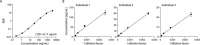
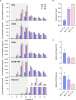
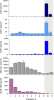
Ter-Ovanesyan, Gilboa, Budnik et al
Elife (2023) 12 DOI: 10.7554/eLife.86394
AI Summary: OriGene products, specifically the recombinant proteins CD63 (Cat# TP301733) and CD81 (Cat# TP317508), were used as standards in Simoa assays to quantify tetraspanin proteins on extracellular vesicles, aiding the development and validation of improved EV isolation methods in this study.
Snippet: use monoclonal) R&D Systems Cat# mab41242 Simoa detector (0.08 μg per assay) Peptide, recombinant protein CD9 Abcam Cat# ab152262 Peptide, recombinant protein CD63 Origene Cat# TP301733 Peptide, recombinant protein CD81 Origene Cat# TP317508 Peptide, recombinant protein Albumin Abcam Cat# ab201876 Other Purified ApoB-100 Stand
Framework for rapid comparison of extracellular vesicle isolation methods
Ter-Ovanesyan, Norman, Lazarovits et al
Elife (2021) 10 DOI: 10.7554/eLife.70725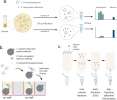
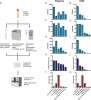
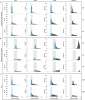
Ter-Ovanesyan, Norman, Lazarovits et al
Elife (2021) 10 DOI: 10.7554/eLife.70725
AI Summary: OriGene products, specifically the anti-CD9 (Cat# TA180072), anti-CD63 (Cat# TA180211), and anti-CD81 (Cat# TA180507) antibodies, were used in this study as capture antibodies in Simoa assays to quantify extracellular vesicle markers and assess the efficiency and purity of various EV isolation methods.
L1CAM is not associated with extracellular vesicles in human cerebrospinal fluid or plasma
Norman, Ter-Ovanesyan, Trieu et al
Nat Methods (2021) 18 (6), 631-634 DOI: 10.1038/s41592-021-01174-8

Norman, Ter-Ovanesyan, Trieu et al
Nat Methods (2021) 18 (6), 631-634 DOI: 10.1038/s41592-021-01174-8
Cited by 269
AI Summary: OriGene products, specifically the anti-L1CAM antibody (Cat# TA326535) and L1CAM cDNA clone (Cat# RC208442), were used to detect and validate L1CAM presence in human cerebrospinal fluid and plasma, supporting the study’s conclusion that L1CAM is not associated with extracellular vesicles in these biofluids.
Showing 1-3 of 3 papers.
Powered by BizGenius
*Delivery time may vary from web posted schedule. Occasional delays may occur due to unforeseen
complexities in the preparation of your product. International customers may expect an additional 1-2 weeks
in shipping.
Related Products
- Price:
- Actual Price:
Welcome to OriGene AI!
I'm your AI-powered guide to everything OriGene.
Ask me anything:
- Product specs
- Ordering help
- Technical questions
- How to find exactly what your experiment needs
Prefer a live agent? Connect with us by clicking the green chat icon, as seen in the image below or email our team at custsupport@origene.com.
