
Vimentin Human Protein

Specifications
| Product Data | |
| Species | Human |
|---|---|
| Expression Host | E. coli |
| Predicted MW | 54 kDa |
| Concentration | 1.0 mg/ml (after reconstitution) |
| Purity | >95% pure determined by SDS Gel Electrophoresis |
| Presentation State | Purified |
| Buffer | Presentation State: Purified State: Lyophilized protein Buffer System: Final solution contains 30 mM Tris/HCI pH 8, 9.5M Urea, 2 mM DTT, 2 mM EDTA, 10 mM Methylammonium Chloride |
| Reconstitution Method | Cat.-No BA1017S: Restore with 70 µl distilled water (final volume 100 µl). Cat.-No BA1017: Restore with 175 µl distilled water (final volume 250 µl). |
| Preparation | Lyophilized protein |
| Recommended Dilution | Protein standard in 1D and 2D SDS gelelectrophoresis. Immunoassays. Immunization. Protocol: Reconstitution to filaments: After vimentin is dissolved in 9.5M Urea buffer (see above), protofilaments and filament complexes are obtained by dialyzing the resulting polypeptide solution stepwise to a concentration of 4M Urea and then to low salt condition (50mM NaCl, 2mM dithiothreitol, 10mM Tris-HCl, pH 7.4). For immunization purposes, the solution can be further dialyzed against PBS (Phosphate Buffered Saline, e.g. Dulbecco's PBS). |
| Protein Description | Standard Recombinant Human Vimentin. |
| Note | Isoelectric Point: pI 5.3 |
| Storage | Store at 2-8°C (lyophilized) or at -20°C (reconstituted). Avoid repeated freezing and thawing. |
| Stability | Shelf life: one year from despatch. |
| Shipping | Ambient |
| Reference Data | |
| RefSeq | NP_003371 |
| Locus ID | 7431 |
| UniProt ID | P08670 |
| Cytogenetics | 10p13 |
| Synonyms | VIM |
| Summary | This gene encodes a type III intermediate filament protein. Intermediate filaments, along with microtubules and actin microfilaments, make up the cytoskeleton. The encoded protein is responsible for maintaining cell shape and integrity of the cytoplasm, and stabilizing cytoskeletal interactions. This protein is involved in neuritogenesis and cholesterol transport and functions as an organizer of a number of other critical proteins involved in cell attachment, migration, and signaling. Bacterial and viral pathogens have been shown to attach to this protein on the host cell surface. Mutations in this gene are associated with congenital cataracts in human patients. provided by RefSeq, Aug 2017 |
| Protein Categories | ADC Targets, Intracellular Proteins, Nervous system Diseases |
| Protein Families | 10mM Tris-HCl, 2mM dithiothreitol, e.g. Dulbecco's PBS)., pH 7.4). For immunization purposes, protofilaments and filament complexes are obtained by dialyzing the resulting polypeptide solution stepwise to a concentration of 4M Urea and then to low salt condition (50mM NaCl, the solution can be further dialyzed against PBS (Phosphate Buffered Saline |
Reviews


Documents
| FAQs |
| SDS |
Resources
| Recombinant Protein Resources |
Citations
Spatiotemporal microRNA profile in peripheral nerve regeneration: miR-138 targets vimentin and inhibits Schwann cell migration and proliferation
Sullivan, Robert, Teebagy et al
Neural Regen Res (2018) 13 (7), 1253-1262 DOI: 10.4103/1673-5374.235073
Sullivan, Robert, Teebagy et al
Neural Regen Res (2018) 13 (7), 1253-1262 DOI: 10.4103/1673-5374.235073
AI Summary: OriGene's human vimentin 3′UTR Firefly luciferase reporter vector was used in this study to confirm that miR-138-5p directly targets vimentin in Schwann cells through luciferase reporter assays.
Snippet: Another system used two separate vectors: one vector contained the human 3′UTR of vimentin linked to the Firefly luciferase gene (Origene, Rockville, MD, USA) and the other contained the Renilla luciferase gene (Promega, Madison, WI, USA) for assay normalization
Non-invasive intravital imaging of cellular differentiation with a bright red-excitable fluorescent protein
Chu, Haynes, Corbel et al
Nat. Methods (2014)
Chu, Haynes, Corbel et al
Nat. Methods (2014)
Cited by 255
AI Summary: In this study, OriGene products—specifically human pyruvate dehydrogenase (NM_000284), human peroxisomal membrane protein (NM_018663.1), and human vimentin (NM_003380.3)—were used as genetic templates to generate fluorescent protein fusion constructs for validating and visualizing cellular differentiation in vivo.
Snippet: human keratin 18 (NM_199187.1, Open Biosystems), EcoRI and NotI;yeast Lifeact (IDT DNA), BamHI and NotI;human pyruvate dehydrogenase, (NM_000284, OriGene), AgeI and NotI;human peroxisomal membrane protein (NM_018663.1, OriGene), NotI and AgeI;human vimentin (NM_003380.3, OriGene), NheI and BamHI;chicken paxillin (NM_204984.1, C. Waterman, NIH), NheI and BamHI;mouse mannosidase II (NM_008549.2, J. …
A bright monomeric green fluorescent protein derived from Branchiostoma lanceolatum
Shaner, Lambert, Chammas et al
Nat. Methods (2013) 10 (5), 407-9 DOI: 10.1038/nmeth.2413
Shaner, Lambert, Chammas et al
Nat. Methods (2013) 10 (5), 407-9 DOI: 10.1038/nmeth.2413
Cited by 1516
AI Summary: OriGene contributed mouse β-catenin cDNA (product: NM_001165902.1) used for cloning and expression experiments in the study.
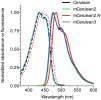
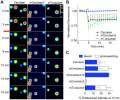
An improved cerulean fluorescent protein with enhanced brightness and reduced reversible photoswitching
Markwardt, Kremers, Kraft et al
PLoS ONE (2011) 6 (3), e17896 DOI: 10.1371/journal.pone.0017896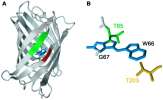
Markwardt, Kremers, Kraft et al
PLoS ONE (2011) 6 (3), e17896 DOI: 10.1371/journal.pone.0017896
Cited by 280
AI Summary: In this paper, OriGene's pCMV6-Entry vector was used as a cloning backbone for the expression and characterization of Cerulean fluorescent protein variants, facilitating the development and testing of the improved mCerulean3 construct.
Showing 1-4 of 4 papers.
Powered by BizGenius
*Delivery time may vary from web posted schedule. Occasional delays may occur due to unforeseen
complexities in the preparation of your product. International customers may expect an additional 1-2 weeks
in shipping.
Related Products
- Price:
- Actual Price:
Welcome to OriGene AI!
I'm your AI-powered guide to everything OriGene.
Ask me anything:
- Product specs
- Ordering help
- Technical questions
- How to find exactly what your experiment needs
Prefer a live agent? Connect with us by clicking the green chat icon, as seen in the image below or email our team at custsupport@origene.com.
