
PLOD3 (NM_001084) Human Untagged Clone

$1,015.00
In Stock*
Specifications
| Product Data | |
| Type | Human Untagged Clone |
|---|---|
| Target Symbol | PLOD3 |
| Synonyms | LH3 |
| Vector | pCMV6-AC |
| E. coli Selection | Ampicillin (100 ug/mL) |
| Mammalian Cell Selection | Neomycin |
| Sequence Data | |
| Restriction Sites | Please inquire | |
| ACCN | NM_001084 |
| OTI Disclaimer | Due to the inherent nature of this plasmid, standard methods to replicate additional amounts of DNA in E. coli are highly likely to result in mutations and/or rearrangements. Therefore, OriGene does not guarantee the capability to replicate this plasmid DNA. Additional amounts of DNA can be purchased from OriGene with batch-specific, full-sequence verification at a reduced cost. Please contact our customer care team at custsupport@origene.com or by calling 301.340.3188 option 3 for pricing and delivery. The molecular sequence of this clone aligns with the gene accession number as a point of reference only. However, individual transcript sequences of the same gene can differ through naturally occurring variations (e.g. polymorphisms), each with its own valid existence. This clone is substantially in agreement with the reference, but a complete review of all prevailing variants is recommended prior to use. More info |
| OTI Annotation | This TrueClone is provided through our Custom Cloning Process that includes sub-cloning into OriGene's pCMV6 vector and full sequencing to provide a non-variant match to the expected reference without frameshifts, and is delivered as lyophilized plasmid DNA. |
| Components | The ORF clone is ion-exchange column purified and shipped in a 2D barcoded Matrix tube containing 10ug of transfection-ready, dried plasmid DNA (reconstitute with 100 ul of water). |
| Reconstitution Method | 1. Centrifuge at 5,000xg for 5min. 2. Carefully open the tube and add 100ul of sterile water to dissolve the DNA. 3. Close the tube and incubate for 10 minutes at room temperature. 4. Briefly vortex the tube and then do a quick spin (less than 5000xg) to concentrate the liquid at the bottom. 5. Store the suspended plasmid at -20°C. The DNA is stable for at least one year from date of shipping when stored at -20°C. |
| Note | Plasmids are not sterile. For experiments where strict sterility is required, filtration with 0.22um filter is required. |
| Shipping | Ambient |
| Reference Data | |
| RefSeq | NM_001084.4, NP_001075.1 |
| RefSeq Size | 2995 bp |
| RefSeq ORF | 2217 bp |
| Locus ID | 8985 |
| UniProt ID | O60568 |
| Cytogenetics | 7q22.1 |
| Domains | 2OG-FeII_Oxy, P4Hc |
| Protein Pathways | Lysine degradation |
| Summary | The protein encoded by this gene is a membrane-bound homodimeric enzyme that is localized to the cisternae of the rough endoplasmic reticulum. The enzyme (cofactors iron and ascorbate) catalyzes the hydroxylation of lysyl residues in collagen-like peptides. The resultant hydroxylysyl groups are attachment sites for carbohydrates in collagen and thus are critical for the stability of intermolecular crosslinks. Some patients with Ehlers-Danlos syndrome type VIB have deficiencies in lysyl hydroxylase activity. provided by RefSeq, Jul 2008 |
Reviews


Documents
| Product Manuals |
| FAQs |
| SDS |
Resources
"NM_001084" in other vectors (5)
| SKU | Description | Size | Price | |
|---|---|---|---|---|
| RC203445 | PLOD3 (Myc-DDK-tagged)-Human procollagen-lysine, 2-oxoglutarate 5-dioxygenase 3 (PLOD3) | 10 ug |
$1,013.00
|
|
| RC203445L3 | Lenti-ORF clone of PLOD3 (Myc-DDK-tagged)-Human procollagen-lysine, 2-oxoglutarate 5-dioxygenase 3 (PLOD3) | 10 ug |
$1,313.00
|
|
| RC203445L4 | Lenti-ORF clone of PLOD3 (mGFP-tagged)-Human procollagen-lysine, 2-oxoglutarate 5-dioxygenase 3 (PLOD3) | 10 ug |
$1,313.00
|
|
| RG203445 | PLOD3 (tGFP-tagged) - Human procollagen-lysine, 2-oxoglutarate 5-dioxygenase 3 (PLOD3) | 10 ug |
$1,213.00
|
|
| SC119470 | PLOD3 (untagged)-Human procollagen-lysine, 2-oxoglutarate 5-dioxygenase 3 (PLOD3) | 10 ug |
$1,015.00
|
|
Citations
Knockdown of PLOD3 suppresses the malignant progression of renal cell carcinoma via reducing TWIST1 expression
Xie, Li, Wei et al
Mol. Cell. Probes (2020) 53, 101608 DOI: 10.1016/j.mcp.2020.101608
Xie, Li, Wei et al
Mol. Cell. Probes (2020) 53, 101608 DOI: 10.1016/j.mcp.2020.101608
Cited by 14
AI Summary: OriGene contributed to this study by providing the 29mer shRNA targeting human PLOD3 gene (shPLOD3, Cat# TR310350) and the PLOD3 overexpression plasmid (Cat# SC321467), which were used to manipulate PLOD3 expression in renal cell carcinoma cells and investigate its role in cancer progression.
Snippet: Procollagen-lysine, 2-oxoglutarate 5-dioxygenase (PLOD3), also known as lysyl hydroxylase 3 (LH3) has been demonstrated to be overexpressed in several kinds of cancers and facilitate cell migration. Currently, we aimed to reveal the role of PLOD3 in renal cell carcinoma (RCC) progression, and explore whether TWIST1" style="font-weight: bold;">TWIST1 (Twist family bHLH transcription factor 1) is involved in this process. Fifty-eight paired RCC tissues and normal tissues were collected and subjected to qPCR and immunohistochemistry (IHC) technology to detect the expression levels of PLOD3. The clinical value of PLOD3 in predicting RCC progression was then explored. …PLOD3 expression was enhanced in RCC tissues and cells, which predicted higher T (tumor), N (lymph node) and M (metastasis) stages, histological grade and TNM (tumor, lymph node, metastasis) stage. PLOD3 downregulation in RCC A498 cells obviously inhibited cell proliferation, migration, invasion, EMT and tumorigenesis and increased cell apoptosis. PLOD3 overexpression led to opposite results in RCC A704 cells. PLOD3 downregulation reduced the expression levels of TWIST1" style="font-weight: bold;">TWIST1, β-catenin and p-AKT. In addition, TWIST1" style="font-weight: bold;">TWIST1 overexpression rescued the repressions of cell proliferation, migration, invasion, EMT and the activation of β-catenin and AKT signaling in addition to apoptosis promotion induced by PLOD3 downregulation. Collectively, this study illustrated that PLOD3 knockdown suppressed RCC malignance via inhibiting TWIST1" style="font-weight: bold;">TWIST1-mediated activation of β-catenin and AKT signaling. … Published by Elsevier Ltd.;Procollagen-lysine, 2-oxoglutarate 5-dioxygenase (PLOD3), also known as lysyl hydroxylase 3 (LH3) has been demonstrated to be overexpressed in several kinds of cancers and facilitate cell migration. Currently, we aimed to reveal the role of PLOD3 in renal cell carcinoma (RCC) progression, and explore whether TWIST1" style="font-weight: bold;">TWIST1 (Twist family bHLH transcription factor 1) is involved in this process. Fifty-eight paired RCC tissues and normal tissues were collected and subjected to qPCR and immunohistochemistry (IHC) technology to detect the expression levels of PLOD3. The clinical value of PLOD3 in predicting RCC progression was then explored. …PLOD3 expression was enhanced in RCC tissues and cells, which predicted higher T (tumor), N (lymph node) and M (metastasis) stages, histological grade and TNM (tumor, lymph node, metastasis) stage. PLOD3 downregulation in RCC A498 cells obviously inhibited cell proliferation, migration, invasion, EMT and tumorigenesis and increased cell apoptosis. PLOD3 overexpression led to opposite results in RCC A704 cells. PLOD3 downregulation reduced the expression levels of TWIST1" style="font-weight: bold;">TWIST1, β-catenin and p-AKT. In addition, TWIST1" style="font-weight: bold;">TWIST1 overexpression rescued the repressions of cell proliferation, migration, invasion, EMT and the activation of β-catenin and AKT signaling in addition to apoptosis promotion induced by PLOD3 downregulation. Collectively, this study illustrated that PLOD3 knockdown suppressed RCC malignance via inhibiting TWIST1" style="font-weight: bold;">TWIST1-mediated activation of β-catenin and AKT signaling. … Published by Elsevier Ltd.;- The unique 29mer shRNA targeting human PLOD3 gene (shPLOD3) constructed in retroviral untagged vector and the retroviral control vector were purchased from Origene (no. TR310350, Beijing, China) SC321467) were established by Origene in pCMV6-AC vectors
PLOD3 suppression exerts an anti-tumor effect on human lung cancer cells by modulating the PKC-delta signaling pathway
Baek, Yun, Kwon et al
Cell Death Dis (2019) 10 (3), 156 DOI: 10.1038/s41419-019-1405-8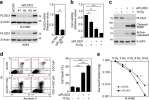
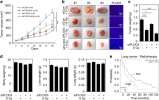
Baek, Yun, Kwon et al
Cell Death Dis (2019) 10 (3), 156 DOI: 10.1038/s41419-019-1405-8
AI Summary: In this study, OriGene's PLOD3-specific siRNA (SR321070) and PLOD3 antibody (TA500594) were used to knock down and detect PLOD3 expression, respectively, enabling the researchers to demonstrate that suppressing PLOD3 inhibits tumor growth and enhances the effectiveness of lung cancer therapies.
Snippet: …Recently, we found four proteins, including procollagen-lysine, 2-oxoglutarate 5-dioxygenase 3 (PLOD3), which had not been previously reported to be;... …Recently, we found four proteins, including procollagen-lysine, 2-oxoglutarate 5-dioxygenase 3 (PLOD3), which had not been previously reported to be
PLOD3 promotes lung metastasis via regulation of STAT3
Baek, Yun, Kwon et al
Cell Death Dis (2018) 9 (12), 1138 DOI: 10.1038/s41419-018-1186-5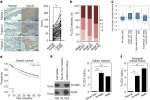
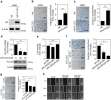
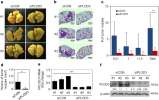
Baek, Yun, Kwon et al
Cell Death Dis (2018) 9 (12), 1138 DOI: 10.1038/s41419-018-1186-5
AI Summary: In this study, the human PLOD3 cDNA (wild type) purchased from OriGene (Cat No. SC324563) was used to construct plasmids for overexpression experiments, enabling the investigation of PLOD3's role in promoting lung cancer metastasis via STAT3 regulation.
Snippet: … Human PLOD3 cDNA (wild type) purchased from OriGene (Cat No. SC324563) was amplified via polymerase chain reaction (PCR) and cloned into pcDNA3.1-HA vectors. Wild-type PLOD3 was generated using primers 5ʹ-GATGGATCCATGACCTCCTCGGGGCCTGGA-3ʹ (BamHI) and 5ʹ-TGAATTCTCAGGGGTCGACAAAGGAC-3ʹ (EcoRI). Thereafter, PLOD3 was inserted between BamHI and XhoI restriction sites in pHA vectors. …
Showing 1-3 of 3 papers.
Powered by BizGenius
*Delivery time may vary from web posted schedule. Occasional delays may occur due to unforeseen
complexities in the preparation of your product. International customers may expect an additional 1-2 weeks
in shipping.
Related Products
- Price:
- Actual Price:
Welcome to OriGene AI!
I'm your AI-powered guide to everything OriGene.
Ask me anything:
- Product specs
- Ordering help
- Technical questions
- How to find exactly what your experiment needs
Prefer a live agent? Connect with us by clicking the green chat icon, as seen in the image below or email our team at custsupport@origene.com.
