
VR1 (TRPV1) (NM_080704) Human Untagged Clone
SKU
SC128105
TRPV1 (untagged)-Human transient receptor potential cation channel, subfamily V, member 1 (TRPV1), transcript variant 1

$769.00
In Stock*
Specifications
| Product Data | |
| Type | Human Untagged Clone |
|---|---|
| Target Symbol | VR1 |
| Synonyms | VR1 |
| Vector | pCMV6-XL4 |
| E. coli Selection | Ampicillin (100 ug/mL) |
| Mammalian Cell Selection | None |
| Sequence Data | |
| Restriction Sites | Please inquire | |
| ACCN | NM_080704 |
| Insert Size | 3900 bp |
| OTI Disclaimer | Our molecular clone sequence data has been matched to the reference identifier above as a point of reference. Note that the complete sequence of our molecular clones may differ from the sequence published for this corresponding reference, e.g., by representing an alternative RNA splicing form or single nucleotide polymorphism (SNP). |
| Components | The ORF clone is ion-exchange column purified and shipped in a 2D barcoded Matrix tube containing 10ug of transfection-ready, dried plasmid DNA (reconstitute with 100 ul of water). |
| Reconstitution Method | 1. Centrifuge at 5,000xg for 5min. 2. Carefully open the tube and add 100ul of sterile water to dissolve the DNA. 3. Close the tube and incubate for 10 minutes at room temperature. 4. Briefly vortex the tube and then do a quick spin (less than 5000xg) to concentrate the liquid at the bottom. 5. Store the suspended plasmid at -20°C. The DNA is stable for at least one year from date of shipping when stored at -20°C. |
| Note | Plasmids are not sterile. For experiments where strict sterility is required, filtration with 0.22um filter is required. |
| Shipping | Ambient |
| Reference Data | |
| RefSeq | NM_080704.2, NP_542435.2 |
| RefSeq Size | 4163 bp |
| RefSeq ORF | 2520 bp |
| Locus ID | 7442 |
| UniProt ID | Q8NER1 |
| Cytogenetics | 17p13.2 |
| Protein Families | Druggable Genome, Ion Channels: Transient receptor potential, Transmembrane |
| Protein Pathways | Neuroactive ligand-receptor interaction |
| Summary | Capsaicin, the main pungent ingredient in hot chili peppers, elicits a sensation of burning pain by selectively activating sensory neurons that convey information about noxious stimuli to the central nervous system. The protein encoded by this gene is a receptor for capsaicin and is a non-selective cation channel that is structurally related to members of the TRP family of ion channels. This receptor is also activated by increases in temperature in the noxious range, suggesting that it functions as a transducer of painful thermal stimuli in vivo. Four transcript variants encoding the same protein, but with different 5' UTR sequence, have been described for this gene. provided by RefSeq, Jul 2008 Transcript Variant: This variant (1) contains a different segment in the 5' UTR, compared to variant 3. Variants 1-4 all encode the same protein. |
Reviews


Documents
| Product Manuals |
| FAQs |
| SDS |
Resources
"NM_080704" in other vectors (6)
| SKU | Description | Size | Price | |
|---|---|---|---|---|
| RC217653 | TRPV1 (Myc-DDK-tagged)-Human transient receptor potential cation channel, subfamily V, member 1 (TRPV1), transcript variant 1 | 10 ug |
$589.00
$768.00
|
|
| RC217653L1 | Lenti ORF clone of Human transient receptor potential cation channel, subfamily V, member 1 (TRPV1), transcript variant 1, Myc-DDK-tagged | 10 ug |
$1,068.00
|
|
| RC217653L2 | Lenti ORF clone of Human transient receptor potential cation channel, subfamily V, member 1 (TRPV1), transcript variant 1, mGFP tagged | 10 ug |
$1,068.00
|
|
| RC217653L3 | Lenti ORF clone of Human transient receptor potential cation channel, subfamily V, member 1 (TRPV1), transcript variant 1, Myc-DDK-tagged | 10 ug |
$1,068.00
|
|
| RC217653L4 | Lenti ORF clone of Human transient receptor potential cation channel, subfamily V, member 1 (TRPV1), transcript variant 1, mGFP tagged | 10 ug |
$1,068.00
|
|
| RG217653 | TRPV1 (tGFP-tagged) - Human transient receptor potential cation channel, subfamily V, member 1 (TRPV1), transcript variant 1 | 10 ug |
$789.00
$968.00
|
|
Citations
Molecular signaling of synthetic cannabinoids: Comparison of CB1 receptor and TRPV1 channel activation
Andersen, Walsh
Eur J Pharmacol (2021) 907, 174301 DOI: 10.1016/j.ejphar.2021.174301

Andersen, Walsh
Eur J Pharmacol (2021) 907, 174301 DOI: 10.1016/j.ejphar.2021.174301
Cited by 14
AI Summary: In this study, OriGene products—specifically, the CB1 receptor cDNA (NM_016083) and TRPV1 channel cDNA (NM_080706)—were used to express these proteins in cells, enabling the authors to assess how different synthetic cannabinoids activate CB1 and TRPV1 channels.
Molecular signaling of synthetic cannabinoids: Comparison of CB1 receptor and TRPV1 channel activation
Andersen, Walsh
European Journal of Pharmacology (2021) 907, 174301 DOI: 10.1016/j.ejphar.2021.174301
Andersen, Walsh
European Journal of Pharmacology (2021) 907, 174301 DOI: 10.1016/j.ejphar.2021.174301
Cited by 14
AI Summary: In this study, OriGene's human TRPV1 channel cDNA (#SC128105) was used to transiently transfect HEK293T cells, enabling the researchers to assess the activation of TRPV1 channels by synthetic cannabinoids.
Snippet: HEK293T cells were cultured as above with the addition of 2 mM glutamine to the media and transiently transfected with the human TRPV1 channel (Origene cDNA #SC128105) or GFP using Lipofectamine 2000 (Invitrogen);HEK293T cells were cultured as above with the addition of 2 mM glutamine to the media and transiently transfected with the human TRPV1 channel (Origene cDNA #SC128105) or GFP using Lipofectamine 2000 (Invitrogen)
Vitamin D is an endogenous partial agonist of the transient receptor potential vanilloid 1 channel
Long, Fatehi, Soni et al
J. Physiol. (Lond.) (2020)
Long, Fatehi, Soni et al
J. Physiol. (Lond.) (2020)
Five hTRPA1 Agonists Found in Indigenous Korean Mint, Agastache rugosa
Moon, Kim, Son et al
PLoS ONE (2015) 10 (5), e0127060 DOI: 10.1371/journal.pone.0127060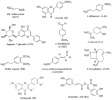
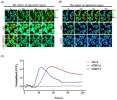
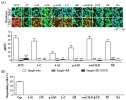
Moon, Kim, Son et al
PLoS ONE (2015) 10 (5), e0127060 DOI: 10.1371/journal.pone.0127060
Cited by 15
AI Summary: OriGene contributed to this study by providing the hTRPV1 clone (NCBI accession number: NG_029716.1), which was used for transient transfection experiments to assess the activity of compounds from Agastache rugosa on hTRPV1-expressing cells.
Snippet: The hTRPV1 used for transient transfection was cloned by OriGene (Rockville, MD, USA;NCBI accession number: NG_029716.1). The hTRPV1 construct was cloned into pEAK10 (Edge Biosystems, Gaithersburg, MD, USA) and the nucleotide sequence of the hTRPV1 ... Cite SaveSaving
Intracellular Long-Chain Acyl CoAs Activate TRPV1 Channels
Yu, Carter, Youssef et al
PLoS ONE (2014) 9 (5), e96597 DOI: 10.1371/journal.pone.0096597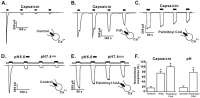
Yu, Carter, Youssef et al
PLoS ONE (2014) 9 (5), e96597 DOI: 10.1371/journal.pone.0096597
Cited by 20
AI Summary: OriGene contributed to this study by providing the full-length human TRPV1 DNA construct, which was used for site-directed mutagenesis experiments to investigate TRPV1 channel regulation.
Snippet: and Felix ratio-metric software (Photon Technologies International, NJ, USA). Site-directed Mutagenesis. The full-length human TRPV1 DNA construct was purchased from OriGene (OriGene Technologies, Rockville, MD, US. Cite SaveSaving
Furanocoumarins are a Novel Class of Modulators for the TRPV1 Channel
Chen, Sun, Gianaris et al
J. Biol. Chem. (2014)
Chen, Sun, Gianaris et al
J. Biol. Chem. (2014)
Showing 1-6 of 6 papers.
Powered by BizGenius
*Delivery time may vary from web posted schedule. Occasional delays may occur due to unforeseen
complexities in the preparation of your product. International customers may expect an additional 1-2 weeks
in shipping.
Related Products
- Price:
- Actual Price:
Welcome to OriGene AI!
I'm your AI-powered guide to everything OriGene.
Ask me anything:
- Product specs
- Ordering help
- Technical questions
- How to find exactly what your experiment needs
Prefer a live agent? Connect with us by clicking the green chat icon, as seen in the image below or email our team at custsupport@origene.com.
