
p53 (TP53) (NM_000546) Human Untagged Clone

$686.00
In Stock*
Specifications
| Product Data | |
| Type | Human Untagged Clone |
|---|---|
| Target Symbol | p53 |
| Synonyms | BCC7; BMFS5; LFS1; P53; TRP53 |
| Vector | pCMV6-XL5 |
| E. coli Selection | Ampicillin (100 ug/mL) |
| Mammalian Cell Selection | None |
| Sequence Data | |
| Restriction Sites | NotI-NotI | |
| ACCN | NM_000546 |
| Insert Size | 1182 bp |
| OTI Disclaimer | Our molecular clone sequence data has been matched to the reference identifier above as a point of reference. Note that the complete sequence of our molecular clones may differ from the sequence published for this corresponding reference, e.g., by representing an alternative RNA splicing form or single nucleotide polymorphism (SNP). |
| OTI Annotation | This TrueClone is provided through our Custom Cloning Process that includes sub-cloning into OriGene's pCMV6 vector and full sequencing to provide a non-variant match to the expected reference without frameshifts, and is delivered as lyophilized plasmid DNA |
| Components | The ORF clone is ion-exchange column purified and shipped in a 2D barcoded Matrix tube containing 10ug of transfection-ready, dried plasmid DNA (reconstitute with 100 ul of water). |
| Reconstitution Method | 1. Centrifuge at 5,000xg for 5min. 2. Carefully open the tube and add 100ul of sterile water to dissolve the DNA. 3. Close the tube and incubate for 10 minutes at room temperature. 4. Briefly vortex the tube and then do a quick spin (less than 5000xg) to concentrate the liquid at the bottom. 5. Store the suspended plasmid at -20°C. The DNA is stable for at least one year from date of shipping when stored at -20°C. |
| Note | Plasmids are not sterile. For experiments where strict sterility is required, filtration with 0.22um filter is required. |
| Shipping | Ambient |
| Reference Data | |
| RefSeq | NM_000546.2, NP_000537.2 |
| RefSeq Size | 2629 bp |
| RefSeq ORF | 1182 bp |
| Locus ID | 7157 |
| UniProt ID | P04637 |
| Cytogenetics | 17p13.1 |
| Domains | P53 |
| Protein Families | Druggable Genome, Stem cell - Pluripotency, Transcription Factors |
| Protein Pathways | Amyotrophic lateral sclerosis (ALS), Apoptosis, Basal cell carcinoma, Bladder cancer, Cell cycle, Chronic myeloid leukemia, Colorectal cancer, Endometrial cancer, Glioma, Huntington's disease, MAPK signaling pathway, Melanoma, Neurotrophin signaling pathway, Non-small cell lung cancer, p53 signaling pathway, Pancreatic cancer, Pathways in cancer, Prostate cancer, Small cell lung cancer, Thyroid cancer, Wnt signaling pathway |
| Summary | This gene encodes a tumor suppressor protein containing transcriptional activation, DNA binding, and oligomerization domains. The encoded protein responds to diverse cellular stresses to regulate expression of target genes, thereby inducing cell cycle arrest, apoptosis, senescence, DNA repair, or changes in metabolism. Mutations in this gene are associated with a variety of human cancers, including hereditary cancers such as Li-Fraumeni syndrome. Alternative splicing of this gene and the use of alternate promoters result in multiple transcript variants and isoforms. Additional isoforms have also been shown to result from the use of alternate translation initiation codons from identical transcript variants (PMIDs: 12032546, 20937277). provided by RefSeq, Dec 2016 Transcript Variant: This variant (1) can initiate translation from two in-frame AUG start codons. The isoform represented in this variant (a, also known as p53alpha) results from translation initiation at the upstream start codon. Both variants 1 and 2 encode isoform a, which is the longest isoform. |
Reviews


Documents
| Product Manuals |
| FAQs |
| SDS |
Resources
"NM_000546" in other vectors (6)
| SKU | Description | Size | Price | |
|---|---|---|---|---|
| RC200003 | TP53 (Myc-DDK-tagged)-Human tumor protein p53 (TP53), transcript variant 1 | 10 ug |
$457.00
|
|
| RC200003L1 | Lenti ORF clone of Human tumor protein p53 (TP53), transcript variant 1, Myc-DDK-tagged | 10 ug |
$757.00
|
|
| RC200003L2 | Lenti ORF clone of Human tumor protein p53 (TP53), transcript variant 1, mGFP tagged | 10 ug |
$757.00
|
|
| RC200003L3 | Lenti ORF clone of Human tumor protein p53 (TP53), transcript variant 1, Myc-DDK-tagged | 10 ug |
$757.00
|
|
| RC200003L4 | Lenti ORF clone of Human tumor protein p53 (TP53), transcript variant 1, mGFP tagged | 10 ug |
$757.00
|
|
| RG200003 | TP53 (tGFP-tagged) - Human tumor protein p53 (TP53), transcript variant 1 | 10 ug |
$489.00
$657.00
|
|
Citations
iNOS/NO is required for IRF1 activation in response to liver ischemia-reperfusion in mice
Du, Luo, Yang et al
Mol. Med. (2020) 26 (1), 56 DOI: 10.1186/s10020-020-00182-2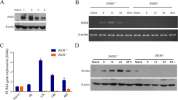
Du, Luo, Yang et al
Mol. Med. (2020) 26 (1), 56 DOI: 10.1186/s10020-020-00182-2
Cited by 17
AI Summary: OriGene products, specifically the human TP53 and IRF1 expression plasmids (pCMV6-xl5-TP53 and pCMV6-xl5-hIRF1), were used in this study to investigate the roles of these genes in iNOS/NO-mediated IRF1 activation and PUMA expression during liver ischemia-reperfusion in mice.
Snippet: Human TP53 and IRF1 expression plasmids, pCMV6-xl5-TP53 and pCMV6-xl5-hIRF1 were purchased from Origene, Rockville, MD
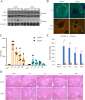
Length and secondary structure of the 5' non-coding regions of mouse p53 mRNA transcripts - mouse as a model organism for p53 gene expression studies
Szpotkowska, Swiatkowska, Ciesiołka
RNA Biol (2019) 16 (1), 25-41 DOI: 10.1080/15476286.2018.1556084
Szpotkowska, Swiatkowska, Ciesiołka
RNA Biol (2019) 16 (1), 25-41 DOI: 10.1080/15476286.2018.1556084
Cited by 7
AI Summary: OriGene’s p53 True Clone was used as the DNA template to generate mouse p53 mRNA variants with different 5′ non-coding region lengths, enabling the study of their structural and translational properties.
Snippet: The DNA templates for p53 mRNA variants with the 5′ non-coding region of 122 or 247 nucleotides in length were prepared in two steps. In the first step, the p53 True Clone (Origene) was digested by SacI and Psp5II restriction enzymes (Invitrogen), digestion products were separated on an agarose gel and the band of approximate length of 6200 nucleotides was excised and eluted. Subsequently, dsDNA templates containing appropriate 5′-terminal regions of p53 mRNA following the T7 transcription promoter sequence were generated by PCR reaction using plasmids from 5′RACE experiment with appropriate length inserts of p53 5′UTR
CELF1/p53 axis: a sustained antiproliferative signal leading to villus atrophy under total parenteral nutrition
Yan, Zhang, Dai et al
FASEB J. (2018)
Yan, Zhang, Dai et al
FASEB J. (2018)
AI Summary: OriGene products, specifically CELF1 (sc128043/rn204942) and p53 (sc119832/rn201296) expression plasmids, were used in this study to manipulate gene expression in cell models, enabling the authors to investigate the role of the CELF1/p53 axis in suppressing intestinal epithelial cell proliferation during total parenteral nutrition-induced villus atrophy.
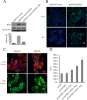
HMGB1 represses the anti-cancer activity of sunitinib by governing TP53 autophagic degradation via its nucleus-to-cytoplasm transport
Luo, Xu, Li et al
Autophagy (2018) 14 (12), 2155-2170 DOI: 10.1080/15548627.2018.1501134
Luo, Xu, Li et al
Autophagy (2018) 14 (12), 2155-2170 DOI: 10.1080/15548627.2018.1501134
AI Summary: In this study, OriGene products pCMV6-XL5-TP53, pCMV6-Entry-Myc-DDKSQSTM1, and pCMV6-AC-GFP-HMGB1 were used as plasmids to investigate the molecular mechanisms by which HMGB1 regulates TP53 autophagic degradation and contributes to sunitinib resistance in cancer cells.
Snippet: … RESEARCH PAPER - TRANSLATIONAL HMGB1 represses the anti-cancer activity of sunitinib by governing TP53 autophagic degradation via its nucleus-to-cytoplasm transport Peihua Luoa, Zhifei Xua, Guanqun Lia;Plasmids used in this study were as follows: pCMV6-XL5- TP53 (Origene, SC119832), pCMV6-Entry-Myc-DDKSQSTM1 (Origene, RC203214) and pCMV6-AC-GFPHMGB1 (Origene, RG205918). HMGB1 cDNA was inserted into the pcDNA3.0 plasmid (a gift from Dr. Ronggui Hu) with FLAG tag. pCMV6-XL5-TP53 was GFP-tagged at the amino terminus. The pCMV6-XL5-TP53-NES-Mut and the pCMV6- AC-GFP-HMGB1-NES-Mut were generated by site-directed mutagenesis and multi-site mutagenesis using the Hieff MutTM Site-Directed Mutagenesis kit (Yeasen, 11003ES10) and Hieff MutTM Multi Site-Directed Mutagenesis Kit (Yeasen, 11004ES10)
Transcribed ultraconserved region 339 promotes carcinogenesis by modulating tumor suppressor microRNAs
Vannini, Wise, Challagundla et al
Nat Commun (2017) 8 (1), 1801 DOI: 10.1038/s41467-017-01562-9
Vannini, Wise, Challagundla et al
Nat Commun (2017) 8 (1), 1801 DOI: 10.1038/s41467-017-01562-9
Cited by 50
Molecular mechanism leading to SAHA-induced autophagy in tumor cells: evidence for a p53-dependent pathway
Fröhlich, Mrakovcic, Smole et al
Cancer Cell Int. (2016) 16 (1), 68 DOI: 10.1186/s12935-016-0343-0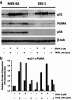
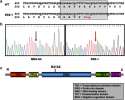
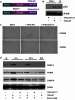
Fröhlich, Mrakovcic, Smole et al
Cancer Cell Int. (2016) 16 (1), 68 DOI: 10.1186/s12935-016-0343-0
Cited by 35
AI Summary: In this study, the pCMV6-XL5 expression vector containing human full-length TP53 cDNA (TP53-WT, SC119832) from OriGene was used to reintroduce wild-type p53 into ESS-1 cells, enabling the researchers to assess the role of p53 in regulating SAHA-induced autophagy and apoptosis.
Snippet: Protein expression was quantified using Image J software. TP53 gene transfer. The expression vector pCMV6-XL5 containing the human full-length cDNA for TP53 (TP53-WT) (NCBI Acc.-No: NM_000546.2;SC119832) was obtained from OriGene (Rockville, CA, USA ... Cite SaveSaving
Showing 1-6 of 13 papers.
Powered by BizGenius
*Delivery time may vary from web posted schedule. Occasional delays may occur due to unforeseen
complexities in the preparation of your product. International customers may expect an additional 1-2 weeks
in shipping.
Related Products
- Price:
- Actual Price:
Welcome to OriGene AI!
I'm your AI-powered guide to everything OriGene.
Ask me anything:
- Product specs
- Ordering help
- Technical questions
- How to find exactly what your experiment needs
Prefer a live agent? Connect with us by clicking the green chat icon, as seen in the image below or email our team at custsupport@origene.com.
