
TFIP11 (NM_012143) Human Untagged Clone

$767.00
In Stock*
Specifications
| Product Data | |
| Type | Human Untagged Clone |
|---|---|
| Target Symbol | TFIP11 |
| Synonyms | bK445C9.6; NTR1; Spp382; STIP; STIP-1; TIP39 |
| Vector | pCMV6-XL5 |
| E. coli Selection | Ampicillin (100 ug/mL) |
| Mammalian Cell Selection | None |
| Sequence Data | |
| Restriction Sites | NotI-NotI | |
| ACCN | NM_012143 |
| Insert Size | 2950 bp |
| OTI Disclaimer | Our molecular clone sequence data has been matched to the reference identifier above as a point of reference. Note that the complete sequence of our molecular clones may differ from the sequence published for this corresponding reference, e.g., by representing an alternative RNA splicing form or single nucleotide polymorphism (SNP). |
| Components | The ORF clone is ion-exchange column purified and shipped in a 2D barcoded Matrix tube containing 10ug of transfection-ready, dried plasmid DNA (reconstitute with 100 ul of water). |
| Reconstitution Method | 1. Centrifuge at 5,000xg for 5min. 2. Carefully open the tube and add 100ul of sterile water to dissolve the DNA. 3. Close the tube and incubate for 10 minutes at room temperature. 4. Briefly vortex the tube and then do a quick spin (less than 5000xg) to concentrate the liquid at the bottom. 5. Store the suspended plasmid at -20°C. The DNA is stable for at least one year from date of shipping when stored at -20°C. |
| Note | Plasmids are not sterile. For experiments where strict sterility is required, filtration with 0.22um filter is required. |
| Shipping | Ambient |
| Reference Data | |
| RefSeq | NM_012143.2, NP_036275.1 |
| RefSeq Size | 2864 bp |
| RefSeq ORF | 2514 bp |
| Locus ID | 24144 |
| UniProt ID | Q9UBB9 |
| Cytogenetics | 22q12.1 |
| Domains | G-patch |
| Summary | This gene encodes a protein component of the spliceosome that promotes the release of the lariat-intron during late-stage splicing through the recruitment of a pre-mRNA splicing factor called DEAH-box helicase 15. The encoded protein contains a G-patch domain, a hallmark of RNA-processing proteins, that binds DEAH-box helicase 15. This protein contains an atypical nuclear localization sequence as well as a nuclear speckle-targeting sequence, enabling it to localize to distinct speckled regions within the cell nucleus. Polymorphisms in this gene are associated with dental caries suggesting a role in amelogenesis. Alternative splicing results in multiple transcript variants. provided by RefSeq, Nov 2016 Transcript Variant: This variant (2) lacks an exon in the 5' UTR, compared to variant1. Variants 1-6 encode the same isoform (1). |
Reviews


Documents
| Product Manuals |
| FAQs |
| SDS |
Resources
"NM_012143" in other vectors (7)
| SKU | Description | Size | Price | |
|---|---|---|---|---|
| RC207682 | TFIP11 (Myc-DDK-tagged)-Human tuftelin interacting protein 11 (TFIP11), transcript variant 2 | 10 ug |
$766.00
|
|
| RC207682L1 | Lenti ORF clone of Human tuftelin interacting protein 11 (TFIP11), transcript variant 2, Myc-DDK-tagged | 10 ug |
$1,066.00
|
|
| RC207682L2 | Lenti ORF clone of Human tuftelin interacting protein 11 (TFIP11), transcript variant 2, mGFP tagged | 10 ug |
$1,066.00
|
|
| RC207682L3 | Lenti ORF clone of Human tuftelin interacting protein 11 (TFIP11), transcript variant 2, Myc-DDK-tagged | 10 ug |
$1,066.00
|
|
| RC207682L4 | Lenti ORF clone of Human tuftelin interacting protein 11 (TFIP11), transcript variant 2, mGFP tagged | 10 ug |
$1,066.00
|
|
| RG207682 | TFIP11 (tGFP-tagged) - Human tuftelin interacting protein 11 (TFIP11), transcript variant 2 | 10 ug |
$789.00
$966.00
|
|
| SC320803 | TFIP11 (untagged)-Human tuftelin interacting protein 11 (TFIP11), transcript variant 2 | 10 ug |
$767.00
|
|
Citations
TFIP11 interacts with mDEAH9, an RNA helicase involved in spliceosome disassembly
Wen, Tannukit, Paine
Int J Mol Sci (2008) 9 (11), 2105-2113 DOI: 10.3390/ijms9112105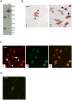
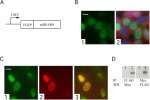
Wen, Tannukit, Paine
Int J Mol Sci (2008) 9 (11), 2105-2113 DOI: 10.3390/ijms9112105
Cited by 34
AI Summary: OriGene products, specifically the TFIP11 cDNA clone and the mDEAH9 (Dhx15) cDNA clone, were used in this study to express and analyze the localization and interaction of these proteins, demonstrating that TFIP11 recruits mDEAH9 to nuclear speckles, thereby supporting their roles in spliceosome disassembly.
TFIP11, CCNL1 and EWSR1 Protein-protein Interactions, and Their Nuclear Localization
Tannukit, Wen, Wang et al
Int J Mol Sci (2008) 9 (8), 1504-1514 DOI: 10.3390/ijms9081504
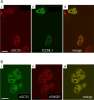
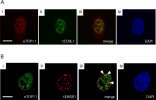
Tannukit, Wen, Wang et al
Int J Mol Sci (2008) 9 (8), 1504-1514 DOI: 10.3390/ijms9081504
Cited by 14
AI Summary: OriGene products, specifically the TFIP11 (RC208307), CCNL1 (RC204875), and EWSR1 (RC200971) cDNA clones, were used to generate fluorescently-tagged proteins that enabled the study of protein-protein interactions and nuclear localization of TFIP11, CCNL1, and EWSR1 in this research.
Showing 1-2 of 2 papers.
Powered by BizGenius
*Delivery time may vary from web posted schedule. Occasional delays may occur due to unforeseen
complexities in the preparation of your product. International customers may expect an additional 1-2 weeks
in shipping.
Related Products
- Price:
- Actual Price:
Welcome to OriGene AI!
I'm your AI-powered guide to everything OriGene.
Ask me anything:
- Product specs
- Ordering help
- Technical questions
- How to find exactly what your experiment needs
Prefer a live agent? Connect with us by clicking the green chat icon, as seen in the image below or email our team at custsupport@origene.com.
