
Pdcd1 (NM_008798) Mouse Tagged Lenti ORF Clone
- LentiORF®
SKU
MR227347L2
Lenti ORF clone of Pdcd1 (mGFP-tagged) - Mouse programmed cell death 1 (Pdcd1)

$750.00
In Stock*
Specifications
| Product Data | |
| Type | Mouse Tagged ORF Clone |
|---|---|
| Target Symbol | Pdcd1 |
| Synonyms | Ly101; PD-1; Pdc1 |
| Vector | pLenti-C-mGFP |
| E. coli Selection | Chloramphenicol (34 ug/mL) |
| Mammalian Cell Selection | None |
| Sequence Data | |
| Restriction Sites |
SgfI-MluI Cloning Scheme for this gene
|
Plasmid Map

|
| ACCN | NM_008798 |
| ORF Size | 867 bp |
| OTI Disclaimer | The molecular sequence of this clone aligns with the gene accession number as a point of reference only. However, individual transcript sequences of the same gene can differ through naturally occurring variations (e.g. polymorphisms), each with its own valid existence. This clone is substantially in agreement with the reference, but a complete review of all prevailing variants is recommended prior to use. More info |
| OTI Annotation | This clone was engineered to express the complete ORF with an expression tag. Expression varies depending on the nature of the gene. |
| Components | The ORF clone is ion-exchange column purified and shipped in a 2D barcoded Matrix tube containing 10ug of transfection-ready, dried plasmid DNA (reconstitute with 100 ul of water). |
| Reconstitution Method | 1. Centrifuge at 5,000xg for 5min. 2. Carefully open the tube and add 100ul of sterile water to dissolve the DNA. 3. Close the tube and incubate for 10 minutes at room temperature. 4. Briefly vortex the tube and then do a quick spin (less than 5000xg) to concentrate the liquid at the bottom. 5. Store the suspended plasmid at -20°C. The DNA is stable for at least one year from date of shipping when stored at -20°C. |
| Note | Plasmids are not sterile. For experiments where strict sterility is required, filtration with 0.22um filter is required. |
| Shipping | Ambient |
| Reference Data | |
| RefSeq | NM_008798.2, NP_032824.1 |
| RefSeq Size | 1972 bp |
| RefSeq ORF | 867 bp |
| Locus ID | 18566 |
| UniProt ID | Q02242 |
| Cytogenetics | 1 D |
| Summary | Inhibitory receptor on antigen activated T-cells that plays a critical role in induction and maintenance of immune tolerance to self (PubMed:10485649, PubMed:11698646, PubMed:11209085, PubMed:21300912). Delivers inhibitory signals upon binding to ligands, such as CD274/PDCD1L1 and CD273/PDCD1LG2 (PubMed:11015443, PubMed:11224527, PubMed:22641383, PubMed:18287011, PubMed:18641123). Following T-cell receptor (TCR) engagement, PDCD1 associates with CD3-TCR in the immunological synapse and directly inhibits T-cell activation (PubMed:22641383). Suppresses T-cell activation through the recruitment of PTPN11/SHP-2: following ligand-binding, PDCD1 is phosphorylated within the ITSM motif, leading to the recruitment of the protein tyrosine phosphatase PTPN11/SHP-2 that mediates dephosphorylation of key TCR proximal signaling molecules, such as ZAP70, PRKCQ/PKCtheta and CD247/CD3zeta (PubMed:11698646, PubMed:22641383). The PDCD1-mediated inhibitory pathway is exploited by tumors to attenuate anti-tumor immunity and facilitate tumor survival (By similarity).UniProtKB/Swiss-Prot Function |
Reviews


Documents
| Product Manuals |
| FAQs |
| SDS |
Resources
"NM_008798" in other vectors (6)
| SKU | Description | Size | Price | |
|---|---|---|---|---|
| MC209155 | PD-1 / PDCD1 (untagged) - Mouse programmed cell death 1 (PD-1 / PDCD1), (10ug) | 10 ug |
$450.00
|
|
| MG227347 | PD-1 / PDCD1 (tGFP-tagged) - Mouse programmed cell death 1 (PD-1 / PDCD1) | 10 ug |
$650.00
|
|
| MR227347 | PD-1 / PDCD1 (Myc-DDK-tagged) - Mouse programmed cell death 1 (PD-1 / PDCD1) | 10 ug |
$450.00
|
|
| MR227347L1 | Lenti ORF clone of Pdcd1 (Myc-DDK-tagged) - Mouse programmed cell death 1 (Pdcd1) | 10 ug |
$750.00
|
|
| MR227347L3 | Lenti ORF clone of Pdcd1 (Myc-DDK-tagged) - Mouse programmed cell death 1 (Pdcd1) | 10 ug |
$750.00
|
|
| MR227347L4 | Lenti ORF clone of Pdcd1 (mGFP-tagged) - Mouse programmed cell death 1 (Pdcd1) | 10 ug |
$750.00
|
|
Citations
PD-1 mediates microglia polarization via the MAPK signaling pathway to protect blood-brain barrier function during cerebral ischemia/reperfusion
Huang, Li, Li et al
Brain Res Bull (2024) 216, 111055 DOI: 10.1016/j.brainresbull.2024.111055
Huang, Li, Li et al
Brain Res Bull (2024) 216, 111055 DOI: 10.1016/j.brainresbull.2024.111055
Cited by 13
AI Summary: OriGene's PD-1 overexpression mGFP-tagged lentivector particles (#MR227347L2 V) were used to transfect cells in the in vitro model, enabling the study of PD-1's role in microglia polarization and blood-brain barrier protection during cerebral ischemia/reperfusion.
Snippet: Cells in the OGD model group were transfected with PD-1 overexpression mGFP-tagged lentivector particles (#MR227347L2 V, Origene;OGD+O-PD1) or the empty vector (OGD+O-NC) by using Lipofectamine 2000 Reagent (Invitrogen, Carlsbad, CA, USA)
Blockade of Tumor-Expressed PD-1 promotes lung cancer growth
Du, McCall, Park et al
Oncoimmunology (2018) 7 (4), e1408747 DOI: 10.1080/2162402X.2017.1408747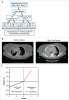
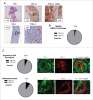
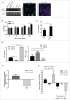
Du, McCall, Park et al
Oncoimmunology (2018) 7 (4), e1408747 DOI: 10.1080/2162402X.2017.1408747
AI Summary: OriGene products, specifically the Human PDCD1 (PD-1) cDNA clone and anti-PD-1 antibody, were used in this study to detect and manipulate PD-1 expression in lung cancer cells, enabling the authors to demonstrate that tumor-intrinsic PD-1 can regulate cancer cell growth and that its blockade may paradoxically promote tumor progression.
Blockade of Tumor-Expressed PD-1 Promotes Lung Cancer Growth
Du, McCall, Park et al
OncoImmunology (2017)
Du, McCall, Park et al
OncoImmunology (2017)
AI Summary: OriGene contributed to this study by providing PD-1 overexpression mGFP-tagged lentivector particles (#MR227347L2V) and polybrene, which were used to generate PD-1-overexpressing lung cancer cells for experimental analysis.
Snippet: PD - 1 - OE cells were generated by transfecting M109 cells with a PD - 1 - overexpression mGFP - tagged lentivector particles purcha sed from O rigene ( # MR227347L2 ░ V) according to the manufacturer’s protocol using polybrene (Origene) to enhance transfection
Showing 1-3 of 3 papers.
Powered by BizGenius
*Delivery time may vary from web posted schedule. Occasional delays may occur due to unforeseen
complexities in the preparation of your product. International customers may expect an additional 1-2 weeks
in shipping.
Related Products
- Price:
- Actual Price:
Welcome to OriGene AI!
I'm your AI-powered guide to everything OriGene.
Ask me anything:
- Product specs
- Ordering help
- Technical questions
- How to find exactly what your experiment needs
Prefer a live agent? Connect with us by clicking the green chat icon, as seen in the image below or email our team at custsupport@origene.com.
