
Human Protein Kinase Clone Set
SKU
TCPK101
Human protein kinases clone set I, containing 90 cDNA clones in mammalian expression vector
Learn More
$1,201.00
5 Days*
Specifications
Reviews


Documents
| Product Manuals |
| SDS |
Resources
Citations
Chemosensitivity to HM90822, a novel synthetic IAP antagonist, is determined by p-AKT-inducible XIAP phosphorylation in human pancreatic cancer cells
Hong, Shin, Moon et al
Invest New Drugs (2020)
Hong, Shin, Moon et al
Invest New Drugs (2020)
Cited by 6
AI Summary: OriGene contributed to this study by providing the human AKT cDNA, which was used to investigate the role of AKT overexpression in resistance to the IAP antagonist HM90822 in pancreatic cancer cells.
Snippet: Plasmids encoding HA-tagged XIAP, cIAP1 and cIAP2 were kindly provided by Dr. Colin S Duckett (University of Michigan, Ann Arbor, MI, USA). Human cDNA encoding AKT was obtained from OriGene (Rockville, MD, USA)
High-Throughput Screening for Linear Ubiquitin Chain Assembly Complex (LUBAC) Selective Inhibitors Using Homogenous Time-Resolved Fluorescence (HTRF)-Based Assay System
Katsuya, Hori, Oikawa et al
SLAS Discov (2018)
Katsuya, Hori, Oikawa et al
SLAS Discov (2018)
AI Summary: OriGene products, specifically human ubiquitin-conjugating enzyme H5c (UbcH5c) and human IκBα cDNA, were used as source materials for cloning key proteins involved in the LUBAC assay development in this study.
Snippet: Human ubiquitin-conjugating enzyme H5c (UbcH5c) and human IκBα cDNA were purchased from Origene Technologies (Rockville, MD). They were subsequently subcloned into pcDNA3.1(+) (Thermo Fisher Scientific, Waltham, MA), pVL1393 (Becton, Dickinson and Company, Franklin Lakes, NJ)
Polycystin-2 is an essential ion channel subunit in the primary cilium of the renal collecting duct epithelium
Liu, Vien, Duan et al
Elife (2018) 7 DOI: 10.7554/eLife.33183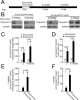
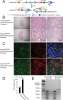
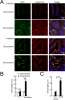
Liu, Vien, Duan et al
Elife (2018) 7 DOI: 10.7554/eLife.33183
AI Summary: In this study, the PKD2 (NM_000297) human cDNA ORF Clone from OriGene was used to investigate the role of polycystin-2 as an essential ion channel subunit in the primary cilium of renal collecting duct epithelium.
Snippet: …The PKD2 (NM_000297) human cDNA ORF Clone was purchased from Origene (Rockville, MD). …The PKD2 (NM_000297) human cDNA ORF Clone was purchased from Origene (Rockville, MD). …
Deciphering the mechanism of Q145H SFTPC mutation unmasks a splicing defect and explains the severity of the phenotype
Delestrain, Simon, Aissat et al
Eur. J. Hum. Genet. (2017)
Delestrain, Simon, Aissat et al
Eur. J. Hum. Genet. (2017)
AI Summary: OriGene’s human proSP-C wild-type (WT) cDNA was used as a template for generating constructs to study the effects of the Q145H SFTPC mutation, enabling the researchers to compare the wild-type and mutant protein maturation and localization.
Snippet: Mobitec, Gottingen, Germany) as previously described. 11 Human proSP-C wild-type (WT) cDNA (Origene, Herford, Germany) was subcloned into the pcDNA3.1/V5-His-TOPO vector. All mutations were generated by using a ... All 4 versions Cite SaveSaving
microRNA-495 promotes bladder cancer cell growth and invasion by targeting phosphatase and tensin homolog
Tan, Mu, Liu et al
Biochem. Biophys. Res. Commun. (2017) 483 (2), 867-873 DOI: 10.1016/j.bbrc.2017.01.019
Tan, Mu, Liu et al
Biochem. Biophys. Res. Commun. (2017) 483 (2), 867-873 DOI: 10.1016/j.bbrc.2017.01.019
AI Summary: OriGene contributed to this study by providing the pCMV-MIR-495 plasmid for miR-495 overexpression and the pCMV-MIR empty vector as a control, which were used to investigate the role of miR-495 in bladder cancer cell growth and invasion.
Snippet: Invitrogen) containing 10% FBS. 2.4. Plasmids and inhibitors. A plasmid expressing human miR-495 (pCMV-MIR-495) and empty vector pCMV-MIR were purchased from Origene (Rockville, MD, USA). Anti-miR-495 inhibitor
Insights into Brain Glycogen Metabolism: The Structure of Human Brain Glycogen Phosphorylase
Mathieu, Li de la Sierra-Gallay, Duval et al
J. Biol. Chem. (2016)
Mathieu, Li de la Sierra-Gallay, Duval et al
J. Biol. Chem. (2016)
AI Summary: OriGene Technologies contributed to this study by providing the human brain glycogen phosphorylase (bGP) cDNA, which was used for cloning and expression of recombinant bGP protein.
Snippet: Cloning of bGP and expression of recombinant bGP— The human bGP cDNA (provided by OriGene Technologies, Inc) was subcloned into the pET28a vector for further expression of His6-tagged fusion recombinant proteins (6xHis-bGP). ... Cite SaveSaving
Showing 1-6 of 14 papers.
Powered by BizGenius
*Delivery time may vary from web posted schedule. Occasional delays may occur due to unforeseen
complexities in the preparation of your product. International customers may expect an additional 1-2 weeks
in shipping.
Related Products
- Price:
- Actual Price:
Welcome to OriGene AI!
I'm your AI-powered guide to everything OriGene.
Ask me anything:
- Product specs
- Ordering help
- Technical questions
- How to find exactly what your experiment needs
Prefer a live agent? Connect with us by clicking the green chat icon, as seen in the image below or email our team at custsupport@origene.com.
