
Mouse monoclonal eGFP antibody, clone OTI5A2


$447.00
In Stock*
Specifications
| Product Data | |
| Clone Name | OTI5A2 (formerly 5A2) |
|---|---|
| Application | WB |
| Recommended Dilution | WB 1:500-1:2000 |
| Reactivity | eGFP |
| Antibody Host | Mouse |
| Clonality | Monoclonal |
| Immunogen | A full length eGFP tagged recombinant protein expressed in HEK293T cell |
| Isotype | IgG1 |
| Formulation | PBS (pH 7.3) containing 1%BSA, 50% glycerol and 0.02% sodium azide |
| Concentration | 0.7mg/ml |
| Conjugation | Unconjugated |
| Storage | Store at -20°C. |
| Stability | Stable for 1 year at -20°C from date of shipment. |
| Shipping | Blue Ice |
| Predicted Protein Size | 26.9 kDa |
Reviews


Documents
| Product Manuals |
| FAQs |
| SDS |
Resources
Citations
Targeting TRIM15-mediated Axin1 depolymerization suppresses Wnt signaling and inhibits colorectal cancer growth
Liang, Zheng, Wu et al
Cell Death Dis (2025)
Liang, Zheng, Wu et al
Cell Death Dis (2025)
Cited by 2
AI Summary: OriGene products, specifically antibodies against β-Tubulin (TA503129), GFP (TA150052), and HSP90 (TA500494), were used in this study to detect and analyze protein expression levels, supporting the investigation of TRIM15's role in Axin1 polymerization and Wnt signaling in colorectal cancer.
Targeting Dlat-Trpv3 pathway by hyperforin elicits non-canonical promotion of adipose thermogenesis as an effective anti-obesity strategy
Lu, Jiang, Zhou et al
J Adv Res (2024)
Lu, Jiang, Zhou et al
J Adv Res (2024)
Cited by 3
AI Summary: In this study, the OriGene GFP antibody (TA150052) was used to detect GFP-tagged proteins, aiding in the investigation of molecular mechanisms underlying hyperforin-induced adipose thermogenesis.
Snippet: Myc (66004-1-Ig), Vdac1/2 (10866-1-AP), F4/80 (28463-1-AP), E-cadherin (20874-1-AP) and Ucp1 (3673-1-AP) were purchased from Proteintech;Flag (M20018) was purchased from Abmart;GFP (TA150052) was purchased from OriGene
Vasopressin-to-Oxytocin Receptor Crosstalk in the Preoptic Area Underlying Parental Behaviors in Male Mice
Inada, Hagihara, Yaguchi et al
bioRxiv (2024)
Inada, Hagihara, Yaguchi et al
bioRxiv (2024)
Cited by 2
Snippet: For the immunohistochemistry, the following reagents were used for primary antibodies: anti-GFP (GFP-1010;Aves Labs;1:500), anti-RFP (5f8;Chromotek;1:500), and anti-mCherry (AB0040-200;OriGene;1:500)
Optimizing rice grain size by attenuating phosphorylation-triggered functional impairment of a chromatin modifier ternary complex
Shen, Ma, Bai et al
Developmental Cell (2024) 59 (4), 448-464.e8 DOI: 10.1016/j.devcel.2023.12.013
Shen, Ma, Bai et al
Developmental Cell (2024) 59 (4), 448-464.e8 DOI: 10.1016/j.devcel.2023.12.013
Cited by 16
Self-assembled thiophanate-methyl/star polycation complex prevents plant cell-wall penetration and fungal carbon utilization during cotton infection by Verticillium dahliae
Su, Yan, Zhao et al
Int J Biol Macromol (2023) 239, 124354 DOI: 10.1016/j.ijbiomac.2023.124354
Su, Yan, Zhao et al
Int J Biol Macromol (2023) 239, 124354 DOI: 10.1016/j.ijbiomac.2023.124354
Cited by 20
AI Summary: In this study, OriGene products—including the cDNA Clone (Cat# SC127965) and qPCR primers (Cat# HQP017332)—were used to analyze gene expression changes in Verticillium dahliae, helping to elucidate the molecular effects of the thiophanate-methyl/star polycation nanoagent on fungal infection and plant protection.
KLF12 promotes the proliferation of breast cancer cells by reducing the transcription of p21 in a p53-dependent and p53-independent manner
Li, Li, Shi et al
Cell Death Dis (2023) 14 (5), 313 DOI: 10.1038/s41419-023-05824-x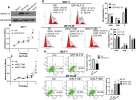
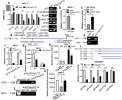
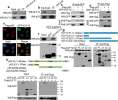
Li, Li, Shi et al
Cell Death Dis (2023) 14 (5), 313 DOI: 10.1038/s41419-023-05824-x
Cited by 20
AI Summary: In this study, OriGene products—including the KLF12 overexpression plasmid (RC207055) and KLF12-specific siRNA (SR321721)—were used to manipulate KLF12 expression in breast cancer cells, enabling the researchers to investigate KLF12's role in regulating cell proliferation and the p53/p21 pathway.
Snippet: ew information for improving breast cancer treatment. The tumor suppressor p53 functions as a transcription factor and regulates downstream targets responsible for homeostasis and defense against tumorigenesis [14]. KLF4, a member of the KLF family, can interact with p53 and mediate the transcription of p21 [15]. KLF9, another member of the KLF family, can inhibit the growth of hepatocellular car
Showing 1-6 of 22 papers.
Powered by BizGenius
*Delivery time may vary from web posted schedule. Occasional delays may occur due to unforeseen
complexities in the preparation of your product. International customers may expect an additional 1-2 weeks
in shipping.
Related Products
- Price:
- Actual Price:
Welcome to OriGene AI!
I'm your AI-powered guide to everything OriGene.
Ask me anything:
- Product specs
- Ordering help
- Technical questions
- How to find exactly what your experiment needs
Prefer a live agent? Connect with us by clicking the green chat icon, as seen in the image below or email our team at custsupport@origene.com.
