
Anti-Myc and Anti-DDK monoclonal antibodies


$412.00
In Stock*
Specifications
| Product Data | |
| Clone Name | 9E10/4C5 |
|---|---|
| Application | FC, IF, IP, WB |
| Recommended Dilution | FC: 1:100-1:1000, WB: 1:1000, IP: 1:200, IF: 1:200 |
| Reactivity | Myc and DDK (FLAG) tags |
| Antibody Host | Mouse |
| Clonality | Monoclonal |
| Immunogen | Anti-Myc: Synthetic peptide corresponding to the C-terminus of human c-Myc conjugated to KLH; Anti-DDK: a synthetic peptide coupled to KLH. |
| Isotype | IgG1/IgG2a |
| Formulation | PBS (pH7.3) containing 1% BSA, 50% glycerol and 0.02% sodium azide |
| Concentration | 1 mg/ml |
| Conjugation | Unconjugated |
| Storage | Store at -20°C. |
| Stability | Stable for 1 year at -20°C from date of shipment. |
| Shipping | Blue Ice |
| Synonyms | ANTI-DDK AND MYC; ANTI-MYC-DDK; ANTI-MYC/DDK; ANTI-MYC AND ANTI-DDK; ANTI-MYC ANTI-DDK; ANTI-MYC DDK; ANTI-MYC MAB; ANTI-MYC MONOCLONAL ANTIBODY; ANTI-MYC TAG; ANTI CMYC; ANTIMYC; ANTI MYC/DDK; ANTI MYC DDK; ANTI MYC TAG |
Reviews


Documents
| Product Manuals |
| FAQs |
| SDS |
Citations
Role of WDR66 in Stemness, Therapy Resistance and Tumor microenvironment modulation in Head and Neck Cancer
Sanchez-Diaz, Espinosa-Sánchez, Carnero
Int J Biol Sci (2026) 22 (11), 5685-5705 DOI: 10.7150/ijbs.130010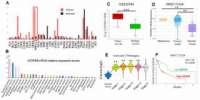
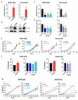
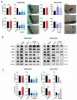
Sanchez-Diaz, Espinosa-Sánchez, Carnero
Int J Biol Sci (2026) 22 (11), 5685-5705 DOI: 10.7150/ijbs.130010
AI Summary: OriGene’s DDK-tag antibody (TA150014) was used at 1:1000 dilution for Western blotting to detect tagged proteins, contributing to the analysis of WDR66 expression and its effects in head and neck cancer cells.
Snippet: DDK-tag Origene (TA150014) 1:1000 (WB) OCT3/4 Santa Cruz (sc-5279) 1:200 (WB) SOX2 Santa Cruz (sc-365823) 1:200 (WB)
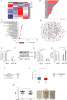
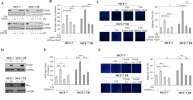
Adipocyte/Tumor cell crosstalk via IGF-1/TXNIP axis promotes malignancy and endocrine resistance in breast cancer
Caruso, Accattatis, Giordano et al
Cell Commun Signal (2025) 23 (1), 262 DOI: 10.1186/s12964-025-02262-4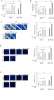
Caruso, Accattatis, Giordano et al
Cell Commun Signal (2025) 23 (1), 262 DOI: 10.1186/s12964-025-02262-4
Cited by 12
AI Summary: In this study, OriGene’s anti-Myc and anti-DDK antibodies (TA150014) were used to detect tagged proteins, contributing to the validation of molecular mechanisms underlying the IGF-1/TXNIP axis in breast cancer malignancy and endocrine resistance.
Snippet: g Technology), anti-IGF-1R (#9750, Cell Signaling Technology), anti-phospho-IGF1R (#80732, Cell Signaling Technology), anti-IGF-1 antibody (#28530-1-AP. Proteintech), anti-Myc and anti-DDK (TA150014, OriGene), (Z)-4-Hydroxytamoxifen (H7904, Sigma-Aldrich), IGF-1 (I3769, Sigma-Aldrich), SAHA (SML0061, Sigma-Aldrich), DZNep (5.06069, Sigma-Aldrich), GSK1838705A (S2703, Aurogene), Everolimus (S1120,
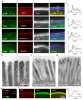
Transmembrane channel-like 4 and 5 proteins at microvillar tips are potential ion channels and lipid scramblases
Ebrahim, Ballesteros, Sharon Zheng et al
bioRxiv (2024)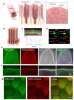
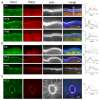
Ebrahim, Ballesteros, Sharon Zheng et al
bioRxiv (2024)
Cited by 3
Snippet: Affinity purified rabbit polyclonal antibody (pAb) against mouse TMC5 (epitope sequence: DFTVTHEKAVKLKQKNLSTE) was custom made by Covance. Anti-TMC4 (HPA048635) and anti-CIB3 (HPA043553) rabbit pAbs were purchased from Sigma. Anti-DDK mouse monoclonal antibodies (CAT#: TA150014) were purchased from Origene
Alpha-1 adrenergic antagonists sensitize neuroblastoma to therapeutic differentiation
Broso, Gatto, Sidarovich et al
Cancer Res (2023)
Broso, Gatto, Sidarovich et al
Cancer Res (2023)
Simplexviruses Successfully Adapt to Their Host by Fine-Tuning Immune Responses
Mozzi, Cagliani, Pontremoli et al
Mol Biol Evol (2022) 39 (7) DOI: 10.1093/molbev/msac142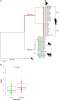
Mozzi, Cagliani, Pontremoli et al
Mol Biol Evol (2022) 39 (7) DOI: 10.1093/molbev/msac142
Cited by 13
AI Summary: OriGene contributed to this study by synthesizing and cloning the coding sequences of ICP47 N-terminus from HSV-1, HSV-2, and B-virus, as well as their mutagenized versions, into the pCMV6-Entry vector (custom service), enabling functional analysis of immune response modulation by these viral proteins.
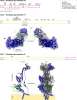
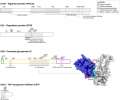
Snippet: Western-Blot The coding sequences of ICP47 N-terminus from HSV-1 (55aa, YP_009137148), HSV-2 (55aa, YP_009137225.1), and B-virus (56aa, NP_851932) were synthesized and cloned in pCMV6-Entry vector by Origene custom service. The pCMV6 vectors coding for the corresponding mutagenized sequences were synthesized and cloned as well (fig. 4B). Jurkat cells were cultured in Roswell Park Memorial Institu
Hypoxia Selectively Increases a SMAD3 Signaling Axis to Promote Cancer Cell Invasion
Brochu-Gaudreau, Charbonneau, Harper et al
Cancers (Basel) (2022) 14 (11) DOI: 10.3390/cancers14112751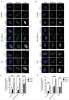
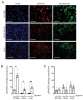
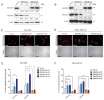
Brochu-Gaudreau, Charbonneau, Harper et al
Cancers (Basel) (2022) 14 (11) DOI: 10.3390/cancers14112751
Cited by 5
AI Summary: OriGene’s VIM-DDK and ITGB2-DDK overexpression plasmids were used in this study to investigate the roles of VIM and ITGB2 genes in hypoxia-induced cancer cell invasion.
Snippet: f C-terminal phosphorylation, pCMV5b-SMAD2-3SA and pCMV5b-SMAD3-3SA [38], were kindly provided by Pr. Attisano (University of Toronto, Canada). VIM-DDK and ITGB2-DDK overexpression plasmids were from Origene (Rockville, MD, USA). 2.2. Antibodies and Reagents TGFβ1 was a kind gift from Dr F.W. Ruscetti (Biological Response Modifiers Program, FRCF, NCI, Maryland, USA). All fluorophore-coupled rea
Showing 1-6 of 35 papers.
Powered by BizGenius
*Delivery time may vary from web posted schedule. Occasional delays may occur due to unforeseen
complexities in the preparation of your product. International customers may expect an additional 1-2 weeks
in shipping.
Related Products
- Price:
- Actual Price:
Welcome to OriGene AI!
I'm your AI-powered guide to everything OriGene.
Ask me anything:
- Product specs
- Ordering help
- Technical questions
- How to find exactly what your experiment needs
Prefer a live agent? Connect with us by clicking the green chat icon, as seen in the image below or email our team at custsupport@origene.com.
