
PD-L1 (CD274) Mouse Monoclonal Antibody [Clone ID: OTI13G7]


$447.00
In Stock*
Specifications
| Product Data | |
| Clone Name | OTI13G7 |
|---|---|
| Application | FC, IF |
| Recommended Dilution | IF 1:5000, FLOW 1:100 |
| Reactivity | Human (Does not react with: Mouse) |
| Antibody Host | Mouse |
| Isotype | IgG1 |
| Clonality | Monoclonal |
| Immunogen | Human recombinant protein fragment corresponding to amino acids 19-239 of human PD-L1/CD274(NP_054862) produced in HEK293 cells. |
| Buffer | PBS (pH 7.3) containing 1% BSA, 50% glycerol and 0.02% sodium azide |
| Concentration | 1 mg/ml |
| Purification | Purified from mouse ascites fluids or tissue culture supernatant by affinity chromatography (protein A/G) |
| Conjugation | Unconjugated |
| Storage | Store at -20°C as received. |
| Stability | Stable for 12 months from date of receipt. |
| Shipping | Blue Ice |
| Predicted Protein Size | 31 kDa |
| Gene Name | CD274 molecule |
| Database Link | |
| Synonyms | B7-H; B7H1; PD-L1; PDCD1L1; PDCD1LG1; PDL1 |
| Reference Data | |
| Protein Categories | ADC Targets, CAR-T Targets, CD Markers, Cytokines, Membrane Proteins |
| Protein Families | Druggable Genome, Transmembrane |
| Protein Pathways | Cell adhesion molecules (CAMs) |
Reviews


Documents
| Product Manuals |
| FAQs |
| SDS |
Resources
Other "OTI13G7" antibodies (1)
| SKU | Description | Size | Price | |
|---|---|---|---|---|
| CF809809 | Carrier-free (BSA/glycerol-free) CD274 mouse monoclonal antibody,clone OTI13G7 | 100 ug |
$620.00
|
|
Citations
T-bet+CD8+ T cells govern anti-PD-1 responses in microsatellite-stable gastric cancers
Tang, Che, Wang et al
Nat Commun (2025) 16 (1), 3905 DOI: 10.1038/s41467-025-58958-1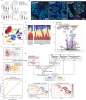
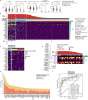
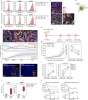
Tang, Che, Wang et al
Nat Commun (2025) 16 (1), 3905 DOI: 10.1038/s41467-025-58958-1
Cited by 14
AI Summary: OriGene's PD-L1 antibody (CF809809) was used for immunostaining to identify PD-L1 expression in tissue samples, contributing to the spatial analysis of the tumor microenvironment in this study.
Snippet: gens. Proteinase K was added to digest the proteins after deparaffination and hydration. The slides were incubated with WTA probe mix overnight. On the second day, the slides were stained with PD-L1 (OriGene, CF809809), CD45 (CST, 13917), PanCK (Novus, NBP2-33200AF532), and Syto13 (ThermoFisher, S7575) for 2 h. Three concentric circles on each T-bet+ - PD-L1 niche were chosen as regions of inter
Zosuquidar Promotes Antitumor Immunity by Inducing Autophagic Degradation of PD-L1
Ding, Guo, Zhang et al
Adv Sci (Weinh) (2024)
Ding, Guo, Zhang et al
Adv Sci (Weinh) (2024)
Cited by 16
AI Summary: OriGene's anti-PD-L1 antibody (TA809809) was used in this study to detect and analyze PD-L1 expression, supporting the investigation of zosuquidar's effect on PD-L1 autophagic degradation and antitumor immunity.
Snippet: nti-PD-L1 (TA809809) was from OriGene (Maryland, USA). Mouse anti-LC3B (sc-376404) was from Santa Cruz Biotechnology (TEXAS, USA). Mouse anti-Lamp1 (14-1079-80) was purchased from eBioscience (California, USA). Antibodies for Flow Cytometry FITC mouse IgG1 κ isotype control (400110), PerCP-Cy5.5 mouse IgG1 κ isotype co
Showing 1-2 of 2 papers.
Powered by BizGenius
*Delivery time may vary from web posted schedule. Occasional delays may occur due to unforeseen
complexities in the preparation of your product. International customers may expect an additional 1-2 weeks
in shipping.
Related Products
- Price:
- Actual Price:
Welcome to OriGene AI!
I'm your AI-powered guide to everything OriGene.
Ask me anything:
- Product specs
- Ordering help
- Technical questions
- How to find exactly what your experiment needs
Prefer a live agent? Connect with us by clicking the green chat icon, as seen in the image below or email our team at custsupport@origene.com.
