
Stathmin 1 (STMN1) Rabbit Polyclonal Antibody

Specifications
| Product Data | |
| Application | IHC, WB |
|---|---|
| Recommended Dilution | WB: 200-1000 WB positive control: Human fetal brain tissue IHC: 25-100 Positive control: Human brain Predicted cell location: Cytoplasm |
| Reactivity | Human, Mouse, Rat |
| Antibody Host | Rabbit |
| Isotype | IgG |
| Clonality | Polyclonal |
| Immunogen | Synthetic peptide of human STMN1 |
| Buffer | pH7.4 PBS, 0.05% NaN3, 40% Glyceroln |
| Concentration | lot specific |
| Purification | Antigen affinity purification |
| Conjugation | Unconjugated |
| Storage | Store at -20°C as received. |
| Stability | Stable for 12 months from date of receipt. |
| Shipping | Blue Ice |
| Predicted Protein Size | 17 kDa |
| Gene Name | stathmin 1 |
| Database Link | |
| Background | This gene belongs to the stathmin family of genes. It encodes a ubiquitous cytosolic phosphoprotein proposed to function as an intracellular relay integrating regulatory signals of the cellular environment. The encoded protein is involved in the regulation of the microtubule filament system by destabilizing microtubules. It prevents assembly and promotes disassembly of microtubules. Multiple transcript variants encoding different isoforms have been found for this gene. |
| Synonyms | C1orf215; Lag; LAP18; OP18; PP17; PP19; PR22; SMN |
| Reference Data | |
| Protein Categories | Cytokines, Growth Factors, Intracellular Proteins |
| Protein Pathways | MAPK signaling pathway |
Reviews


Documents
| Product Manuals |
| FAQs |
| SDS |
Citations
MET Suppresses Epithelial VEGFR2 via Intracrine VEGF-induced Endoplasmic Reticulum-associated Degradation
Chen, Filvaroff, Peng et al
EBioMedicine (2015) 2 (5), 406-20 DOI: 10.1016/j.ebiom.2015.03.021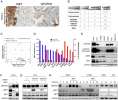
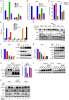
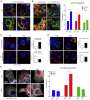
Chen, Filvaroff, Peng et al
EBioMedicine (2015) 2 (5), 406-20 DOI: 10.1016/j.ebiom.2015.03.021
Cited by 18
AI Summary: In this study, OriGene’s pCMV6-Entry-KDR (VEGFR2) plasmid and MET shRNA lentiviral particles were used to manipulate VEGFR2 and MET expression, respectively, enabling the authors to investigate how MET signaling suppresses VEGFR2 protein levels via intracrine VEGF-induced endoplasmic reticulum-associated degradation in epithelial cancer cells.
Showing 1-1 of 1 papers.
Powered by BizGenius
*Delivery time may vary from web posted schedule. Occasional delays may occur due to unforeseen
complexities in the preparation of your product. International customers may expect an additional 1-2 weeks
in shipping.
Related Products
- Price:
- Actual Price:
Welcome to OriGene AI!
I'm your AI-powered guide to everything OriGene.
Ask me anything:
- Product specs
- Ordering help
- Technical questions
- How to find exactly what your experiment needs
Prefer a live agent? Connect with us by clicking the green chat icon, as seen in the image below or email our team at custsupport@origene.com.
