
NGAL (LCN2) Rabbit Polyclonal Antibody

Specifications
| Product Data | |
| Application | IHC, WB |
|---|---|
| Recommended Dilution | WB: 1000-5000 WB positive control: Human liver cancer tissue IHC: 50-200 Positive control: Human breast cancer Predicted cell location: Cytoplasm |
| Reactivity | Human |
| Antibody Host | Rabbit |
| Isotype | IgG |
| Clonality | Polyclonal |
| Immunogen | Synthetic peptide peptide corresponding to a region derived from 60-73 amino acids of human lipocalin 2 |
| Buffer | PBS pH7.3, 0.05% NaN3, 50% glycerol |
| Concentration | lot specific |
| Purification | Antigen affinity purification |
| Conjugation | Unconjugated |
| Storage | Store at -20°C as received. |
| Stability | Stable for 12 months from date of receipt. |
| Shipping | Blue Ice |
| Predicted Protein Size | 23 kDa |
| Gene Name | lipocalin 2 |
| Database Link | |
| Background | Iron-trafficking protein involved in multiple processes such as apoptosis; innate immunity and renal development. Binds iron through association with 2;5-dihydroxybenzoic acid (2;5-DHBA); a siderophore that shares structural similarities with bacterial enterobactin; and delivers or removes iron from the cell; depending on the context. Iron-bound form (holo-24p3) is internalized following binding to the SLC22A17 (24p3R) receptor; leading to release of iron and subsequent increase of intracellular iron concentration. In contrast; association of the iron-free form (apo-24p3) with the SLC22A17 (24p3R) receptor is followed by association with an intracellular siderophore; iron chelation and iron transfer to the extracellular medium; thereby reducing intracellular iron concentration. Involved in apoptosis due to interleukin-3 (IL3) deprivation: iron-loaded form increases intracellular iron concentration without promoting apoptosis; while iron-free form decreases intracellular iron levels; inducing expression of the proapoptotic protein BCL2L11/BIM; resulting in apoptosis. Involved in innate immunity; possibly by sequestrating iron; leading to limit bacterial growth. |
| Synonyms | 24p3; MSFI; NGAL |
| Reference Data | |
| Protein Categories | Secreated Proteins |
| Protein Families | Secreted Protein |
Reviews


Documents
| Product Manuals |
| FAQs |
| SDS |
Citations
LCN2 Is a Potential Biomarker for Radioresistance and Recurrence in Nasopharyngeal Carcinoma
Zhang, Wang, Zeng et al
Front Oncol (2020) 10, 605777 DOI: 10.3389/fonc.2020.605777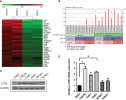
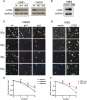
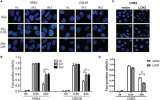
Zhang, Wang, Zeng et al
Front Oncol (2020) 10, 605777 DOI: 10.3389/fonc.2020.605777
Cited by 20
AI Summary: OriGene products, specifically the LCN2 Human cDNA ORF Clone (RC208349) and LCN2 shRNA plasmids (TG313423), were used in this study to manipulate LCN2 expression in nasopharyngeal carcinoma cell lines, enabling the authors to investigate the role of LCN2 in radioresistance and recurrence.
Experimental and Human Evidence for Lipocalin-2 (Neutrophil Gelatinase-Associated Lipocalin [NGAL]) in the Development of Cardiac Hypertrophy and heart failure
Marques, Prestes, Byars et al
J Am Heart Assoc (2017) 6 (6) DOI: 10.1161/JAHA.117.005971
Marques, Prestes, Byars et al
J Am Heart Assoc (2017) 6 (6) DOI: 10.1161/JAHA.117.005971
Inhibition of FASN suppresses migration, invasion and growth in hepatoma carcinoma cells by deregulating the HIF-1α/IGFBP1 pathway
Gong, Shen, Yang et al
Int J Oncol (2017) 50 (3), 883-892 DOI: 10.3892/ijo.2017.3867
Gong, Shen, Yang et al
Int J Oncol (2017) 50 (3), 883-892 DOI: 10.3892/ijo.2017.3867
Cited by 51
AI Summary: OriGene products, specifically the FASN shRNA plasmid (Cat# TG311034) and HIF-1α antibody (Cat# TA500490), were used in this study to knock down FASN expression and detect HIF-1α protein levels, respectively, thereby enabling the investigation of how FASN inhibition affects hepatoma cell migration, invasion, and the HIF-1α/IGFBP1 pathway.
Showing 1-3 of 3 papers.
Powered by BizGenius
*Delivery time may vary from web posted schedule. Occasional delays may occur due to unforeseen
complexities in the preparation of your product. International customers may expect an additional 1-2 weeks
in shipping.
Related Products
- Price:
- Actual Price:
Welcome to OriGene AI!
I'm your AI-powered guide to everything OriGene.
Ask me anything:
- Product specs
- Ordering help
- Technical questions
- How to find exactly what your experiment needs
Prefer a live agent? Connect with us by clicking the green chat icon, as seen in the image below or email our team at custsupport@origene.com.
