
VGLL1 Rabbit Polyclonal Antibody

Specifications
| Product Data | |
| Application | WB |
|---|---|
| Recommended Dilution | WB: 2000-10000 WB positive control: 293T cells |
| Reactivity | Human |
| Antibody Host | Rabbit |
| Isotype | IgG |
| Clonality | Polyclonal |
| Immunogen | Synthetic peptide corresponding to a region derived from 62-75 amino acids of human vestigial like 1 (Drosophila) |
| Buffer | PBS pH7.3, 0.05% NaN3, 50% glycerol |
| Concentration | lot specific |
| Purification | Antigen affinity purification |
| Conjugation | Unconjugated |
| Storage | Store at -20°C as received. |
| Stability | Stable for 12 months from date of receipt. |
| Shipping | Blue Ice |
| Predicted Protein Size | 29 kDa |
| Gene Name | vestigial like family member 1 |
| Database Link | |
| Background | The protein encoded by this gene binds proteins of the TEA domain family of transcription factors (TEFs) through the Vg (vestigial) homology region found in its N-terminus. It may thus function as a specific coactivator for the mammalian TEFs. TDU interacted directly with the TEA domain family member; TEF1; and deletion of the Vg homology region abolished the interaction. The TDU-TEF1 dimer activated a reporter plasmid; and expression of TDU in Drosophila rescued loss of Vg function. The interaction was stronger in cardiac myocytes; suggesting a myocyte-specific factor may participate in the interaction. Vgll1 was weakly active in driving expression of a reporter gene from the mouse skeletal muscle alpha-actin promoter; and Vgll1 could partially reverse the inhibitory effect of TEF1 in this assay. |
| Synonyms | TDU; VGL1 |
| Reference Data | |
| Protein Categories | Intracellular Proteins |
| Protein Families | Transcription Factors |
Reviews


Documents
| Product Manuals |
| FAQs |
| SDS |
Citations
Vestigial-like 1 is a shared targetable cancer-placenta antigen expressed by pancreatic and basal-like breast cancers
Bradley, Talukder, Lai et al
Nat Commun (2020) 11 (1), 5332 DOI: 10.1038/s41467-020-19141-w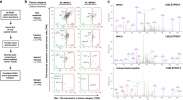
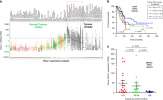
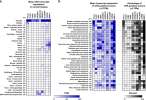
Bradley, Talukder, Lai et al
Nat Commun (2020) 11 (1), 5332 DOI: 10.1038/s41467-020-19141-w
Cited by 30
AI Summary: OriGene’s VGLL1-specific rabbit polyclonal antibody (TA322329) was used in this study to detect VGLL1 protein expression in cancer samples, supporting the identification of VGLL1 as a targetable cancer antigen.
Snippet: transferred, and membranes probed with VGLL1-specific rabbit polyclonal antibody (TA322329, OriGene). VGLL1 protein was visualized using an enzyme-linked anti-rabbit mAb with the Scientific Pierce Fast Western Blot Kit,
Showing 1-1 of 1 papers.
Powered by BizGenius
*Delivery time may vary from web posted schedule. Occasional delays may occur due to unforeseen
complexities in the preparation of your product. International customers may expect an additional 1-2 weeks
in shipping.
Related Products
- Price:
- Actual Price:
Welcome to OriGene AI!
I'm your AI-powered guide to everything OriGene.
Ask me anything:
- Product specs
- Ordering help
- Technical questions
- How to find exactly what your experiment needs
Prefer a live agent? Connect with us by clicking the green chat icon, as seen in the image below or email our team at custsupport@origene.com.
