
FOXC1 Goat Polyclonal Antibody

Specifications
| Product Data | |
| Application | FC, WB |
|---|---|
| Recommended Dilution | ELISA: 1:32,000. WB: 0.5-1.5µg/ml. |
| Reactivity | Human, Mouse, Zebrafish |
| Antibody Host | Goat |
| Isotype | IgG |
| Clonality | Polyclonal |
| Immunogen | Peptide with sequence RTSGAFVYDCSKF, from the C Terminus of the protein sequence according to NP_001444.1. |
| Buffer | Supplied at 0.5 mg/ml in Tris saline, 0.02% sodium azide, pH7.3 with 0.5% bovine serum albumin. |
| Purification | Purified from goat serum by ammonium sulphate precipitation followed by antigen affinity chromatography using the immunizing peptide. Supplied at 0.5 mg/ml in Tris saline, 0.02% sodium azide, pH7.3 with 0.5% bovine serum albumin. Aliquot and store at -20°C. Minimize freezing and thawing. |
| Conjugation | Unconjugated |
| Storage | Store at -20°C as received. |
| Stability | Stable for 12 months from date of receipt. |
| Shipping | Blue Ice |
| Gene Name | forkhead box C1 |
| Database Link | |
| Background | This gene belongs to the forkhead family of transcription factors which is characterized by a distinct DNA-binding forkhead domain. The specific function of this gene has not yet been determined; however, it has been shown to play a role in the regulation of embryonic and ocular development. Mutations in this gene cause various glaucoma phenotypes including primary congenital glaucoma, autosomal dominant iridogoniodysgenesis anomaly, and Axenfeld-Rieger anomaly. provided by RefSeq |
| Synonyms | ARA; FKHL7; FREAC-3; FREAC3; IGDA; IHG1; IRID1; RIEG3 |
| Reference Data | |
| Protein Categories | Chemokines, Growth Factors, Intracellular Proteins, Transciption Factors |
| Protein Families | Druggable Genome, Transcription Factors |
Reviews


Documents
| Product Manuals |
| FAQs |
| SDS |
Citations
Loss of Foxc1 and Foxc2 function in chondroprogenitor cells disrupts endochondral ossification
Almubarak, Lavy, Srnic et al
The Journal of biological chemistry (2021) 297 (3), 101020 DOI: 10.1016/j.jbc.2021.101020
Almubarak, Lavy, Srnic et al
The Journal of biological chemistry (2021) 297 (3), 101020 DOI: 10.1016/j.jbc.2021.101020
Cited by 18
AI Summary: OriGene’s anti-Foxc1 antibodies were used to screen and confirm reduced Foxc1 protein levels in genetically modified cell lines, enabling the study of Foxc1’s role in chondrocyte differentiation and endochondral ossification.
Snippet: cell solution was added to each well. Single cells were then expanded to larger culture volumes and were screened for a reduction in Foxc1 protein levels by immunoblotting with anti Foxc1 antibodies (OriGene), followed by sequencing of the Foxc1 ORF. Two cell lines were selected (crFOXC1-1 and crFOXC1-8) and used for subsequent functional studies. Both lines displayed similar properties in chondro
Shear stimulation of FOXC1 and FOXC2 differentially regulates cytoskeletal activity during lymphatic valve maturation
Norden, Sabine, Wang et al
Elife (2020) 9 DOI: 10.7554/eLife.53814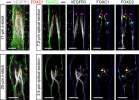
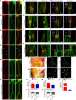
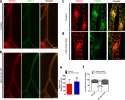
Norden, Sabine, Wang et al
Elife (2020) 9 DOI: 10.7554/eLife.53814
AI Summary: In this study, OriGene’s FOXC1 siRNA (SR320173) was used to specifically knock down FOXC1 expression in human lymphatic endothelial cells, enabling the authors to investigate FOXC1’s role in regulating cytoskeletal activity during lymphatic valve maturation.
Snippet: ion by DNA staining. Table 3. List of siRNAs. GENE SPECIES COMPANY REFERENCE (SEQUENCE) Control Human QIAGEN AllStars Neg. Control siRNA-1027281 FOXC1 Human Origene SR320173 #1 -rGrArUrArArArArCrArCrUrArGrArArGrUrUrArCrCrUrATT #2 - rCrUrArGrUrCrCrArUrGrUrCrArArArUrUrUrUrArCrUrAAA FOXC2 Human Thermo Scientific (Dharmacon) FISSH-000119 (
FOXC1 Regulates Expression of Prostaglandin Receptors Leading to an Attenuated Response to Latanoprost
Doucette, Footz, Walter
Invest. Ophthalmol. Vis. Sci. (2018) 59 (6), 2548-2554 DOI: 10.1167/iovs.17-23223
Doucette, Footz, Walter
Invest. Ophthalmol. Vis. Sci. (2018) 59 (6), 2548-2554 DOI: 10.1167/iovs.17-23223
AI Summary: In this study, the OriGene goat anti-FOXC1 antibody was used to specifically detect FOXC1 protein in chromatin immunoprecipitation (ChIP) experiments, enabling the authors to demonstrate FOXC1 binding to the EP3 prostaglandin receptor gene.
Snippet: was incubated with 5 μg of either rabbit anti-IgG (CALTAG Laboratories, Buckingham, UK), a negative control;rabbit anti-H3AcK9 (Enzo Life Sciences, Farmingdale, NY, USA), a positive control for transcriptionally active chromatin;or goat anti-FOXC1 (OriGene, Rockville Cached
Foxc1 and Foxc2 deletion causes abnormal lymphangiogenesis and correlates with ERK hyperactivation
Fatima, Wang, Uchida et al
J. Clin. Invest. (2016)
Fatima, Wang, Uchida et al
J. Clin. Invest. (2016)
AI Summary: In this study, the OriGene anti-FOXC1 antibody was used to specifically detect FOXC1 protein, helping to elucidate the role of FOXC1 in regulating lymphatic vessel growth and ERK signaling.
Snippet: dLyNeo). Asterisks indicate FOXC-specific binding. Note that specific antibodies against FOXC1 (left, Abcam;right Origene) and FOXC2 (left, Santa Cruz Biotechnology Inc.;right, Abcam) were used in C and D, respectively. (F ... Cite SaveSaving
Foxc1 Regulates Early Cardiomyogenesis and Functional Properties of Embryonic Stem Cell Derived Cardiomyocytes
Lambers, Arnone, Fatima et al
Stem Cells (2016)
Lambers, Arnone, Fatima et al
Stem Cells (2016)
Cited by 51
Dysfunction of the stress-responsive FOXC1 transcription factor contributes to the earlier-onset glaucoma observed in Axenfeld-Rieger syndrome patients
Ito, Goping, Berry et al
Cell Death Dis (2014) 5, e1069 DOI: 10.1038/cddis.2014.8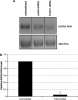
Ito, Goping, Berry et al
Cell Death Dis (2014) 5, e1069 DOI: 10.1038/cddis.2014.8
Cited by 39
AI Summary: In this study, the FOXC1 antibody from OriGene Technologies was used to investigate the role of FOXC1 in stress response and cell viability in human trabecular meshwork cells, contributing to the understanding of glaucoma development in Axenfeld-Rieger syndrome.
Snippet: Lysates were incubated with 4 μg of FOXC1 antibody (OriGene Technologies, Inc., Rockville, MD, USA), 4 μg of Histone H3 acetylated at lysine 9 antibody (Cell Signaling Technology, Inc., Danvers, MA, USA), or rabbit IgG (Cell Signaling Technology, Inc.) overnight ... Cite SaveSaving
Showing 1-6 of 6 papers.
Powered by BizGenius
*Delivery time may vary from web posted schedule. Occasional delays may occur due to unforeseen
complexities in the preparation of your product. International customers may expect an additional 1-2 weeks
in shipping.
Related Products
- Price:
- Actual Price:
Welcome to OriGene AI!
I'm your AI-powered guide to everything OriGene.
Ask me anything:
- Product specs
- Ordering help
- Technical questions
- How to find exactly what your experiment needs
Prefer a live agent? Connect with us by clicking the green chat icon, as seen in the image below or email our team at custsupport@origene.com.
